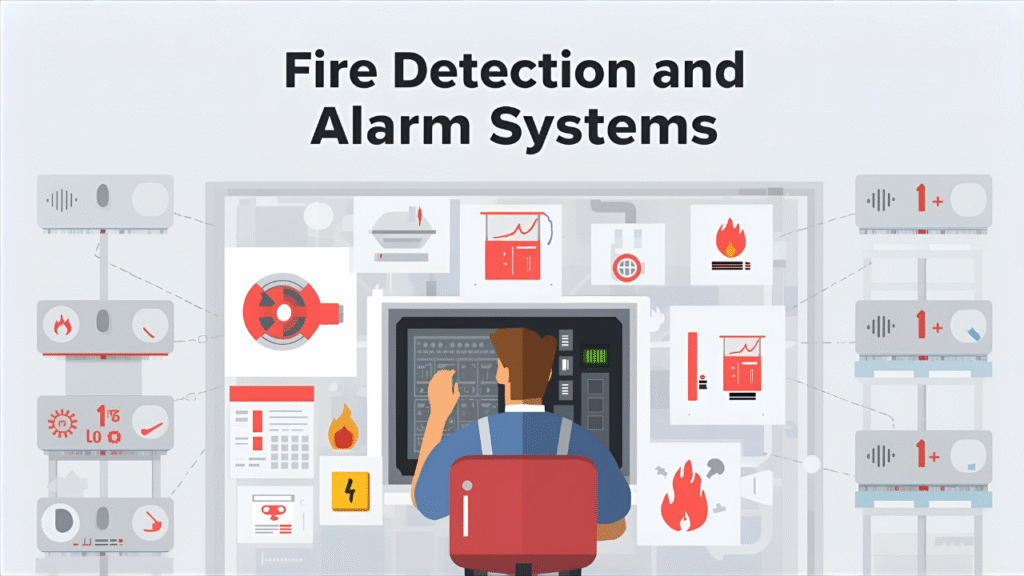
Fire Detection and Alarm Systems Explained
Fire can spread rapidly, especially in industrial or commercial buildings. Early fire detection plays a critical role in preventing fatalities, asset damage, and operational disruption. Fire detection and alarm systems help identify the early signs of smoke, heat, or flames, automatically alerting occupants and emergency services.
This article breaks down how these systems work, types of detectors, system components, installation best practices, testing requirements, and safety guidelines.
Why Fire Detection Systems Are Important
- Detect fire at the earliest possible stage
- Provide audible & visual alarms
- Alert emergency responders faster
- Reduce property damage
- Allow faster evacuation
- Help initiate fire suppression systems
Types of Fire Detectors
1. Smoke Detectors
Used in offices, residences, and enclosed spaces.
Types include:
Ionization Smoke Detectors
- Detect fast-flaming fires
- Sensitive to invisible smoke particles
Photoelectric Smoke Detectors
- Best for smoldering, slow-burning fires
- Sensitive to visible smoke
Combination detectors include both technologies.
2. Heat Detectors
Triggered by temperature increase.
Types:
- Fixed-temperature detector
Activates above a set temperature (e.g., 58°C). - Rate-of-rise detector
Activates when temperature increases rapidly.
Used in:
- Manufacturing plants
- Kitchens
- Boiler rooms
- Parking garages
3. Flame Detectors
Detect radiation from flames.
Types:
- UV Flame Detectors
- IR Flame Detectors
- UV/IR Combined Detectors
Used in:
- Oil & gas plants
- Refineries
- Fuel storage areas
- Chemical industries
4. Gas Detectors
Detect combustion gases like:
- CO (carbon monoxide)
- LPG leaks
- Hydrogen
- Methane
Used in:
- Laboratories
- Industrial processes
- Battery charging areas
Core Components of a Fire Alarm System
1. Fire Detectors (Input Devices)
Smoke, heat, flame, or gas detectors.
2. Manual Call Points (MCP)
Also called break-glass alarm switches — allow humans to trigger the alarm manually.
3. Fire Alarm Control Panel (FACP)
The central brain of the system.
Responsibilities:
- Receives detection signals
- Activates alarm outputs
- Records events
- Interfaces with fire suppression systems
4. Notification Devices (Output Devices)
Used to alert building occupants.
These include:
- Sirens
- Strobe lights
- Horns
- Voice alarm announcements
- Emergency lighting
5. Power Supply System
Fire alarms must function during power failure.
Includes:
- Primary power (mains)
- Backup batteries
- Emergency power supply unit
Fire Alarm System Types
Conventional Fire Alarm System
- Uses zone-based wiring
- Cost-effective
- Best for small buildings
- Control panel indicates zone of fire, not exact detector location
Addressable Fire Alarm System
- Each detector has a unique ID
- Control panel shows exact device location
- Best for large facilities like:
- Hospitals
- Airports
- Factories
- Malls
Wireless Fire Alarm System
- Radio-based communication
- Ideal for heritage buildings or temporary setups
- Quick installation
How a Fire Detection and Alarm System Works
- Detector identifies smoke, heat, flame, or gas
- Signal sent to control panel
- Control panel evaluates input
- Alarm activates (sirens, flashing lights)
- Evacuation instructions announced
- Fire department automatically notified (if integrated)
Installation Best Practices
- Install smoke detectors on ceilings or high walls
- Avoid placing detectors near ventilation vents
- Keep detectors away from steam or humidity sources
- Place MCPs near exits
- Ensure alarm sound level > 65 dB in all areas
- Install detectors in:
- Sleeping areas
- Hallways
- Storage areas
- Electrical rooms
- Mechanical rooms
Testing and Maintenance Requirements
To ensure reliability:
Weekly tests:
- Manual call point activation
Monthly checks:
- Battery inspection
- Visual inspection of detectors
Quarterly tests:
- Alarm system functionality
- Emergency lighting check
Annual inspection:
- Full system test by certified technicians
Common Mistakes in Fire Alarm Usage
- Ignoring false alarms
- Detectors covered or obstructed
- Removing batteries
- Poor wiring or DIY installation
- Failure to maintain or test equipment
- Placing detectors in wrong locations
Integration with Suppression Systems
Fire alarms can be connected to:
- Sprinkler systems
- Deluge systems
- FM-200 or NOVEC gas systems
- CO₂ extinguishing systems
- Fire department automatic notification systems
Conclusion
Fire detection and alarm systems are vital components of workplace safety. By detecting early signs of a fire, they allow a faster, more efficient emergency response, saving lives and property. Proper installation, routine maintenance, and correct placement are crucial for ensuring full effectiveness.
Fire safety begins not when the first flame appears — but when the first alarm sounds.
For checklist and templates visit The HSE Tools.
Importance of Fire Drills and Mock Drills
Fire Emergency Evacuation Procedures at Work
Steps to Conduct a Fire Risk Assessment
Types of Fire and Fire Extinguishers (A, B, C, D, K Explained)
First Aid Response for Electrical Shock Incidents
Frequently Asked Questions (FAQs)
1. How often should fire alarms be tested?
Weekly activation tests and annual professional inspection.
2. What type of detector is best for kitchens?
Heat detectors — smoke detectors may trigger false alarms.
3. What’s the difference between conventional and addressable systems?
Conventional shows zones — addressable shows exact detector locations.
4. Can fire alarms work during power failures?
Yes — with backup battery systems.
5. Is manual activation still necessary if automatic detectors exist?
Yes — manual call points provide redundancy.
