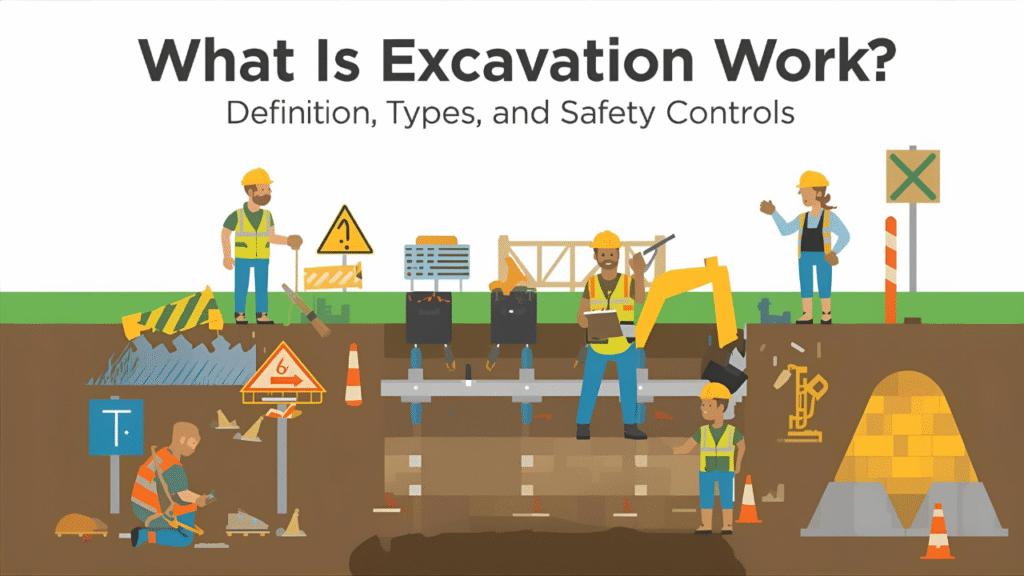
What Is Excavation Work? Definition, Types, and Safety Controls
Excavation is one of the most hazardous activities in construction. It involves removing earth, soil, or rock to create holes, trenches, foundations, and underground installations. While it may seem routine, excavation accidents — especially cave-ins — cause severe injuries and fatalities if safety measures are not followed.
This article explains excavation work, types of excavations, the risks involved, and best–practice safety controls.
What Is Excavation Work? (Definition)
Excavation work is the process of removing soil, rock, or other materials from the ground to create a cavity, trench, pit, or foundation for construction or utility installation.
Examples include:
- Digging trenches
- Creating foundations
- Lowering ground levels
- Preparing basement areas
- Installing underground utilities
Types of Excavation Work
Excavation can be categorized in several ways:
1. Trenches
Narrow excavations deeper than they are wide — typically used for:
- Pipes
- Cables
- Drainage
- Water lines
Trenches are extremely dangerous due to collapse risk.
2. Pits
Square or rectangular excavations used for:
- Foundations
- Manholes
- Tank installations
- Equipment bases
3. Basement Excavations
Large excavations below ground level for building substructures.
4. Footing Excavations
Used for structural support bases of columns and walls.
5. Road/Surface Excavations
Removal of soil or pavement for roadway construction or repair.
Common Hazards Associated With Excavation Work
Excavation activities present multiple risks:
1. Cave-ins and collapsing walls
The biggest cause of deaths in excavation.
2. Falls into excavations
Workers or equipment can fall in.
3. Falling objects
Tools, materials, rocks, or debris falling into trench.
4. Hazardous atmosphere
Low oxygen, toxic gases, or flammable gases.
5. Contact with underground utilities
Such as gas pipes, electric cables, or water lines.
6. Flooding or water accumulation
Rain or groundwater intrusion weakens soil.
7. Equipment hazards
Excavators, loaders, and dumpers can strike workers.
Soil Classification and Its Importance
Soil behavior determines stability.
Types of soil:
- Stable Rock – least collapse risk
- Type A soil (clay) – cohesive, strong
- Type B soil – medium stability
- Type C soil (sand, gravel) – loosest and most dangerous
Proper soil assessment is crucial before excavation begins.
Safety Controls in Excavation Work
The primary goal is preventing collapse and protecting workers.
1. Protective Systems
A. Sloping
Cutting trench sides at an angle to prevent collapse.
B. Benching
Stepped excavation walls.
C. Shoring
Mechanical or hydraulic supports installed to stabilize walls.
D. Shielding (Trench Boxes)
Protect workers inside in case walls collapse.
2. Access & Egress Requirements
- Ladders or steps must be provided
- At least every 7.5 meters (25 feet)
- No worker should be trapped
3. Daily Inspection by Competent Person
Before each shift, the site must be checked for:
- Cracks
- Water seepage
- Soil changes
- Vibrations
- Atmosphere conditions
4. Locating Underground Utilities
- Use drawings
- Surveying
- Electronic scanning
- Permit-to-dig procedure
5. Preventing Water Accumulation
- Pumps
- Drainage systems
- Proper grading
- Rain protection
6. Controlled Equipment Movement
- Equipment must stay away from trench edges
- Spoil piles kept at least 2 feet from excavation
7. Atmospheric Testing (when required)
Check for:
- Oxygen deficiency
- Toxic gases
- Flammable gases
Especially important in deeper or confined excavations.
8. Use of PPE
Workers should use:
- Helmets
- Safety boots
- Reflective vests
- Gloves
- Gas detectors (where needed)
- Fall protection if required
Training and Communication
Workers must be trained in:
- Recognizing signs of collapse
- Emergency evacuation procedures
- Safe entry and exit
- Equipment awareness
Clear communication prevents confusion and accidents.
Emergency Preparedness
- Rescue procedures prepared
- First-aid availability
- Communication system
- Emergency access routes
No worker should enter a trench without rescue planning.
Conclusion
Excavation work is highly technical and potentially dangerous if not properly controlled. By understanding soil behavior, applying protective systems, conducting regular inspections, and enforcing safe work practices, excavation risks can be significantly minimized. A safe excavation is not a matter of luck — it is a result of correct planning and disciplined safety procedures.
For checklist and templates visit The HSE Tools.
Electrical PPE: Complete Guide for Safety Officers
What Is a Residual Current Device (RCD) and How It Works
Understanding the Concept of Earthing and Grounding
Electrical Hazards and Their Control Measures
The Importance of Daily Toolbox Talks in Construction
Frequently Asked Questions (FAQs)
1. What is the biggest hazard in excavation work?
Cave-ins, which can bury workers instantly.
2. Who is responsible for excavation inspection?
A competent person trained in excavation safety.
3. How far should spoil piles be from the trench?
At least 2 feet away from the edge.
4. What is the difference between shoring and shielding?
Shoring supports trench walls — shielding protects workers.
5. When is atmospheric testing required?
When working in deep or confined excavations where gases may accumulate.
