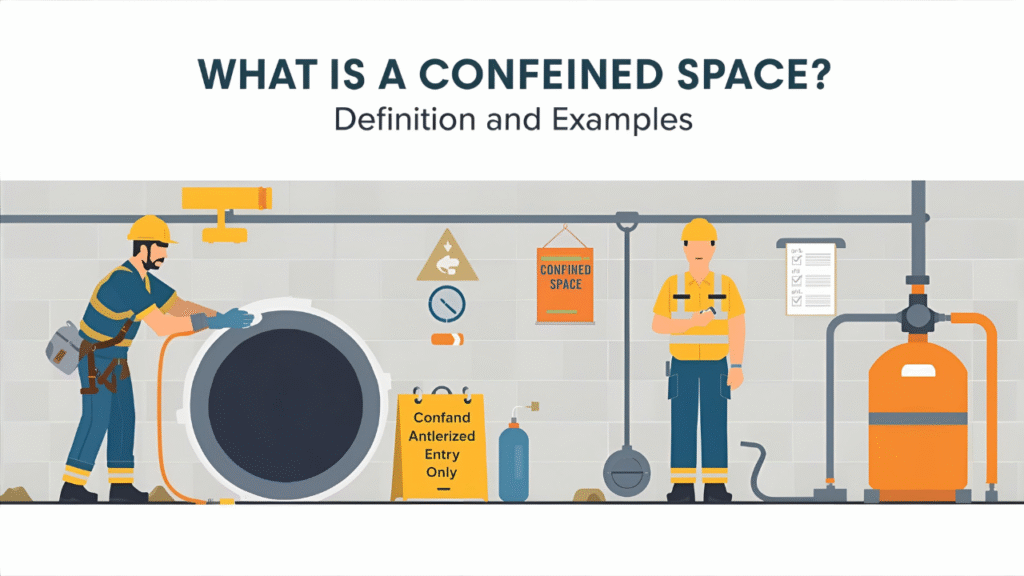
What Is a Confined Space? Definition and Examples
In many industries, workers enter areas that may look harmless but contain hidden dangers such as lack of oxygen, toxic gases, or restricted space for movement. These areas are known as confined spaces — and they pose serious risks.
Every year, workers are injured or killed in confined spaces due to suffocation, poisoning, engulfment, or unexpected reactions. This article explains what confined spaces are, gives real-world examples, and helps you recognize when special safety procedures are required.
Definition of a Confined Space
A confined space is an area that:
- Is large enough for a worker to enter and perform tasks
- Has limited or restricted entry and exit
- Is not designed for continuous occupancy
Key point:
Just being small does not make something a confined space — the hazards and restricted access do.
Characteristics of a Confined Space
Typical features include:
- Narrow entry points
- Poor ventilation
- Difficult access
- Limited movement
- Potential for hazardous atmosphere
Hazards may include:
- Oxygen deficiency
- Toxic gas buildup
- Flammable vapor accumulation
- Engulfment risk (soil, grain, slurry)
- Extreme temperatures
- Mechanical or moving hazards
Examples of Confined Spaces in Various Industries
A confined space can appear in construction, manufacturing, utilities, oil and gas, marine, or agriculture.
Industrial Examples
- Storage tanks
- Boilers
- Pressure vessels
- Silos
- Mixing chambers
- Industrial ovens
Construction Examples
- Manholes
- Vaults
- Crawl spaces
- Trenches deeper than 1.2 m
- Pipelines
- Utility ducts
Oil and Gas / Maritime Examples
- Ship cargo holds
- Ballast tanks
- Mud tanks
- Offshore platform compartments
- Subsurface bunkers
Municipal / Water Treatment Examples
- Sewers
- Stormwater drains
- Pumping stations
- Water reservoir chambers
- Clarifier pits
Agricultural Confined Spaces
- Grain bins
- Feed hoppers
- Fertilizer tanks
Real-World Confined Space Fatalities
Understanding real incidents helps reinforce importance.
Case 1 — Oxygen Deficiency in Sewer
Worker entered sewer without testing atmosphere — collapsed due to lack of oxygen.
Rescuer entered without PPE — collapsed as well.
Result: both workers died.
Case 2 — Gas Build-Up in Storage Tank
During maintenance, methane and hydrogen sulfide gas accumulated.
Worker was exposed and died instantly due to toxic inhalation.
Case 3 — Engulfment in Grain Silo
Worker sank into grain due to bridging and was trapped — suffocated.
Confined Space vs. Enclosed Space
These terms are often confused.
Key distinction:
| Confined Space | Enclosed Space |
|---|---|
| Not designed for continuous occupancy | May allow short occupancy |
| Hazardous atmosphere likely | Ventilation may exist |
| Entry requires permit | Entry may not require permit |
| Higher risk | Moderately restricted |
Example:
A warehouse is enclosed but not a confined space.
A boiler is confined.
Legal Requirements and Standards
Many countries enforce confined space regulations including:
- OSHA 29 CFR 1910.146 (USA)
- UK Confined Spaces Regulations 1997
- Australian AS2865
- ISO standards on confined space safety
These require strict controls before workers enter.
Permit-Required Confined Spaces
Some confined spaces require special authorization.
A Permit-Required Confined Space contains:
- Hazardous atmosphere
- Potential engulfment
- Internal configuration trapping workers
- Any other recognized serious hazards
Permit includes:
- Authorized entrants
- Atmospheric test results
- Ventilation conditions
- Rescue plan
- Communication procedures
Atmospheric Hazards
Atmospheric condition is one of the biggest risks.
Dangers include:
- Low oxygen (below 19.5%)
- High oxygen (above 23.5%) — fire hazard
- Flammable gases (methane, propane)
- Toxic gases (CO, H₂S, ammonia)
Testing must be performed with:
- Calibrated gas detector
- Continuous or periodic monitoring
- Testing at multiple levels (bottom/middle/top)
Gas can stratify — some heavier, some lighter than air.
Mechanical and Physical Hazards
Inside confined spaces, workers may face:
- Moving machinery
- Rotating agitators
- Conveyors
- Sharp edges
- Slippery surfaces
All mechanical hazards must be isolated before entry.
Engulfment Hazards
Engulfment occurs when a worker is covered or submerged in loose material:
- Sand
- Grain
- Sludge
- Liquid
This can result in immediate suffocation.
Entry and Exit Limitations
Confined spaces often have:
- Small hatches
- Vertical ladders
- Narrow tunnels
This complicates:
- Evacuation
- Rescue operations
- Oxygen supply
Role of the Authorized Entrant
A worker entering confined space must:
- Be trained
- Understand hazards
- Wear required PPE
- Maintain communication
- Follow emergency procedures
Role of Confined Space Attendant / Watchman
Every confined space entry must have a trained attendant outside.
Responsibilities:
- Monitor entrants
- Maintain communication
- Track time inside
- Summon emergency rescue if needed
- Prevent unauthorized entry
The attendant never enters the space — even during emergencies.
Ventilation and Purging
Before entry:
- Air must be ventilated
- Toxic gases removed
- Oxygen concentration balanced
- Forced air ventilation may be used
Purging is required when flammable vapors present.
Personal Protective Equipment (PPE)
Depending on hazards, workers may need:
- Respirators
- SCBA (Self-Contained Breathing Apparatus)
- Chemical-resistant suits
- Gloves
- Harness & lifeline
- Helmets
- Boots
Communication Systems
Workers must always remain connected through:
- Radios
- Voice communication
- Hard-wired communication
- Visual contact
No worker should be out of contact inside space.
Emergency & Rescue Procedures
Confined space rescues require:
- Standby rescue team
- Tripod hoist system
- Harness and retrieval line
- Oxygen supply equipment
- CPR-trained rescuers
80% of confined space fatalities are would-be rescuers entering unprotected.
Training Requirements
All workers must be trained in:
- Entry procedures
- Gas detection
- PPE usage
- Communication
- Emergency procedures
- Lockout/Tagout isolation
- First Aid / CPR
- Rescue protocols
Conclusion
A confined space is not defined by size — but by safety risks related to restricted access, poor ventilation, and dangerous atmospheres. Recognizing confined spaces and applying proper controls prevents tragedies and ensures workers return home safely.
Confined space awareness is not optional — it is lifesaving.
For checklist and templates visit The HSE Tools.
Fire Load Calculation and Its Significance
Common Fire Hazards in Industries and Their Controls
Importance of Fire Drills and Mock Drills
Importance of Insulation Resistance Testing
How to Safely Work Near Live Electrical Panels
Frequently Asked Questions (FAQs)
1. Is a trench considered a confined space?
Yes, if it is deeper than 1.2 m and has limited egress — and if atmosphere hazards exist.
2. Does a confined space always require a permit?
Only if hazards are present — then it becomes a Permit-Required Confined Space.
3. What gas is most dangerous in confined spaces?
Hydrogen sulfide (H₂S) — instantly fatal in high concentration.
4. Can two people enter a confined space together?
Yes, but only if trained, authorized, equipped, and monitored.
5. Why is oxygen level testing critical?
Low oxygen causes immediate unconsciousness and death — often with no warning.
