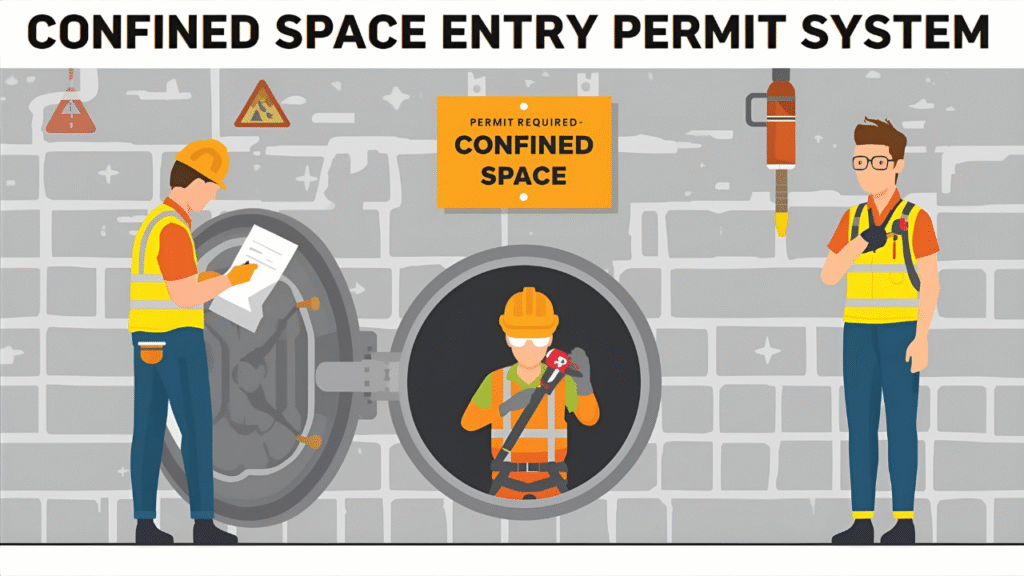
Confined Space Entry Permit System Explained
Working inside confined spaces poses serious hazards including toxic gases, oxygen deficiency, entrapment, and engulfment. To prevent fatalities and ensure that only trained and authorized personnel enter such areas, a documented system known as the Confined Space Entry Permit System is used.
This article explains how the permit system works, who is responsible for issuing and approving it, and what safety criteria must be met before anyone steps into a confined space.
What Is a Confined Space Entry Permit?
Definition
A confined space entry permit is a written, formal document that authorizes workers to enter a confined space after confirming that all hazards have been identified and controlled.
Purpose
- Ensure all hazards are assessed
- Confirm atmospheric testing is completed
- Assign authorized workers
- Provide emergency plan
- Establish communication procedures
- Assign a standby attendant
- Document approval from responsible authority
Without a permit — no entry is allowed.
When Is a Confined Space Entry Permit Required?
A permit is required when the confined space contains or may contain:
One or more of the following:
- Hazardous atmosphere
- Oxygen deficiency (<19.5%)
- Flammable gases or vapors
- Toxic gases (H₂S, CO, etc.)
- Engulfment materials
- Poor ventilation
- Restricted movement or exit
- Presence of mechanical or electrical energy
If any of these risks exist — the space becomes a permit-required confined space.
Roles & Responsibilities in Permit System
1. Entry Supervisor
Responsibilities
- Issues and signs the permit
- Ensures site safety conditions
- Confirms worker competency
- Verifies equipment functionality
- Cancels permit once work is done
2. Authorized Entrants
Responsibilities
- Follow instructions
- Wear required PPE
- Maintain communication
- Understand hazards
- Recognize warning signs
- Exit immediately when ordered
3. Attendant / Standby Person
Responsibilities
- Remains outside confined space
- Monitors entrants
- Keeps count of personnel
- Communicates continually
- Initiates emergency response
- Never enters the space
4. Rescue Team
Responsibilities
- Be available on standby
- Trained in confined space extraction
- Equipped with breathing apparatus
- Ready to respond immediately
Key Pre-Entry Requirements Before Permit Approval
Before signing a permit, certain conditions must be verified:
Atmospheric Testing
Mandatory gas testing includes:
- Oxygen level (19.5–23.5%)
- Flammable gases (below LEL)
- Toxic gases (below permissible limits)
Testing must be done at:
- Top of space
- Middle of space
- Bottom of space
Because gases stratify.
Isolation of Energy Sources (LOTO)
Energy sources that must be isolated
- Electrical
- Pneumatic
- Hydraulic
- Mechanical
- Chemical
- Thermal
A lockout/tagout system must be applied.
Ventilation and Purging
Used to:
- Remove toxic gases
- Introduce fresh air
- Control temperature
Mechanical ventilation may be required.
Equipment for Safe Entry
Workers must have:
- PPE
- Safety harness & lifeline
- Tripod or davit rescue system
- Gas detector
- Portable communication system
- Lighting
- Tools and intrinsically safe equipment
- First aid kit nearby
Communication Protocols
Allowed communication modes:
- Handheld radios
- Voice communication
- Tether-line signaling
- Hard-wired communication
Continuous communication is essential.
Permit Form Components
A confined space entry permit must include:
Typical Permit Sections
- Work location and description
- Date and duration of permit validity
- Names of authorized entrants
- Entry supervisor signature
- Atmospheric test results
- PPE requirements
- Ventilation instructions
- Rescue procedure
- Emergency equipment
- Lockout/Tagout verification
- Communication procedure
- Attendant name
- Permit expiration criteria
This becomes an official legal document.
Permit Duration & Cancellation
Permit validity conditions:
- Only valid for specified time
- Must be re-issued if conditions change
- Automatically void if hazardous condition develops
- Must be cancelled after completion of work
Permit must be cancelled when:
- Work is finished
- Emergency occurs
- Unsafe condition is detected
- Supervisor declares space unsafe
Permit Display Requirements
Permit must be posted at entry point:
- Visible to all entrants
- Visible to attendant
- Accessible for inspection
This ensures everyone is aware of authorization and conditions.
Emergency Response Requirements
Must include:
- Immediate evacuation plan
- Rescue equipment in place
- Certified, trained rescue personnel
- Medical support accessible
- Fire and gas control provisions
Time is critical in confined space emergencies — victims often collapse in seconds.
Training Requirements Under Permit System
Authorized workers must be trained in:
Mandatory Training Areas
- Confined space hazards
- Gas detection & interpretation
- PPE usage
- Entry procedures
- Exit procedures
- Communication
- Non-entry rescue techniques
- First Aid / CPR
No training — no entry.
Audit & Permit Retention Requirements
Retention
Permit must be:
- Signed
- Filed
- Stored as records
- Kept 12 months or per regulation
Review
Lessons learned are documented to prevent recurrence.
Common Causes of Confined Space Accidents
Permit failures due to:
- No atmospheric monitoring
- Inadequate ventilation
- Poor supervision
- Improper PPE
- Entry without permit
- Untrained workers
- Rescue attempt without breathing apparatus
Best Practices for Permit-Controlled Entry
Golden Rules
- Never enter without valid permit
- Always test atmosphere
- Always have an attendant
- Always have rescue process in place
- Never work alone
- Always monitor gas levels
- Always isolate energy sources
Conclusion
The confined space entry permit system is not just paperwork — it is a life-preserving barrier between workers and hidden hazards. By ensuring all safety checks are completed, testing is performed, and procedures are followed, workers can enter confined spaces confidently and safely.
A valid permit is proof that safety is prioritized.
For checklist and templates visit The HSE Tools.
What Is a Confined Space? Definition and Examples
Permit to Work System Interview Questions and Answers
Confined Space Safety Interview Questions and Answers
Confined Space Safety Interview: 50 Questions and Sample Answers
FAQs
1. Who issues the confined space entry permit?
The entry supervisor or authorized safety representative.
2. How often must gas levels be tested?
Before entry and continuously while inside.
3. Can a permit be reused?
No — a new permit is required for each entry period or if conditions change.
4. Is an attendant required for every confined space entry?
Yes — always.
5. What happens if conditions change during entry?
Permit is void — workers must evacuate immediately.
