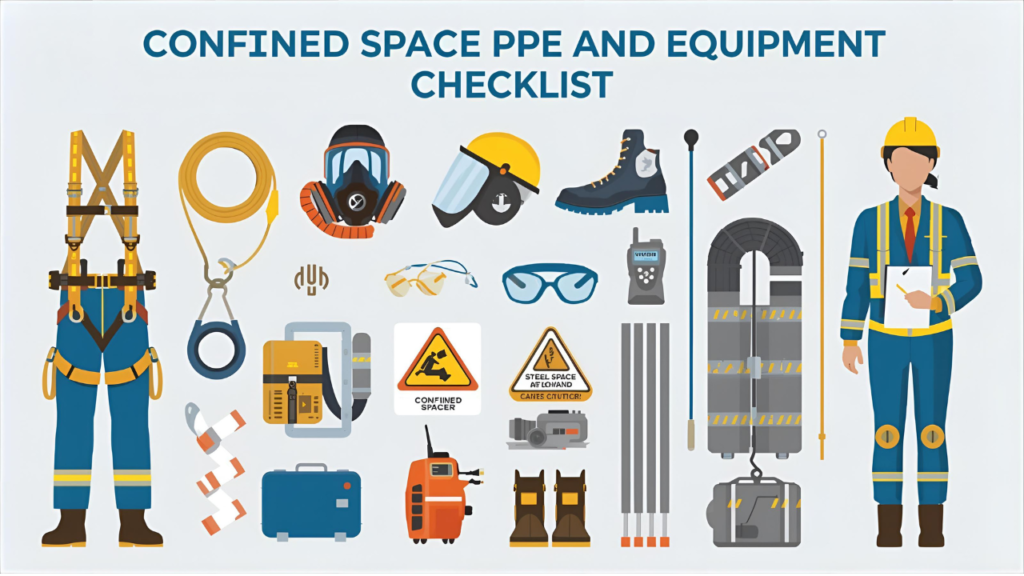
Confined Space PPE and Equipment Checklist
Confined spaces pose multiple life-threatening hazards, including oxygen deficiency, toxic gases, flammable vapors, engulfment, extreme temperatures, and limited mobility. Because these hazards are invisible and unpredictable, proper PPE and specialized equipment must be used for every confined space entry.
A robust PPE and equipment checklist ensures that workers are protected, supervisors can verify compliance, and emergency teams can respond effectively. This guide provides a complete breakdown of all mandatory gear for safe confined space operations.
Why PPE and Specialized Equipment Are Essential
Confined space hazards are different from conventional work environments. Unlike open areas, confined spaces trap gases, limit oxygen, restrict movement, and make communication difficult. PPE and equipment serve three critical purposes:
Protection from atmospheric hazards
Oxygen levels may drop below 19.5%, and toxic gases like hydrogen sulfide or carbon monoxide can cause unconsciousness within seconds.
Prevention of entrapment and falls
Harnesses, lifelines, and retrieval systems prevent workers from becoming trapped or unrescuable.
Ensuring communication and monitoring
Gas detectors, communication radios, and alarms help maintain safety oversight.
PPE is the last line of defense, but in confined spaces, it becomes life-sustaining protection.
Essential PPE for Confined Space Entry
Below are the mandatory PPE categories required before entering any confined space.
Head Protection
Hard Hat / Safety Helmet
Protects against:
- Falling objects
- Low-clearance ceilings
- Impact from overhead structures
Helmets should include chin straps to prevent slipping in tight spaces.
Eye and Face Protection
Safety Goggles
Used when there is risk of:
- Chemical splashes
- Dust and debris
- Vapors or irritants
Face Shields
Used when grinding, performing hot work, or handling chemicals inside confined spaces.
Respiratory Protection
Atmospheric hazards are the most dangerous confined space risks. Respiratory protection must match the hazard type.
Air-Purifying Respirators (APR)
Used only when the atmosphere is known to be safe and contaminants are below exposure limits.
Supplied Air Respirators (SAR)
Used when oxygen levels may fluctuate or contaminants may exceed safe limits.
Self-Contained Breathing Apparatus (SCBA)
Required when:
- Oxygen <19.5%
- Unknown atmosphere
- High toxicity environment
- Emergency rescue
SCBA provides a continuous supply of breathable air — essential for rescue teams.
Hand Protection
Chemical-Resistant Gloves
Used when handling solvents, cleaning agents, wastewater, or sludge.
Cut-Resistant Gloves
Used when working near sharp edges, welding tasks, or steel structures.
Heat-Resistant Gloves
Required for hot work operations.
Foot Protection
Steel-Toe Safety Boots
Protect against:
- Impact
- Puncture
- Slips
Chemical-Resistant or Waterproof Boots
Used in wet or corrosive environments such as manholes or sump pits.
Slip-resistant soles are mandatory.
Body Protection
Protective Coveralls
Provide full-body protection from:
- Chemicals
- Dirt
- Contaminants
- Sharp edges
Chemical-Resistant Suits
Used for hazardous chemical exposures.
Flash-Resistant Clothing
Used during hot work or high-temperature tasks.
Fall Protection Equipment
Full Body Harness
Mandatory for every worker entering a confined space.
Harness allows:
- Vertical retrieval
- Fall protection
- Controlled lowering
Lifeline
Attached to the back D-ring of the harness for rescue purposes.
Retrieval Winch
Used to lift or lower workers in vertical confined spaces.
Fall protection equipment ensures workers can be rescued without delays.
Atmospheric Monitoring Equipment
Atmospheric testing is the most essential safety function inside confined spaces.
Multi-Gas Detector
Must detect:
- Oxygen (O₂)
- Flammable gases (LEL)
- Hydrogen sulfide (H₂S)
- Carbon monoxide (CO)
Continuous Gas Monitor
Used for long-duration operations.
Calibration and Bump-Test Kits
Gas detectors must be checked before each use.
Atmospheric monitoring is continuous — not a one-time check.
Lighting and Electrical Equipment
Confined spaces are often dark and hazardous.
Intrinsically Safe Lighting
Required to prevent ignition of flammable gases.
Portable Explosion-Proof Lamps
Used in hazardous atmospheres.
Headlamps
Attached to helmets for hands-free operation.
Electrical equipment must be rated for confined spaces and explosive environments.
Communication Equipment
Clear communication is essential.
Two-Way Radios
Used between entrant and attendant.
Hardwired Communication Lines
Used when radio signals cannot penetrate confined spaces.
Alarm Systems
Entrants must be able to sound alarm instantly.
Communication ensures continuous monitoring and immediate response in emergencies.
Ventilation Equipment
Ventilation ensures breathable air and dilutes contaminants.
Ventilation Blower / Air Mover
Pushes fresh air into the space.
Ventilation Ducts
Extend airflow deep into confined areas.
Exhaust Fans
Remove contaminated air from the space.
Ventilation must remain on throughout the job.
Rescue and Retrieval Equipment
A rescue plan is mandatory before entry.
Tripod or Davit Arm System
Used for vertical entry into manholes and tanks.
Rescue Winches
Retrieve workers safely without entering the space.
Rescue Stretcher
Used to transport injured entrants after rescue.
SCBA for Rescue Teams
Required for emergency entry into unsafe atmosphere.
Rescue equipment must be placed at the entry point and ready for immediate use.
Entry and Access Equipment
Ladders
Used for safe access and exit.
Access Platforms
Prevent slips and falls at the entry point.
Walk Boards
Used for horizontal confined spaces.
Proper access equipment reduces entry-exit hazards.
Lockout/Tagout (LOTO) Equipment
LOTO must be applied before any confined space entry.
Padlocks
Used to isolate energy sources.
Tags and Permit Labels
Inform others that equipment is locked.
Valve Lockout Devices
Prevent accidental opening of gas or chemical lines.
Electrical Lockout Devices
Ensure motors, pumps, and switches are isolated.
LOTO protects entrants from unexpected energy releases.
Confined Space Signage and Barriers
Warning Boards
Indicate “Confined Space — Authorized Entry Only.”
Barricades
Prevent unauthorized or accidental entry.
Tape or Chains
Used to secure the perimeter.
Signage ensures only authorized personnel enter.
Documentation and Permits
Confined Space Entry Permit
Must include:
- Atmospheric test results
- Hazard identification
- PPE check
- Rescue plan
- Authorization
PPE Checklists
Verified before and after entry.
Rescue Plan Documentation
Mandatory for emergency situations.
Documents ensure compliance and safety.
Complete Confined Space PPE and Equipment Checklist
Below is a consolidated checklist supervisors can use.
PPE
- Helmet
- Safety goggles
- Face shield
- Protective suit
- Gloves (chemical or cut-resistant)
- Safety boots
- Full body harness
- Lifeline
- Respiratory protection (APR, SAR, SCBA)
Atmospheric Testing
- Multi-gas detector
- Calibration kit
- Bump test kit
Lighting & Electrical
- Intrinsically safe lamps
- Explosion-proof lighting
- Headlamps
Communication
- Radios
- Hardline systems
Ventilation
- Air blower
- Ventilation ducts
- Exhaust fans
Rescue Equipment
- Tripod / Davit
- Winch
- Stretcher
- SCBA for rescue team
LOTO
- Locks
- Tags
- Valve lockouts
- Electrical lockouts
Entry Equipment
- Ladders
- Platforms
- Walk boards
Signage & Barriers
- Warning signs
- Barricades
- Safety cones
Documentation
- Entry permit
- PPE checklist
- Gas testing records
- Rescue plan
This checklist must be verified before every confined space job.
Conclusion
Confined space safety depends on more than training and awareness — it requires the right PPE, specialized equipment, and continuous monitoring. Every worker entering a confined environment must be fully protected from atmospheric hazards, physical risks, and unexpected emergencies. A complete PPE and equipment checklist ensures that all safety measures are in place and gives workers the best chance of completing the job safely.
Confined space work is unforgiving, but with proper equipment and disciplined procedures, risks can be effectively controlled.
For checklist and templates visit The HSE Tools.
Emergency Rescue Procedures for Confined Space Entry
Duties of Confined Space Attendants and Entrants
Ventilation Requirements for Confined Spaces
Confined Space Atmospheric Testing – Gas Detection Explained
Confined Space Entry Permit System Explained
FAQs
1. Is a full-body harness mandatory for all confined space entries?
Yes, a harness and lifeline are required for safe retrieval.
2. Can workers enter confined spaces without gas detectors?
No — atmospheric testing is required before and during entry.
3. When should SCBA be used?
During emergency rescue or when oxygen levels are unsafe.
4. Is ventilation required even if gas levels are normal?
Yes, continuous ventilation prevents sudden atmospheric changes.
5. Who checks PPE before entry?
The entrant, the attendant, and the supervisor must all verify PPE.
