Safe Load Limits for Scaffolding Platforms
Understand safe load limits for scaffolding platforms, including load types, duty ratings, common mistakes, and control measures to prevent scaffold overloading and collapse.
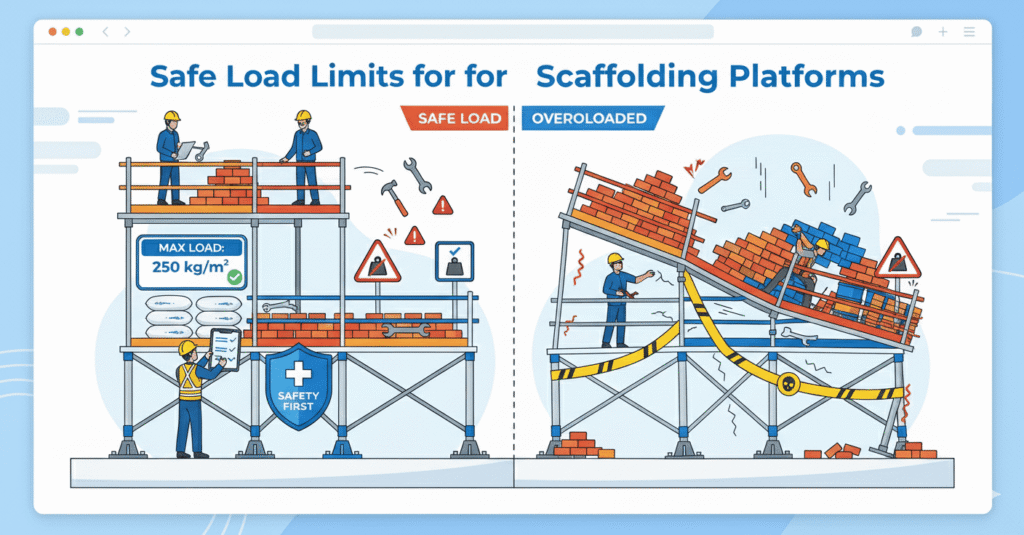
Scaffolding platforms are designed to provide safe access and working space at height, but their safety depends heavily on not exceeding safe load limits. Overloading is one of the leading causes of scaffold collapse, platform failure, and serious injuries. Many scaffold accidents occur not because of poor erection, but because too many workers, materials, or equipment are placed on the platform at the same time.
Understanding safe load limits for scaffolding platforms is essential for scaffolders, supervisors, engineers, and safety officers. This article explains scaffold load concepts, types of loads, load ratings, common overloading causes, and practical control measures to ensure scaffolds remain safe under all working conditions.
Why Safe Load Limits Are Critical for Scaffolding
Scaffold platforms are temporary structures with defined load-carrying capacity. When these limits are exceeded, the scaffold may:
- Collapse suddenly
- Fail at weak points such as planks or couplers
- Tilt or overturn
- Cause falls from height
- Drop materials onto people below
Respecting load limits protects workers’ lives, prevents structural failure, and ensures compliance with safety regulations.
What Are Safe Load Limits in Scaffolding?
Safe load limits, also known as Safe Working Load (SWL), refer to the maximum load a scaffolding platform can safely support under normal working conditions. This load includes:
- Weight of workers
- Weight of tools and equipment
- Weight of stored materials
- Dynamic loads caused by movement
Exceeding the SWL significantly increases the risk of failure.
Types of Loads Acting on Scaffolding Platforms
Understanding load types helps in accurate load planning.
Dead Load
Dead load is the constant weight of the scaffold itself.
Includes:
- Scaffold tubes
- Planks or decks
- Guardrails
- Toe boards
Dead load is considered during scaffold design and cannot be changed.
Live Load
Live load includes all variable loads placed on the scaffold.
Includes:
- Workers
- Tools
- Materials
- Equipment
Live load must always remain within allowable limits.
Impact and Dynamic Load
Dynamic load occurs due to movement.
Examples:
- Workers walking or climbing
- Lifting or dropping materials
- Use of power tools
Dynamic loads increase stress on the scaffold and must be minimized.
Environmental Load
Environmental loads come from external forces.
Includes:
- Wind pressure
- Rain accumulation
- Snow or ice
Environmental loads can reduce scaffold capacity and stability.
Scaffold Duty Ratings and Load Classes
Scaffolds are classified based on intended load capacity.
Light Duty Scaffolds
Typical Use
- Painting
- Inspection
- Light maintenance
Load Capacity
- Low material storage
- Generally limited to one or two workers
Medium Duty Scaffolds
Typical Use
- Bricklaying
- Plastering
- General construction
Load Capacity
- Moderate material storage
- Multiple workers
Heavy Duty Scaffolds
Typical Use
- Heavy masonry
- Industrial construction
- Large equipment installation
Load Capacity
- High material storage
- Heavy tools and equipment
Special Duty Scaffolds
Typical Use
- Designed for specific applications
Load Capacity
- As per engineering design
Load ratings must always be confirmed from scaffold design or manufacturer data.
Understanding Load Distribution on Scaffolding Platforms
Even when total load is within limits, uneven load distribution can cause failure.
Concentrated Loads
Concentrated loads occur when heavy items are placed in one area.
Examples:
- Stacked bricks in one corner
- Heavy equipment placed on a single plank
Uniformly Distributed Loads
Uniform load distribution spreads weight evenly across the platform, reducing stress.
Control Measures
- Spread materials evenly
- Avoid stacking materials in one location
- Use additional platforms if required
Common Causes of Scaffold Overloading
Excessive Material Storage
Workers often store materials on platforms for convenience.
Risk
- Overloading beyond design capacity
Control
- Limit materials to immediate use only
Too Many Workers on One Platform
Multiple workers performing tasks simultaneously increase live load.
Control
- Limit number of workers per platform
- Plan work activities
Heavy Equipment on Scaffolds
Placing generators, welding machines, or compressors on scaffolds is dangerous.
Control
- Use ground-based equipment
- Confirm load capacity before placement
Lack of Awareness of Load Limits
Workers often do not know scaffold load ratings.
Control
- Display load limits clearly
- Conduct training and toolbox talks
Unauthorized Scaffold Modifications
Removing or altering components reduces load capacity.
Control
- Prohibit unauthorized changes
- Enforce scaffold tagging system
Control Measures to Maintain Safe Load Limits
Proper Scaffold Design and Planning
- Select correct scaffold type
- Determine load requirements before erection
- Use engineered designs for heavy-duty scaffolds
Display Load Rating Information
- Clearly display scaffold load class
- Use signage or scaffold tags
Workers should know the maximum allowed load.
Material Management on Scaffolds
- Store only required materials
- Remove excess materials daily
- Avoid stockpiling
Use of Scaffold Tags
Scaffold tags should indicate:
- Load class
- Inspection status
- Usage restrictions
Regular Inspection and Monitoring
Daily inspections should check for:
- Signs of overloading
- Bent components
- Sagging platforms
Immediate action must be taken if overloading is suspected.
Training and Awareness
Training should cover:
- Load types
- Load limits
- Safe material storage
- Consequences of overloading
Educated workers are less likely to overload scaffolds.
Special Considerations for Different Scaffold Types
Mobile Scaffolds
- Lower load capacity
- No material storage allowed
- Wheels must be locked
Suspended Scaffolds
- Strict load limits
- Balanced loads essential
- Overloading can cause suspension failure
Cantilever Scaffolds
- High risk of overturning
- Requires engineered design
- Load limits strictly controlled
Weather Impact on Scaffold Load Capacity
Environmental conditions can reduce safe load limits.
Wind Effects
- Wind pressure adds lateral load
- Can destabilize scaffold
Control
- Reduce loads during high winds
- Secure materials
Rain and Water Accumulation
- Increases platform weight
- Makes surfaces slippery
Control
- Ensure proper drainage
- Suspend work during heavy rain
Snow or Ice
- Adds significant dead load
- Increases slip risk
Control
- Clear platforms before use
- Reassess load capacity
Inspection Checklist Related to Load Safety
Safety officers should verify:
- Load rating signage present
- No excessive materials
- Even load distribution
- No sagging or bending
- Scaffold ties intact
Role of Safety Officers in Load Control
Safety officers must:
- Verify scaffold design
- Educate workers
- Monitor material storage
- Stop work if overloading is observed
Their proactive role prevents serious incidents.
Integration with Permit to Work System
For heavy-duty or high-risk scaffolds:
- Load limits must be referenced in the Permit to Work
- Permit should specify material limits
- Supervisor must verify compliance
Common Myths About Scaffold Load Limits
- “It looks strong, so it’s safe”
- “A little extra load won’t matter”
- “Scaffold hasn’t collapsed before”
These assumptions have caused many accidents.
Best Practices for Maintaining Safe Load Limits
- Plan material delivery schedules
- Use lifting equipment to move materials
- Enforce housekeeping rules
- Inspect platforms daily
- Never exceed design limits
Conclusion
Maintaining safe load limits for scaffolding platforms is a fundamental requirement for work at height safety. Overloading scaffolds is a silent hazard that can lead to sudden and catastrophic failures. By understanding load types, respecting load ratings, managing materials effectively, and enforcing strict inspection and supervision, organizations can prevent scaffold collapses and protect workers’ lives.
Always remember — a scaffold is only as safe as the load it carries.
For checklist and templates visit The HSE Tools.
Common Scaffolding Hazards and Control Measures
Daily Scaffold Inspection Checklist for Safety Officers
Scaffolding Erection and Dismantling Procedure
Scaffold Components and Types Explained
Roof Work Safety: Do’s and Don’ts
FAQs
1. What happens if a scaffold is overloaded?
It can collapse, fail structurally, or cause falls and injuries.
2. Who decides the safe load limit of a scaffold?
The scaffold designer, manufacturer, or engineer.
3. Can materials be stored on scaffolding platforms?
Yes, but only within approved load limits.
4. Should load limits be displayed on scaffolds?
Yes, load rating must be clearly visible.
5. How can overloading be prevented?
Through planning, training, inspection, and supervision.
