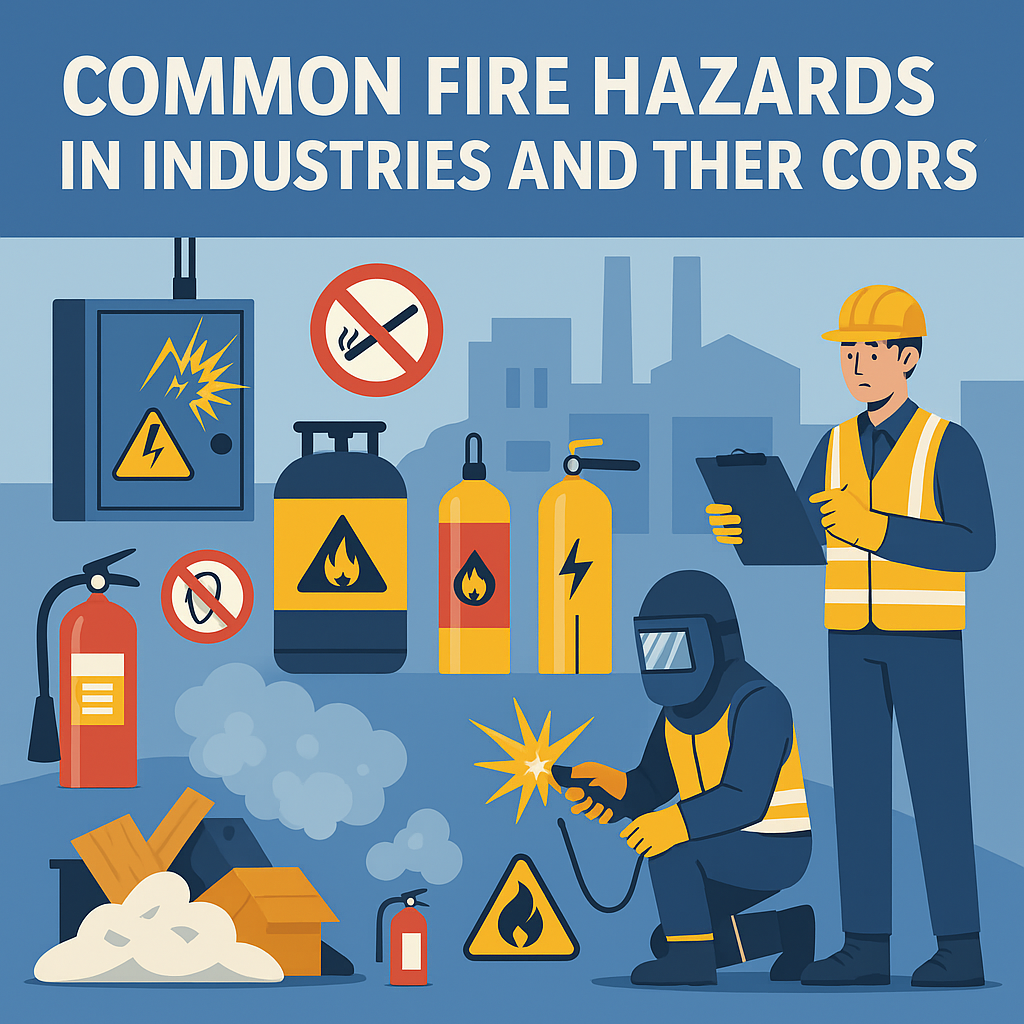
Common Fire Hazards in Industries and Their Controls
Industrial environments include machinery, chemicals, fuel, electrical equipment, compressed gases, and heat sources — all of which can contribute to fire hazards. Understanding these hazards is the first step in preventing incidents and protecting life and property.
This article explains the most common industrial fire hazards, their causes, and practical control methods to reduce risk.
1. Electrical Hazards
Electrical faults are among the leading causes of industrial fires.
Common causes:
- Short circuits
- Overloaded circuits
- Damaged wiring
- Loose connections
- Overheated motors
- Faulty electrical panels
Controls:
- Regular electrical inspection
- Use of proper circuit breakers & RCDs
- Thermal scanning
- Preventive maintenance
- Avoiding cable overloading
- Ensuring proper grounding and bonding
- Only qualified electricians handling repairs
2. Flammable Liquids & Chemicals
Industries often use or store chemicals such as:
- Paints
- Solvents
- Fuels
- Thinners
- Adhesives
- Cleaning fluids
Controls:
- Store in fire-rated cabinets
- Use proper labeling and segregation
- Use anti-spill trays and absorbents
- Ensure ventilation in storage areas
- Prohibit ignition sources nearby
- Train workers in safe handling
3. Combustible Dust
Fine dust particles can ignite rapidly and explode.
Industries at risk:
- Woodworking
- Paper mills
- Grain processing
- Textile manufacturing
- Metal fabrication
Controls:
- Dust extraction systems
- Frequent cleaning
- Avoiding dust accumulation
- Explosion-proof electrical systems
- Good ventilation
- Monitoring static electricity
4. Hot Work Operations
Includes welding, grinding, brazing, soldering, and cutting.
Hazards:
- Sparks
- Molten metal
- Heat radiation
- Flying hot particles
Controls:
- Hot Work Permit system
- Removal of flammables before work
- Assigned fire watch
- Fire extinguishers at site
- Spark shields and fire blankets
- Proper PPE
5. Gas and Fuel Cylinder Storage
Compressed gases are explosive if mishandled.
Hazards:
- LPG, acetylene, oxygen cylinders
- Gas leaks and hose ruptures
- Improper storage orientation
Controls:
- Store upright and chained
- Use leak detectors and ventilation
- Regular inspection of valves
- Proper segregation
- No smoking zones
- Correct pressure regulators
6. Overheating Machinery and Equipment
Machines generate heat due to:
- Friction
- Poor lubrication
- Bearing failure
- Motor burnout
Controls:
- Preventive maintenance
- Real-time temperature monitoring
- Lubrication systems
- Equipment shutdown on overheating
- Thermal imaging inspections
7. Smoking in Unauthorized Areas
Even a small cigarette spark near flammables can cause fire.
Controls:
- Strict smoking policies
- Designated smoking areas
- Fire-resistant ashtrays
- Clear signage
- Enforcement through supervision
8. Static Electricity Discharge
Static charge buildup can ignite vapors.
Industries at risk:
- Oil & gas
- Chemical plants
- Rubber
- Packaging
Controls:
- Grounding and bonding
- Anti-static flooring
- Use of conductive PPE
- Humidity control
- Anti-static spray
9. Poor Housekeeping and Waste Accumulation
Waste can act as fuel for fire.
Examples:
- Paper
- Packaging
- oily rags
- wood scraps
- chemical residues
Controls:
- Daily cleanup schedule
- Waste segregation
- Proper disposal bins
- Controlling clutter
10. Faulty Fire Safety Systems
A fire is dangerous — but a fire with no detection system is deadly.
Examples:
- Non-functioning alarms
- Empty or expired extinguishers
- No sprinkler systems
- Poor emergency lighting
Controls:
- Regular system inspections
- Monthly extinguisher checks
- Annual servicing
- Emergency drills
- Equipment placement & accessibility
Fire Hazard Risk Reduction Strategy
A structured approach improves safety:
Elimination
Remove the hazard if possible.
Substitution
Use less flammable materials.
Engineering Controls
Ventilation, isolation, spark arrestors.
Administrative Controls
Training, signage, permits.
PPE
Flame-resistant clothing, gloves, shields.
Fire Safety Training for Employees
Workers should be trained to:
- Identify hazards
- Use fire extinguishers
- Activate alarms
- Follow evacuation routes
- React calmly in emergencies
- Report unsafe conditions
Emergency Preparedness
Every workplace must have:
- Fire alarms
- Evacuation maps
- Assembly points
- Fire wardens
- First aiders
- Emergency numbers displayed
Conclusion
Industrial fire hazards are preventable if identified and controlled early. Through proper storage, electrical maintenance, hot work permits, ventilation, housekeeping, and training — workplaces can drastically minimize fire risk and protect their workers, assets, and productivity.
A safe workplace is not created by luck — but by preparation, awareness, and consistent control measures.
For checklist and templates visit The HSE Tools.
Importance of Fire Drills and Mock Drills
Fire Emergency Evacuation Procedures at Work
Steps to Conduct a Fire Risk Assessment
Types of Fire and Fire Extinguishers (A, B, C, D, K Explained)
First Aid Response for Electrical Shock Incidents
Frequently Asked Questions (FAQs)
1. What is the most common cause of industrial fires?
Electrical faults and overheating machinery.
2. How often should fire safety equipment be inspected?
Monthly visual checks and annual servicing.
3. What is a hot work permit?
A mandatory safety document required before performing tasks like welding or cutting.
4. Why is combustible dust dangerous?
It can ignite and explode when suspended in air.
5. What industries face the highest fire risk?
Oil & gas, chemical manufacturing, woodworking, textile, and metal processing.
