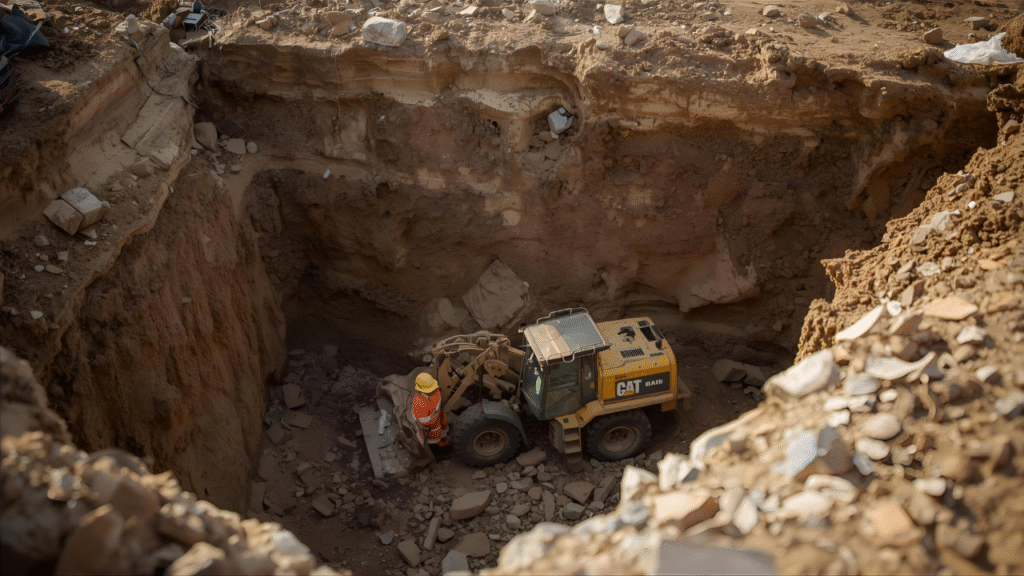
Excavation Hazards and Their Control Measures
Excavation work is essential for foundations, pipelines, drainage systems, and underground installations. However, it remains one of the most dangerous construction activities. Workers are exposed to life-threatening risks such as cave-ins, hazardous gases, falling debris, and collisions with machinery.
This article highlights major excavation hazards and explains control measures to reduce accident risk and ensure worker safety.
Major Excavation Hazards and Their Controls
1. Cave-ins & Collapsing Walls
The most serious hazard — responsible for the highest number of excavation-related fatalities.
Causes:
- Unstable soil
- Excessive vibrations
- Lack of shoring
- Heavy loads near edges
- Poor planning
Control Measures:
- Use protective systems: sloping, benching, shoring, trench boxes
- Soil classification before excavation
- Daily inspections by competent person
- Maintain spoil piles at least 2 ft away
- Avoid heavy equipment near edges
2. Falling Into Excavation
Workers or equipment can accidentally fall inside.
Control Measures:
- Install guardrails or barricades
- Provide safe access/egress (ladders, steps)
- Mark edges with warning tape
- Adequate lighting during night work
- Proper site supervision
3. Falling Loads & Materials
Tools or debris may fall on workers inside the excavation.
Control Measures:
- Keep loose materials away from edges
- Use tool lanyards
- Install overhead protection
- Maintain safe lifting procedures
- Use spotters when lifting near excavations
4. Hazardous Atmosphere
Dangerous gases or lack of oxygen may occur, especially in deep or enclosed excavations.
Possible Hazards:
- Oxygen deficiency
- Methane buildup
- Hydrogen sulfide
- Toxic vapors
Control Measures:
- Atmospheric testing before entry
- Ventilation systems
- Stop work if unsafe gas levels detected
- Use gas detectors
- Emergency rescue plan in place
5. Contact with Underground Utilities
Risk of striking:
- Gas pipelines
- Electrical cables
- Water lines
- Sewer lines
- Fiber optics
Control Measures:
- Use permit-to-dig system
- Consult utility maps
- Use cable detectors & ground scanning technology
- Hand digging when approaching utility zones
- Proper communication with utility authorities
6. Flooding or Water Accumulation
Water weakens soil walls, increasing collapse risk.
Control Measures:
- Install proper drainage
- Dewatering pumps
- Divert runoff using trenches/drains
- Avoid excavation during heavy rain
- Inspect water seepage regularly
7. Mobile Equipment Movement
Excavators, trucks, and loaders can strike workers.
Control Measures:
- Define equipment-free zones
- Spotters for guiding movement
- Audio alarms & reverse beepers
- High-visibility clothing
- Operator safety training
8. Vibration-Induced Collapse
Nearby heavy vehicles, trains, or pile-driving activities can destabilize soil.
Control Measures:
- Monitor vibration levels
- Use shoring systems
- Prohibit traffic close to trench
- Strengthen wall support
9. Exposure to Noise, Dust & Heat
Environmental hazards often ignored but affect worker health.
Control Measures:
- PPE — masks, ear protection, eyewear
- Dust suppression using water spray
- Scheduling work during cooler hours
- Adequate hydration & shade
10. Lack of Training & Communication
Human behavior plays a role in most accidents.
Control Measures:
- Toolbox talks
- Safety induction
- Proper signage
- Clear communication among crew
Daily Excavation Safety Checklist
Before work begins, verify:
- Soil inspection completed
- Protective system installed
- Gas testing done (if required)
- Utilities identified
- Spoil piles placed safely
- Access/egress available
- Weather conditions checked
- First-aid & rescue plan ready
- Competent person authorized
Competent Person Responsibilities
A qualified excavation safety supervisor must:
- Inspect daily and after any weather changes
- Stop work if unsafe conditions exist
- Approve re-entry after corrections
- Communicate hazards to workers
- Document safety checks
Emergency Response Plan
In case of an incident:
- Clear the area
- Notify emergency services
- Do not re-enter collapsed trench
- Provide first aid if safe
- Initiate rescue operations with trained responders only
Conclusion
Excavation hazards are predictable — and preventable. With proper planning, soil evaluation, engineering protection systems, atmospheric testing, training, and daily inspection, excavation work can be conducted safely.
Safety in excavation is not optional — it is the foundation of responsible construction.
For checklist and templates visit The HSE Tools.
What Is Excavation Work? Definition, Types, and Safety Controls
Fire Safety Signages and Color Codes Explained
Fire Load Calculation and Its Significance
Role of Fire Wardens in Workplace Safety
How to Maintain and Inspect Fire Extinguishers
FAQs
1. What is the deadliest excavation hazard?
Cave-ins, as they can bury workers instantly.
2. When is atmospheric testing required?
In deep or confined excavations where gases may accumulate.
3. How far should spoil piles be from trenches?
At least 2 feet from the edge.
4. Who conducts daily trench inspections?
A legally designated competent person.
5. What is the safest protective system?
Trench shields / trench boxes are most effective in many cases.
