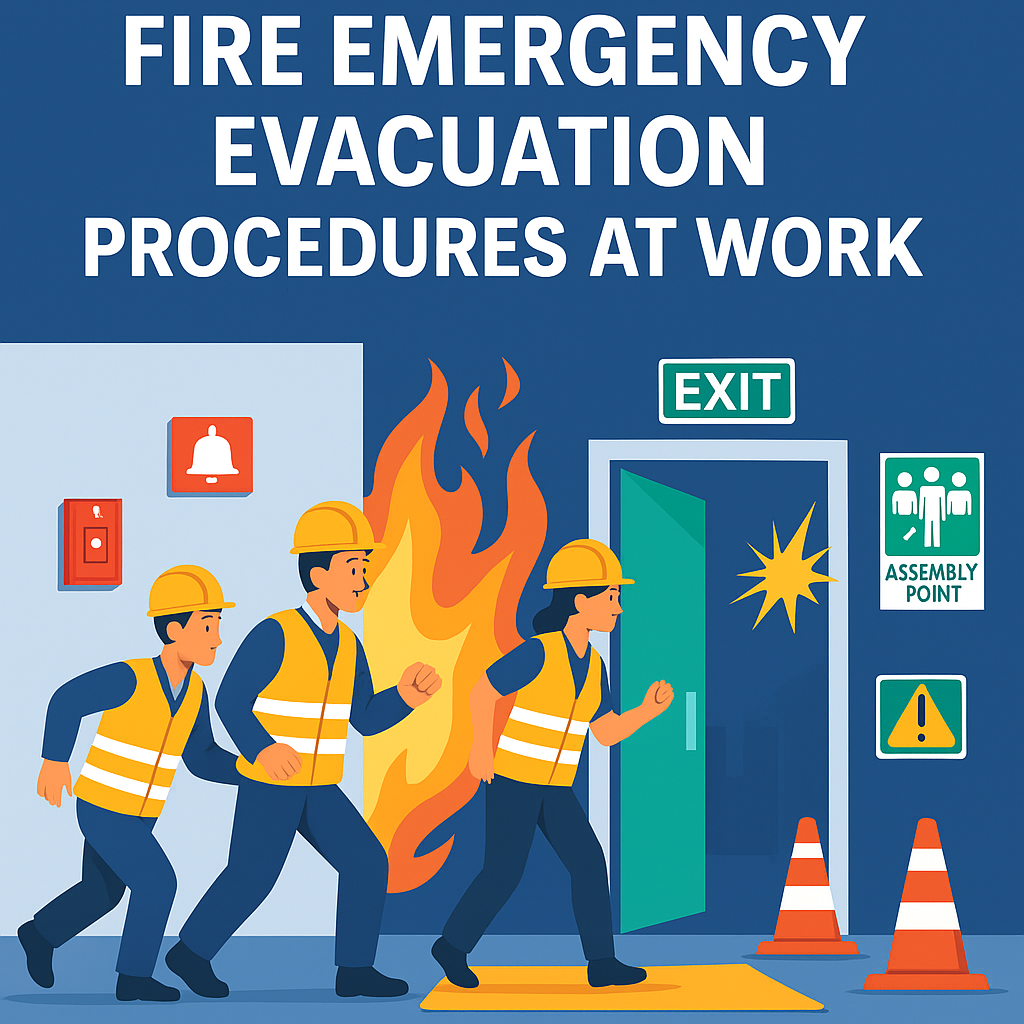
Fire Emergency Evacuation Procedures at Work
Fire emergencies can occur unexpectedly and escalate quickly, especially in workplaces where flammable materials, electrical equipment, or machinery are present. In such moments, safe and orderly evacuation is critical to saving lives. A well-planned and well-practiced fire evacuation procedure ensures that workers know exactly what to do and where to go during a fire emergency.
This guide explains the essential evacuation procedures, roles, and responsibilities during a fire incident in any workplace.
Objectives of Fire Emergency Evacuation
- Ensure everyone exits the building safely
- Prevent panic and confusion
- Provide clear instructions for escape
- Account for all personnel
- Coordinate with emergency responders
- Minimize casualties and injuries
Fire Evacuation: Step-by-Step Procedure
Step 1: Activate the Alarm
As soon as a fire or smoke is detected:
- Activate the nearest manual fire alarm switch (break glass)
- Automatic alarms may activate via smoke or heat detectors
The alarm alerts everyone to evacuate immediately.
Step 2: Stop Work Immediately
- Shut down machinery (if time permits)
- Do NOT collect personal belongings
- Do NOT waste time securing workstations
The priority is life safety.
Step 3: Evacuate Using the Nearest Safe Exit
Important Rules:
- Do NOT use elevators
- Use designated fire exits and staircases only
- Follow illuminated exit signs
- Walk quickly — do not run
Running can cause panic, falls, and injury.
Step 4: Follow Assigned Evacuation Routes
Evacuation routes must:
- Be clearly marked
- Be free of obstructions
- Have emergency lighting
- Lead to a safe assembly point outside
Step 5: Assist Others if Safe to Do So
Assist:
- Disabled individuals
- Visitors unfamiliar with the premises
- Injured persons
- Pregnant or elderly individuals
However, do not delay evacuation or endanger yourself.
Step 6: Proceed to the Assembly Point
Gather at the designated meeting area outside the workplace.
Assembly Point Rules:
- Stay together
- Do not leave the area
- Do not re-enter the building
- Wait for instructions from Fire Warden or Safety Officer
Step 7: Roll Call and Head Count
Fire Wardens or Supervisors verify:
- All employees are accounted for
- Visitor logs are checked
- Contractors are verified
- Anyone missing is reported immediately
Step 8: Do NOT Re-Enter Until Declared Safe
Only fire authorities or trained safety personnel may give clearance to re-enter the building.
Roles and Responsibilities During a Fire Evacuation
Fire Wardens
- Direct and lead evacuation
- Check rooms and restrooms
- Close doors to contain fire
- Report missing persons
- Communicate with safety and rescue teams
Employees
- Follow evacuation instructions
- Do not panic
- Do not return for personal belongings
- Assist others when possible
- Wait at assembly point
Visitors
- Must follow staff instructions
- Move quickly to exits
- Stay at assembly point
Security Personnel
- Assist with evacuation
- Secure high-risk areas
- Guide emergency responders
Emergency Response Team (ERT)
- Coordinate with fire department
- Provide first aid
- Manage accountability records
- Conduct post-evacuation evaluation
Common Mistakes to Avoid During Evacuation
- Running or pushing
- Using elevators
- Going back to retrieve items
- Blocking exits
- Going to the wrong assembly point
- Ignoring alarm signals (thinking it’s a drill)
- Re-entering prematurely
Fire Drills and Practice Evacuation
Fire drills should be conducted:
- Every 6 months (minimum)
- With full participation
- Without prior warning (sometimes)
These exercises help:
- Improve evacuation time
- Strengthen confidence
- Reduce panic and confusion
- Educate workers on emergency roles
Special Evacuation Considerations
High-rise buildings
- Use stairwells
- Evacuate in phases
- Follow floor wardens
Factories / Warehouses
- Stay clear of flammable storage areas
- Avoid machinery paths
Construction sites
- Move toward open space
- Avoid crane and equipment movement
Emergency Communication Protocol
- Alert Fire Department
- Use PA system or alarms
- Notify management
- Keep assembly point communication active
Clear information prevents chaos.
Fire Evacuation Signage and Instructions
Employers must ensure:
- Clear exit signs
- Assembly point signage
- Fire alarm instructions
- Posted evacuation maps
- Emergency contact lists
All must be visible and understandable.
Conclusion
Effective fire emergency evacuation procedures can save lives and prevent injury during a fire incident. Training, awareness, signage, leadership, and regular drills are essential to ensure calm, orderly, and efficient evacuation.
Fires do not allow time for thinking — only time for acting. Preparation is not optional — it is essential.
For checklist and templates visit The HSE Tools.
Types of Fire and Fire Extinguishers (A, B, C, D, K Explained)
First Aid Response for Electrical Shock Incidents
Fire Safety in Construction Sites – Prevention & Control
Common Construction Site Hazards and How to Control Them
The Role of Safety Committees in Workplace Safety
Frequently Asked Questions (FAQs)
1. Why are fire drills important?
They prepare workers for real emergencies and improve reaction speed.
2. What should I do if I hear a fire alarm?
Stop work immediately and evacuate using the nearest safe exit.
3. Can I use an elevator during a fire evacuation?
No — elevators may fail or trap people.
4. Who is responsible for roll call during evacuation?
Fire Wardens, Supervisors, or the Safety Officer.
5. What if I don’t see smoke or fire — should I still evacuate?
Yes — never ignore an alarm. All alarms must be treated as real.

Wavo that is very grateful knowledge about safety field