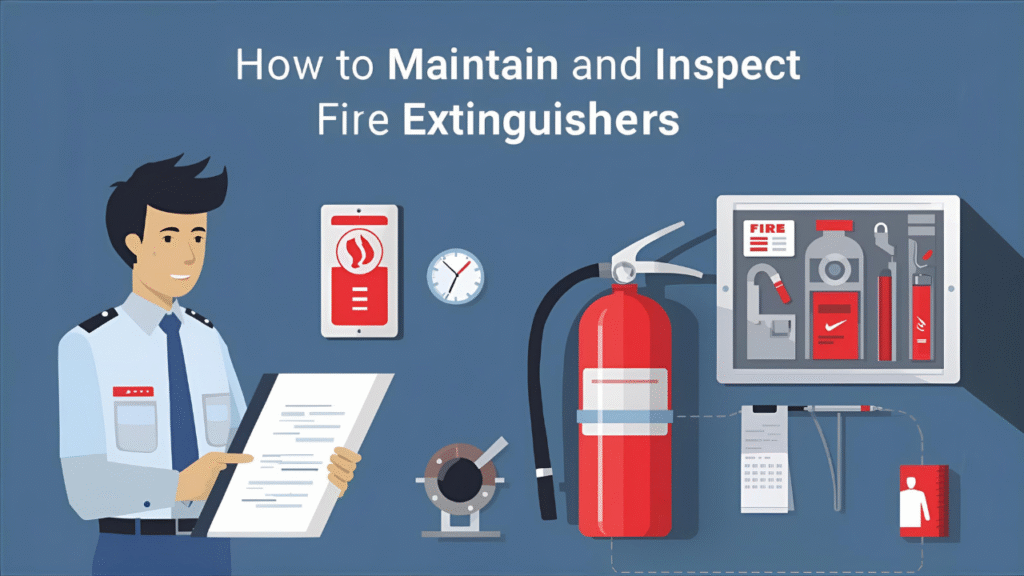
How to Maintain and Inspect Fire Extinguishers
A fire extinguisher is only useful if it works during an emergency. Unfortunately, many extinguishers fail due to poor maintenance, improper pressure, blocked nozzles, or expired agent. Regular fire extinguisher inspections and servicing ensure they remain ready to operate at any moment.
This guide explains how to check, maintain, and care for fire extinguishers according to fire safety standards and best industry practices.
Types of Fire Extinguishers and Their Maintenance Needs
Different extinguishers require different inspection and servicing:
- Water extinguisher — Class A fires
- Foam extinguisher — Class A, B
- CO₂ extinguisher — Class B, C
- Dry chemical (ABC or BC)
- Wet chemical extinguisher — Class K
Understanding type is important for correct handling and servicing.
Inspection Frequency
1. Monthly Visual Inspection (User-level)
By a trained worker or safety officer.
2. Annual Maintenance Check (Technician-level)
Performed by a certified fire service professional.
3. 5-Year or 10-Year Internal Testing (Hydrostatic Testing)
Checks cylinder integrity and pressure safety.
Monthly Fire Extinguisher Inspection Checklist
During monthly checks, verify:
1. Location
- Extinguisher is in designated visible spot
- Not blocked by furniture, equipment, or boxes
2. Physical Condition
- No dents, rust, cracks, or damage
- Safety pin is intact and sealed
3. Pressure Gauge Reading (if applicable)
- Needle in green zone — normal pressure
- Red zone — requires recharge or servicing
4. Nozzle Condition
- Free from dust, dirt, or obstructions
- No damage to hose or nozzle tip
5. Proper Label and Instructions
- Legible usage label
- Clear operating instructions
6. Weight Check
- Extinguisher is not lighter than expected (for powder or liquid)
7. Accessibility
- Mounted at correct height
- Handle reachable
8. Inspection Tag Recorded
- Date
- Inspector initials
Annual Servicing Requirements
Done by certified professionals:
- Pressure test
- Checking internal corrosion
- Refilling / recharging if necessary
- O-ring replacement
- Seal and tamper check
- Replacement of damaged parts
- Verification of correct extinguisher type per location
Documentation must be logged as per legal fire safety compliance.
Hydrostatic Testing (5–10 years)
This test ensures cylinder durability and safety.
Typical testing schedule:
- Water / Foam / Dry Chemical extinguishers — every 5 years
- CO₂ extinguishers — every 10 years
During the test:
- Cylinder is pressurized
- Checked for leaks or weakness
- If cylinder fails — extinguisher is discarded
Signs a Fire Extinguisher Needs Servicing or Replacement
- Needle in red zone
- Broken or missing safety pin
- Visible corrosion or leakage
- No inspection tag
- Expired manufacturer date
- Dry powder caked or blocked
- Lost pressure
- Damaged hose or handle
Proper Storage and Placement Guidelines
- Mount on wall at proper height
- Avoid placing directly on floor
- Keep near fire risk areas:
- electrical panels
- flammable storage
- kitchens
- workshops
- fuel areas
- Avoid high humidity or heat exposure
- Protect from direct sunlight
User Training: How to Use a Fire Extinguisher (PASS Method)
- P — Pull the pin
- A — Aim at base of fire
- S — Squeeze handle
- S — Sweep side to side
Training ensures extinguishers are used correctly during emergencies.
Legal and Compliance Requirements
Many jurisdictions require:
- Proper extinguisher placement
- Annual service
- Inspection labels
- Staff fire safety training
- Compliance with NFPA, OSHA, and local fire codes
Failure to comply can result in penalties.
Common Mistakes to Avoid
- Covering extinguishers with packaging
- Ignoring pressure indicator
- Using wrong extinguisher type
- Removing safety seals
- Storing extinguisher outdoors without cover
- Never shaking dry powder extinguishers (they compact over time)
Conclusion
Fire extinguishers are frontline fire defense devices — but only if properly maintained. Regular checks, servicing, correct storage, and user training ensure that extinguishers will function effectively when needed most.
A working fire extinguisher can save equipment, buildings, and lives — maintenance is a responsibility, not an option.
For checklist and templates visit The HSE Tools.
Fire Detection and Alarm Systems Explained
Common Fire Hazards in Industries and Their Controls
Importance of Fire Drills and Mock Drills
Fire Emergency Evacuation Procedures at Work
Steps to Conduct a Fire Risk Assessment
Frequently Asked Questions (FAQs)
1. How often should fire extinguishers be inspected?
Monthly visual checks and annual professional servicing.
2. What is hydrostatic testing?
A pressure test to ensure cylinder safety and structural integrity.
3. Who can service fire extinguishers?
Certified fire equipment technicians.
4. What should I do if a fire extinguisher is damaged?
Remove it from service immediately and replace or repair it.
5. Is employee training on extinguisher use required?
Yes — workplaces should provide fire safety and extinguisher training.
