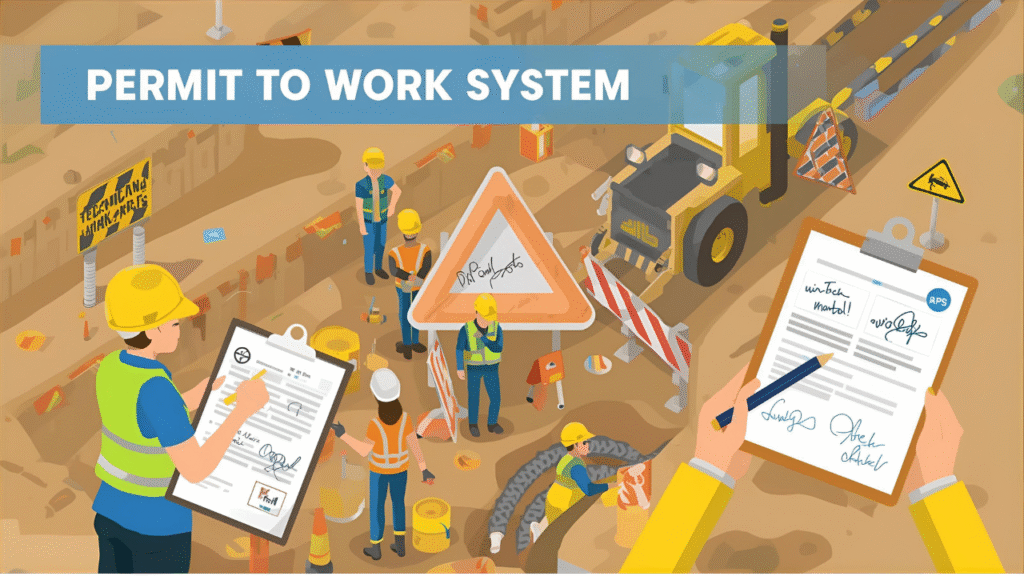
Permit to Work System in Excavation Activities
Excavation is one of the riskiest activities in construction, involving hazards like cave-ins, underground utilities, hazardous atmospheres, flooding, and equipment interactions. Because of these high-risk factors, most organizations and regulatory authorities mandate a formal Permit to Work (PTW) System before excavation begins.
A PTW ensures that the work is authorized, hazards are identified, controls are implemented, inspections are completed, and a competent person has approved the work area. This structured control mechanism significantly reduces risk and prevents excavation-related incidents and fatalities.
This comprehensive guide explains what a permit to work system is, its components, approval process, responsibilities, documentation, inspection requirements, and best-practice compliance procedures for excavation safety.
What is a Permit to Work System?
A Permit to Work system is a formal safety management procedure used to authorize high-risk tasks after evaluating and controlling associated hazards.
Purpose of PTW in Excavation
- Prevent accidents by ensuring hazard identification
- Provide structured authorization before digging
- Communicate risks to workers
- Verify competence of involved personnel
- Ensure excavation conditions and protective systems are compliant
- Maintain documented control and traceability
The PTW system does not replace safe work procedures. Rather, it supports and enforces them.
When is a Permit to Work Required for Excavation?
A PTW is required for excavation work when:
Excavation exceeds defined depth:
- In many jurisdictions: > 1.2 meters (4 feet)
- Some companies: > 1 meter
- In confined soil conditions: any depth
Proximity to underground utilities:
- Gas pipelines
- Electrical cables
- Sewer lines
- Fiber-optic infrastructure
Where soil instability or water presence exists
When heavy equipment is used near excavation
When excavation is adjacent to:
- Roads
- Foundations
- Existing structures
In contaminated or toxic soil zones
Wherever excavation begins — a PTW ensures that every factor is considered before digging starts.
Types of Permits Relevant to Excavation
Depending on site conditions, multiple PTWs may combine for excavation work:
Excavation Work Permit
Core permit — confirms authorization to dig.
Hot Work Permit
When welding or cutting occurs near trench.
Confined Space Permit
If excavation becomes deep, narrow, or oxygen-deficient.
Electrical Work Permit
When near underground cables.
Working at Heights Permit
For deep trenching requiring ladders or platforms.
Heavy Equipment Operation Permit
For excavators, backhoes, and machinery.
In complex operations, multiple permits overlap and require coordination.
Key Elements of an Excavation Permit
A valid excavation permit typically includes:
Work Details
- Location of excavation
- Work description
- Expected depth and dimensions
- Duration and start-end time
Hazard Identification
List of potential hazards:
- Cave-ins
- Utilities
- Flooding
- Gas hazards
- Vibration
- Equipment collision
- Falling objects
Risk Assessment
Evaluation of severity and likelihood.
Control Measures
Documented method to mitigate risks:
- Shoring
- Bench cutting
- Sloping
- Trench boxes
- Spoil management
- Barricading
Competent Person Declaration
Person responsible for trench inspection and safety.
Authorization Signatures
- Requestor
- Competent person
- Site supervisor
- HSE officer
- Project manager (in some organizations)
Responsibilities Within the Permit to Work System
Permit Applicant / Work Supervisor
- Requests permit before work
- Describes scope and duration
- Ensures workers are trained
- Executes work according to control measures
Competent Person
- Conducts soil classification
- Examines environmental conditions
- Inspects trench daily
- Has authority to stop work
HSE Officer or Safety Team
- Reviews hazard controls
- Verifies compliance
- Conducts site audits
- Ensures PTW process is followed
Permit Issuer / Authorized Approver
- Reviews job scope
- Ensures safety planning
- Grants final approval to start work
Workers
- Follow instructions
- Use required PPE
- Report hazards
- Do not enter excavation without PTW
A successful PTW system requires collaborative accountability.
The Permit-to-Work Workflow (Step-by-Step Process)
Step 1: Initiation
Work supervisor submits PTW request for excavation.
Step 2: Hazard Identification
Joint assessment by supervisor & competent person.
Step 3: Risk Evaluation
Control measures selected based on soil type, depth, utilities, etc.
Step 4: Documenting Controls
Checklist preparation:
- Protective systems
- Safety signage
- Access/egress
- Spoil pile placement
- Equipment clearance distances
Step 5: Permit Authorization
HSE officer verifies compliance and signs authorization.
Step 6: Pre-Work Safety Briefing
Mandatory Toolbox Talk before excavation begins.
Step 7: Excavation Work Execution
Workers follow approved procedure.
Step 8: Monitoring & Re-inspection
Daily and event-based inspections:
- After rainfall
- After vibration
- After soil disturbances
Step 9: Closure or Renewal
If work is:
- Finished — permit is closed
- Interrupted — permit is suspended
- Extended — permit must be renewed
Soil Examination and Environmental Testing Requirements
Competent person tests soil for:
- Cohesiveness
- Moisture content
- Bursting and compressive strength
Environmental Conditions Assessed
- Weather
- Ground moisture
- Vibration
- Traffic load
- Seepage or groundwater flow
If conditions change, permit must be re-validated.
Control Measures That Must Be Verified Before Permit Approval
Access and Egress
- Ladder every 7.5 m (25 ft)
- Proper ramp or stair setup
Spoil Pile Placement
- Minimum 2 ft from trench edge
Protective Systems Installed
- Shoring
- Benching
- Sloping
- Trench boxes
Utility Marking
Use of:
- Grid maps
- Cable locators
- Utility coordination
Barricading and Signage
- Hard barriers
- Warning signs
- Safety tape
Atmospheric Safety
Gas testing when required.
Lighting and Visibility
Essential for night operations.
Documentation and Record Keeping
A PTW must be:
- Written
- Dated
- Signed
- Filed appropriately
Records serve as compliance evidence and legal documentation.
Retention times vary:
- Some companies: 1 year
- Others: 5 years or more
- Major incidents: indefinitely
Common Failures in Permit-to-Work Systems
Over-reliance on paperwork
Permit exists, but field conditions ignored.
Superficial hazard evaluation
Checklist ticked, no real inspection.
Failure to communicate conditions
Workers unaware of permit constraints.
Expired or unrenewed PTW
Work continues after authorization expires.
No follow-up inspections
Soil conditions change — no response.
Inadequate training
Workers don’t understand roles.
A PTW is only effective when implementation matches documentation.
Benefits of Implementing a Strong Permit to Work System
- Reduces excavation accidents
- Prevents underground utility strikes
- Enhances hazard awareness
- Promotes accountability
- Ensures regulatory compliance
- Improves communication
- Builds safety culture
- Protects lives and property
PTW is not bureaucracy — it is engineered risk control.
Integration with Other Safety Management Systems
The PTW integrates with:
- Job Safety Analysis (JSA)
- HIRA (Hazard Identification & Risk Assessment)
- Toolbox Talks
- Emergency rescue planning
- Incident reporting & investigation
- Training programs
Conclusion
Excavation work is inherently dangerous due to unpredictable soil behavior, underground infrastructure, and dynamic field conditions. A Permit to Work system is a structured, legally recognized process that ensures all hazards are considered, controls are implemented, and work has been properly authorized. When implemented properly — backed by training, competence, inspections, and continuous monitoring — the PTW system becomes a powerful tool that safeguards workers and assures safe excavation operations.
No excavation job should begin without a signed, verified, and communicated permit.
For checklist and templates visit The HSE Tools.
Shoring, Sloping and Benching: Protective Systems Explained
Soil Classification and Testing for Excavation Safety
Excavation Hazards and Their Control Measures
What Is Excavation Work? Definition, Types, and Safety Controls
Excavation Safety Interview: 50 Questions and Sample Answers
FAQs
1. Who authorizes an excavation permit to work?
Typically the HSE officer and authorized site manager approve it after proper inspection.
2. How long is an excavation permit valid?
Usually for one shift or one working day unless specified otherwise.
3. Can work continue if conditions change after permit issue?
No. The permit must be re-evaluated and re-approved.
4. Is a PTW needed for shallow excavations?
Yes — if conditions are risky, utilities exist nearby, or company policy requires it.
5. What happens if excavation is done without a permit?
It constitutes a safety violation and may result in disciplinary action, accident, or legal liability.

It is very beneficial for safety officer