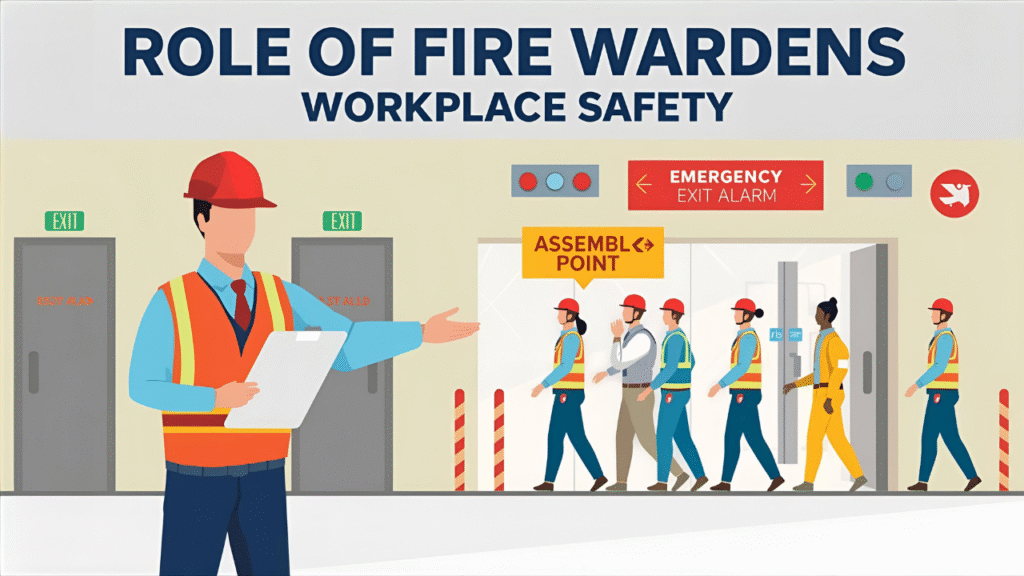
Role of Fire Wardens in Workplace Safety
Fire emergencies are unpredictable but can be managed effectively with proper planning and leadership. A key figure in workplace fire safety is the Fire Warden, who plays a critical role in ensuring safe and efficient evacuation during emergencies. Their presence reduces confusion, speeds up evacuation, and saves lives.
This guide explains who fire wardens are, what they do, and why every workplace must have them.
What Is a Fire Warden?
A Fire Warden is a trained employee appointed to support fire prevention and emergency response. They coordinate evacuation, communicate instructions, identify hazards, and help ensure workplace fire safety readiness.
Key Responsibilities of a Fire Warden
1. Monitoring Fire Hazards
Fire wardens regularly check for:
- Blocked fire exits
- Overloaded sockets
- Flammable storage issues
- Faulty extinguishers
- Unsafe hot work
- Obstructed access routes
They help prevent fire incidents before they occur.
2. Ensuring Emergency Preparedness
Fire wardens:
- Review evacuation plans
- Check emergency signage
- Confirm alarm audibility
- Verify extinguishers are accessible
- Ensure safety equipment is maintained
3. Leading Fire Drills
Fire wardens coordinate and evaluate drills by:
- Guiding staff
- Assessing evacuation times
- Identifying bottlenecks
- Providing post-drill feedback
Regular drills develop safety awareness and reduce panic.
4. Guiding Safe Evacuation During Emergencies
In a real fire incident, fire wardens:
- Direct people to nearest safe exit
- Prevent use of elevators
- Keep people calm
- Assist injured or disabled individuals
- Ensure no re-entry
- Follow evacuation routes
5. Accounting for Personnel
At the assembly point, wardens:
- Conduct roll call
- Check attendance lists
- Identify missing persons
- Report to emergency services
This is essential for rescue efforts.
6. Using Firefighting Equipment (If Safe to Do So)
Fire wardens are trained in:
- PASS method for extinguisher use
- Identifying fire types
- Knowing when not to attempt firefighting
Their priority is life safety, not property protection.
7. Liaising With Emergency Services
Upon fire department arrival, wardens provide:
- Building layout info
- Fire location
- Missing persons list
- Hazard areas
- Electrical shut-off points
- Fuel or gas storage locations
This speeds up emergency response.
8. Training and Awareness
Wardens help educate staff in:
- Alarm procedures
- Evacuation routes
- Extinguisher basics
- Fire behavior awareness
- General safety culture
Fire Warden Qualifications and Training
Effective fire wardens must receive professional training covering:
- Fire science basics
- Fire extinguisher use
- Evacuation leadership
- Risk identification
- Communication skills
- Emergency first aid
- Disabled person assistance
How Many Fire Wardens Are Required?
General guideline:
- Low-risk workplaces: 1 fire warden per 20 people
- High-risk workplaces: 1 fire warden per 10 people
Additional wardens required for:
- Multiple floors
- Shift work
- Large facilities
- High-risk areas (kitchens, workshops, electrical rooms)
Attributes of an Effective Fire Warden
A strong fire warden must be:
- Calm under pressure
- Responsible
- Physically capable
- Good communicator
- Knowledgeable about site layout
- Respected by colleagues
- Observant and proactive
Limitations of a Fire Warden
A fire warden is not:
- A firefighter
- A rescue specialist
- A fire engineer
- A medical professional
Their role is coordination and control, not high-risk intervention.
Why Fire Wardens Are Essential
Fire wardens:
- Reduce panic
- Provide trusted leadership
- Speed up evacuation
- Save lives
- Enhance fire safety culture
- Support emergency services
Without wardens, evacuation can be chaotic and dangerous.
Conclusion
Fire wardens are indispensable for workplace fire safety. They ensure prevention, preparedness, calm leadership, and coordinated response during emergencies. By training fire wardens and recognizing their importance, workplaces can dramatically reduce fire-related risks and improve safety outcomes.
Fire wardens don’t just manage emergencies — they build a safer workplace every day.
For checklist and templates visit The HSE Tools.
How to Maintain and Inspect Fire Extinguishers
Fire Detection and Alarm Systems Explained
Common Fire Hazards in Industries and Their Controls
Importance of Fire Drills and Mock Drills
Fire Emergency Evacuation Procedures at Work
Frequently Asked Questions (FAQs)
1. Do all workplaces need fire wardens?
Yes, every workplace must have trained fire wardens according to fire safety regulations.
2. Can anyone volunteer to be a fire warden?
Yes, but they must undergo proper training.
3. How often should fire wardens be trained?
Training should be refreshed annually or whenever procedures change.
4. Are fire wardens allowed to fight fires?
Only small, manageable fires — and only if it is safe to do so.
5. What if the fire warden is absent during an emergency?
Backup or deputy fire wardens must be assigned for all shifts and areas.
