 Skip to content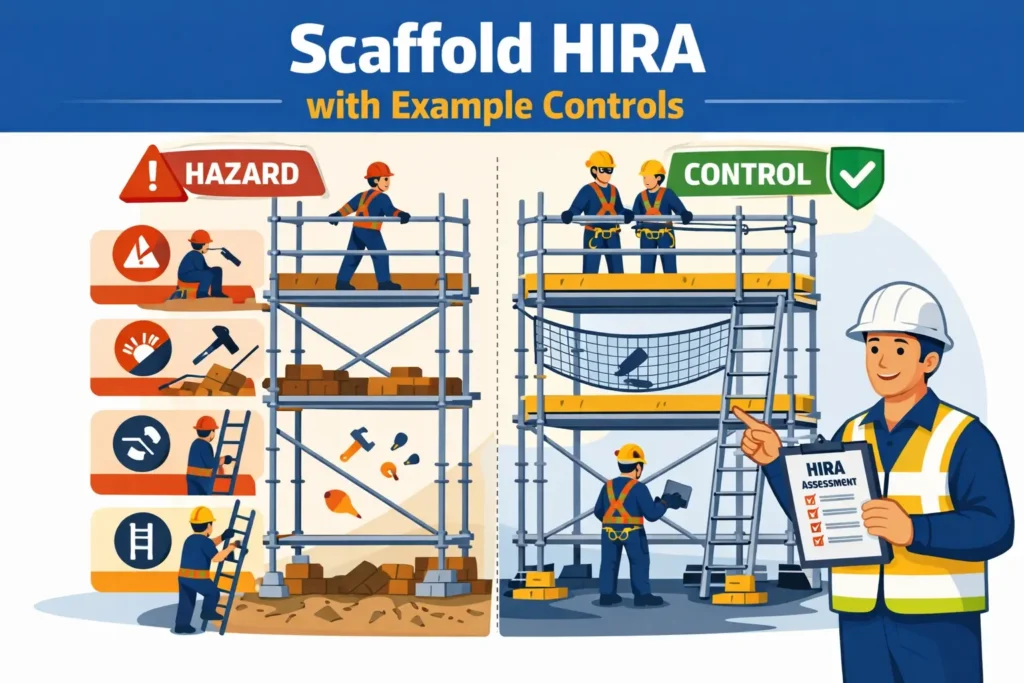
Scaffold HIRA with Example Controls
Scaffolding is one of the most common and high-risk activities in construction and industrial environments. While scaffolds provide essential access for working at height, they also introduce serious hazards such as falls, collapse, falling objects, and electrical contact. Many scaffold-related accidents occur because hazards are not identified in advance or risks are not adequately controlled.
A Scaffold HIRA (Hazard Identification and Risk Assessment) is a structured process used to identify potential hazards at each stage of scaffolding work and apply effective control measures before work begins. A well-prepared HIRA not only prevents accidents but also ensures compliance with legal and organizational safety requirements.
This article explains how to conduct a Scaffold HIRA step by step and provides practical example controls for common scaffolding hazards.
What Is Scaffold HIRA?
Scaffold HIRA is a systematic process used to:
- Identify hazards associated with scaffolding work
- Assess the risk level of each hazard
- Implement control measures to reduce risk
- Review and monitor safety effectiveness
It applies to all phases of scaffolding work, including:
- Erection
- Use
- Inspection
- Modification
- Dismantling
Scaffold HIRA is a critical component of work-at-height safety management.
Why Scaffold HIRA Is Essential
Scaffold HIRA is essential because:
- Scaffolding hazards are often severe or fatal
- Conditions change daily on scaffolds
- Multiple workers are exposed simultaneously
- Work at height requires strict controls
- Legal regulations mandate risk assessments
Without a proper HIRA, scaffolding work becomes unpredictable and dangerous.
Legal and Compliance Requirements for Scaffold HIRA
Most safety regulations require risk assessments for scaffolding activities, including:
- Construction safety rules
- Work at Height Regulations
- OSHA scaffolding standards
- Factory and building safety acts
- ISO 45001 safety management systems
Failure to conduct a Scaffold HIRA can lead to legal penalties, site shutdowns, and serious injuries.
When Should Scaffold HIRA Be Conducted
Scaffold HIRA must be conducted:
- Before scaffold erection
- Before first use
- Before modification or extension
- After changes in site conditions
- After incidents or near misses
A HIRA must be reviewed whenever conditions change.
Steps to Conduct Scaffold HIRA
Step 1: Define the Scaffolding Activity
Clearly define the scope of work, such as:
- Type of scaffold
- Height and location
- Duration of use
- Nature of work (masonry, painting, maintenance)
Clear definition helps identify relevant hazards.
Step 2: Identify Scaffolding Hazards
Hazards must be identified for each stage of work.
Structural Hazards
- Weak or unstable foundations
- Missing or damaged components
- Inadequate bracing
- Overloading
Fall Hazards
- Missing guardrails or toe boards
- Unsafe platforms
- Unprotected edges
- Improper fall protection
Access and Egress Hazards
- Unsafe ladders
- Climbing scaffold frames
- Blocked access routes
Falling Object Hazards
- Tools or materials dropping from height
- No toe boards or debris nets
Environmental Hazards
- Wind
- Rain
- Slippery surfaces
- Poor visibility
Electrical and External Hazards
- Overhead power lines
- Moving equipment near scaffolds
Human and Organizational Hazards
- Untrained workers
- Poor supervision
- Unauthorized modifications
Step 3: Identify Persons at Risk
Persons at risk may include:
- Scaffolders
- Workers using the scaffold
- Workers below the scaffold
- Supervisors and inspectors
- Visitors or the public
Understanding exposure helps prioritize controls.
Step 4: Assess Risk Level
Each hazard must be evaluated based on:
- Likelihood of occurrence
- Severity of injury
Risk levels are commonly classified as:
- Low
- Medium
- High
- Extreme
Most scaffolding hazards fall under high or extreme risk, requiring strong controls.
Step 5: Apply Control Measures Using Hierarchy of Controls
Control measures must follow the hierarchy:
Elimination
- Avoid scaffold use where possible
- Perform work from ground level
Substitution
- Use MEWPs instead of scaffolds
- Use prefabricated components
Engineering Controls
- Guardrails and toe boards
- Stable foundations
- Proper bracing and ties
Administrative Controls
- Permit to Work system
- Safe work procedures
- Training and supervision
Personal Protective Equipment
- Helmets with chin straps
- Full-body harnesses
- Safety footwear
PPE is always the last line of defense.
Scaffold HIRA with Example Hazards and Controls
Hazard: Unstable Scaffold Foundation
Risk
Scaffold collapse leading to falls and injuries.
Example Controls
- Prepare and level ground
- Use sole boards and base plates
- Inspect foundations daily
- Prohibit erection on soft or waterlogged soil
Hazard: Missing Guardrails
Risk
Workers falling from open edges.
Example Controls
- Install top and mid guardrails on all platforms
- Use advance guardrail systems during erection
- Prohibit use of incomplete scaffolds
Hazard: Unsafe Working Platforms
Risk
Slips, trips, and falls.
Example Controls
- Fully deck platforms
- Secure planks properly
- Replace damaged planks
- Maintain good housekeeping
Hazard: Falling Objects from Scaffold
Risk
Head injuries or fatalities to workers below.
Example Controls
- Install toe boards and debris nets
- Use tool lanyards
- Barricade area below scaffold
Hazard: Overloading of Scaffold Platforms
Risk
Structural failure or collapse.
Example Controls
- Display load rating signage
- Limit material storage
- Train workers on load limits
- Conduct daily inspections
Hazard: Unsafe Access to Scaffold
Risk
Falls during climbing.
Example Controls
- Provide secured ladders or stair towers
- Prohibit climbing on frames
- Keep access routes clear
Hazard: Working Near Power Lines
Risk
Electrocution.
Example Controls
- Maintain safe clearance distances
- Install warning signage
- De-energize lines where possible
Hazard: Adverse Weather Conditions
Risk
Slips, loss of balance, structural instability.
Example Controls
- Monitor weather forecasts
- Suspend work during rain or high winds
- Re-inspect scaffold after storms
Hazard: Untrained Scaffolders
Risk
Incorrect erection and unsafe modifications.
Example Controls
- Use trained and competent scaffolders
- Provide regular refresher training
- Supervise all scaffolding activities
Hazard: Unauthorized Scaffold Modification
Risk
Loss of structural integrity.
Example Controls
- Prohibit unauthorized changes
- Implement scaffold tagging system
- Educate workers on dangers
Documentation of Scaffold HIRA
Scaffold HIRA documentation should include:
- Activity description
- Identified hazards
- Risk rating
- Control measures
- Responsible persons
- Review date
Proper documentation ensures accountability and compliance.
Monitoring and Review of Scaffold HIRA
Scaffold HIRA must be reviewed:
- Daily for active scaffolds
- After modifications
- After incidents or near misses
- After weather changes
Regular review keeps risk controls effective.
Role of Safety Officers in Scaffold HIRA
Safety officers must:
- Prepare or review scaffold HIRA
- Verify control measures
- Conduct audits and inspections
- Stop unsafe work
Their involvement is critical for effective implementation.
Integration of Scaffold HIRA with Permit to Work
For high-risk scaffolding work:
- Scaffold HIRA must support Permit to Work approval
- Permit should reference control measures
- Work should stop if HIRA conditions are violated
Common Mistakes in Scaffold HIRA
- Generic assessments
- Ignoring environmental factors
- Over-reliance on PPE
- Poor communication to workers
- Failure to review HIRA
Avoiding these mistakes improves safety outcomes.
Best Practices for Effective Scaffold HIRA
- Conduct site-specific assessments
- Involve scaffolders and supervisors
- Prioritize collective protection
- Review HIRA regularly
- Train workers on hazards and controls
Conclusion
A Scaffold HIRA with example controls is one of the most effective tools for preventing scaffold-related accidents. By systematically identifying hazards and applying appropriate control measures, organizations can significantly reduce the risks associated with scaffolding work.
Scaffold safety does not happen by chance — it is achieved through planning, assessment, supervision, and continuous monitoring. A strong Scaffold HIRA turns a high-risk activity into a controlled and safe operation.
To help you implement scaffold HIRAs more effectively, you can use ready-to-use scaffold risk assessment checklists and HIRA documentation templates from The HSE Tools to record hazards, risks, and control measures in a structured format.
Tagging System in Scaffold Safety (Green, Yellow, Red)
Safe Load Limits for Scaffolding Platforms
Common Scaffolding Hazards and Control Measures
Daily Scaffold Inspection Checklist for Safety Officers
Scaffolding Erection and Dismantling Procedure
FAQs
1. What is Scaffold HIRA?
A hazard identification and risk assessment process for scaffolding activities.
2. Who prepares Scaffold HIRA?
A competent safety officer or supervisor.
3. Is Scaffold HIRA mandatory?
Yes, for all scaffolding activities involving work at height.
4. How often should Scaffold HIRA be reviewed?
Whenever conditions change or periodically during work.
5. Can PPE alone control scaffold risks?
No, PPE must be combined with engineering and administrative controls.
