 Skip to content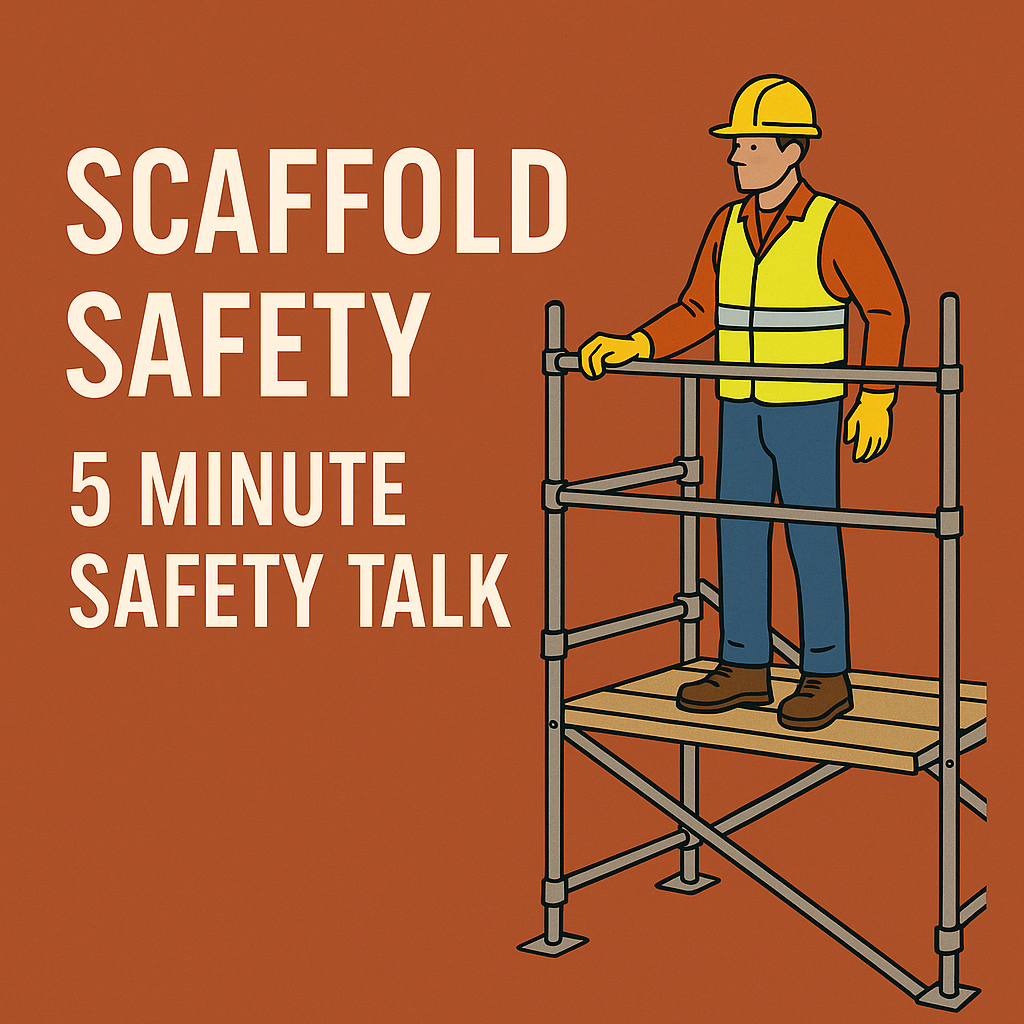
Scaffold Safety 5 Minute Safety Talk
Good morning team,
Today’s safety talk is about a structure we use almost every day on site—scaffolding. Scaffolds help us reach work at heights safely, but when not used properly, they can become one of the most dangerous elements on site.
Falls from scaffolds are a leading cause of serious injuries and fatalities in construction. Most of these incidents are preventable when proper scaffold safety rules are followed.
Let’s take 5 minutes to go over the basics of scaffold safety and how we can protect ourselves and our teammates.
Why Scaffold Safety Is Critical
Here’s what can go wrong when scaffold safety is ignored:
- Falls from height due to missing guardrails or faulty planks
- Collapse of the scaffold structure
- Falling tools and materials hitting workers below
- Electrocution from scaffolds placed too close to power lines
- Slips and trips on wet or cluttered platforms
A scaffold is not just a platform—it’s a potential hazard if not used correctly.
Types of Scaffolds Commonly Used
- Tube and coupler scaffolds
- System scaffolds (modular)
- Suspended scaffolds
- Mobile tower scaffolds
- Cantilever scaffolds
Each type has different setup and safety requirements, but all must be secure, inspected, and used properly.
Scaffold Safety Rules to Follow
- Only trained personnel should erect, modify, or dismantle scaffolds
- Scaffolds must be inspected daily and before each shift
- Guardrails, toe boards, and mid-rails must be in place
- Never climb on scaffold frames—use ladders or stair access
- Keep platforms clear of debris, tools, and materials
- Always use personal fall protection when required
- Scaffolds must be built on stable, level ground
- Do not exceed the weight limit—this includes people, tools, and materials
PPE Required for Scaffold Work
When working on or around scaffolds, wear:
- Hard hats to protect from falling objects
- Non-slip footwear
- Fall arrest harness when required
- High-visibility clothing
- Gloves for grip and protection
PPE is your last line of defense—don’t skip it.
What NOT to Do on a Scaffold
- Don’t work on a scaffold in bad weather (rain, high wind)
- Don’t move mobile scaffolds with people on them
- Don’t use boxes or ladders on top of scaffolds to reach higher
- Don’t lean too far out over the edge
- Don’t assume it’s safe just because it looks okay—inspect it
Load Limits and Stability
- Know the scaffold’s maximum load capacity—never exceed it
- Distribute loads evenly across the platform
- Use base plates, mud sills, and ties to stabilize the scaffold
- Secure materials and tools to prevent items from falling
If a scaffold feels shaky or overloaded—get off and report it immediately.
Scaffold Safety Checklist
- Is the scaffold erected and inspected by a competent person?
- Are guardrails and toe boards in place?
- Is the platform free of obstructions and dry?
- Is fall protection available and being used?
- Are ladders or access points secure?
If you answered “no” to any of the above—stop work.
Real-Life Example
A construction worker stepped onto a scaffold without checking its stability. A plank had come loose and was not secured. He fell 15 feet, breaking his leg and suffering spinal injuries.
The scaffold had not been inspected that morning. One missed check resulted in months of recovery.
Everyone Has a Role in Scaffold Safety
- Workers must follow procedures and report unsafe conditions
- Supervisors must ensure inspections are done daily
- Safety officers must train and monitor scaffold use
- Scaffold erectors must comply with regulations and best practices
Safety is everyone’s responsibility.
Conclusion
Scaffolds are tools—not shortcuts. They must be treated with the same respect and caution as any high-risk equipment on site.
So before you step up:
- Inspect it
- Wear your PPE
- Keep it clean
- Use it correctly
- Never assume—it’s safe only if proven safe
Because the only thing worse than falling from a height is knowing it could’ve been prevented.
Chemical Handling 5 Minute Safety Talk
Hot Work Safety 5 Minute Safety Talk
Working at Height 5 Minute Safety Talk
Safe Lifting Techniques 5 Minute Safety Talk
Slips Trips and Falls 5 Minute Safety Talk
5 Unique FAQs
Q1: Do I need a harness on a scaffold with guardrails?
Not always, but some sites and jurisdictions require both. Check your site rules.
Q2: Who is allowed to erect or alter scaffolding?
Only trained and authorized scaffold erectors.
Q3: Can I work on a scaffold during rain?
It’s not safe. Wet platforms increase the risk of slips and falls. Wait until it’s dry.
Q4: How often should scaffolds be inspected?
At least daily and before each shift. Also after bad weather or any changes.
Q5: What if the scaffold I’m working on feels shaky?
Stop work immediately and report it. Do not take chances.
