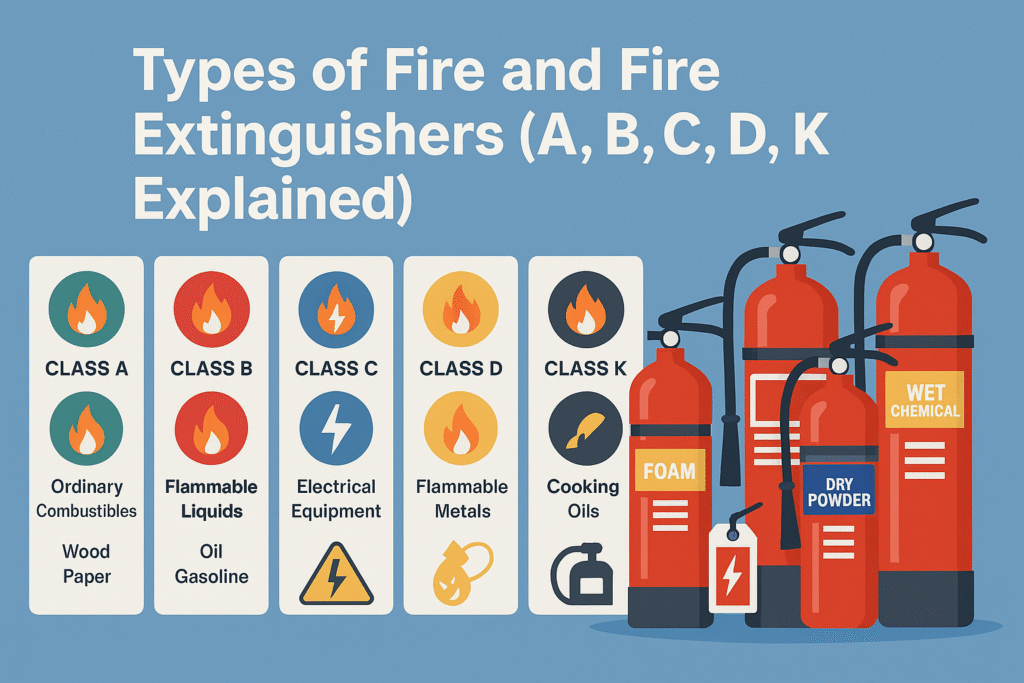
Types of Fire and Fire Extinguishers (A, B, C, D, K Explained)
Not all fires are the same — and not all fire extinguishers work on every type of fire. Using the wrong extinguisher can make a fire worse or even cause an explosion.
This guide clearly explains the five major fire classes (A, B, C, D, K) and the correct extinguisher to use for each.
Whether you are a safety officer, HSE student, supervisor, or worker — this knowledge is essential for fire emergency response.
Fire Classification Overview
Before choosing an extinguisher, you must correctly identify the type of fire.
The classes are:
- Class A — Ordinary combustibles
- Class B — Flammable liquids
- Class C — Electrical fires
- Class D — Metal fires
- Class K — Kitchen & cooking oil fires
Each type of fire requires a different firefighting method.
Class A Fire – Ordinary Combustibles
Examples:
- Wood
- Paper
- Cloth
- Rubber
- Plastic
- Furniture
Best Extinguisher: Water & Foam
Extinguishers Suitable:
- Water extinguishers
- Foam extinguishers
- Dry chemical (ABC)
How It Works:
Water cools the fuel below ignition temperature.
Do NOT Use:
- CO₂ (less effective)
- Dry powder (not ideal)
Class B Fire – Flammable Liquids
Examples:
- Oil
- Petrol
- Diesel
- Paint
- Thinner
- Kerosene
- Grease
Best Extinguisher: Foam or CO₂
Extinguishers Suitable:
- Foam extinguishers
- CO₂ extinguishers
- Dry chemical (ABC or BC)
How It Works:
- Foam smothers the fire
- CO₂ removes oxygen
Do NOT Use:
- Water extinguisher — may spread the burning liquid
Class C Fire – Electrical Fires
Examples:
- Short circuits
- Overheated wiring
- Energized electrical panels
- Electric motors
- Switchgear
- Electrical appliances
Best Extinguisher: CO₂ or Dry Powder
Extinguishers Suitable:
- CO₂
- Dry chemical powder (ABC or BC)
How It Works:
- CO₂ displaces oxygen without leaving residue
- Dry powder interrupts the chemical reaction
Do NOT Use:
- Water extinguisher
- Foam extinguisher
They conduct electricity and increase risk of electrocution.
Class D Fire – Flammable Metals
Examples:
- Magnesium
- Lithium
- Titanium
- Sodium
- Potassium
- Aluminum dust
These fires occur in laboratories, metal foundries, and manufacturing.
Best Extinguisher: Dry Powder (Metal Grade – Class D)
How It Works:
Powder isolates oxygen and prevents reaction with air.
Do NOT Use:
- CO₂
- Water
These can react violently with burning metals.
Class K Fire – Cooking Oils & Grease
Primarily kitchen-related fires.
Examples:
- Cooking oil
- Animal fat
- Vegetable oil
- Deep fryer fires
Best Extinguisher: Wet Chemical Extinguisher
How It Works:
Wet chemical converts burning oil into a soap-like substance (saponification), cooling and sealing the surface.
Do NOT Use:
- Water — causes explosive spread of burning oil
- CO₂ — ineffective
- Powder — may not prevent re-ignition
Fire Extinguisher Types Explained
Water Extinguishers
Used For:
Class A fires
Do NOT Use For:
B, C, D, or K
Foam Extinguishers
Used For:
Class A and B
Do NOT Use For:
Class C or D
Dry Chemical Powder Extinguishers
- ABC type — Most universal
- BC type — For flammable liquids and electrical fires
- Class D powder — For metal fires
Used For:
A, B, C (ABC type)
CO₂ Extinguishers
Used For:
Class B and C
Do NOT Use For:
Class A or D
Advantages:
- Leaves no residue
- Does not damage electrical equipment
Wet Chemical Extinguishers
Used For:
Class K (Kitchen fires)
Sometimes Also Effective For:
Class A (solid combustibles)
How to Use a Fire Extinguisher (PASS Method)
P — Pull the pin
Breaks the tamper seal.
A — Aim at the base of the fire
Not the flames.
S — Squeeze the handle
Releases extinguishing agent.
S — Sweep side to side
Cover the entire fire area.
Safety Precautions During Firefighting
- Raise the alarm immediately
- Assess fire situation
- Only attempt extinguishing if safe
- Maintain safe exit route
- Never turn your back to fire
- If fire grows — evacuate, do NOT fight
Fire Extinguisher Maintenance and Inspection
Monthly Checks:
- Pressure gauge
- Safety pin
- Seal intact
- Rust or damage
- Nozzle obstruction
Annual Professional Inspection Required
Recharging Required After Use
Conclusion
Understanding fire types and choosing the correct extinguisher is critical for proper emergency response. Using the wrong extinguisher can worsen the fire — or endanger the responder. Correct fire classification and equipment knowledge empower workers, safety professionals, and building occupants to act safely and effectively.
Fire safety should always start with awareness, prevention, and correct preparedness.
For checklist and templates visit The HSE Tools.
First Aid Response for Electrical Shock Incidents
Fire Safety in Construction Sites – Prevention & Control
Common Construction Site Hazards and How to Control Them
The Role of Safety Committees in Workplace Safety
How to Conduct a Basic Safety Induction for New Employees
Frequently Asked Questions (FAQs)
1. What extinguisher should be used for electrical fires?
CO₂ or Dry Powder.
2. Can water be used for oil or petrol fires?
No — it will spread the burning liquid.
3. Which extinguisher is best for kitchen fires?
Wet Chemical (Class K).
4. Can one extinguisher work for all fires?
ABC dry chemical extinguisher is closest — but not suitable for metal or Class K fires.
5. How often should fire extinguishers be inspected?
Monthly visual checks and annual professional servicing.
