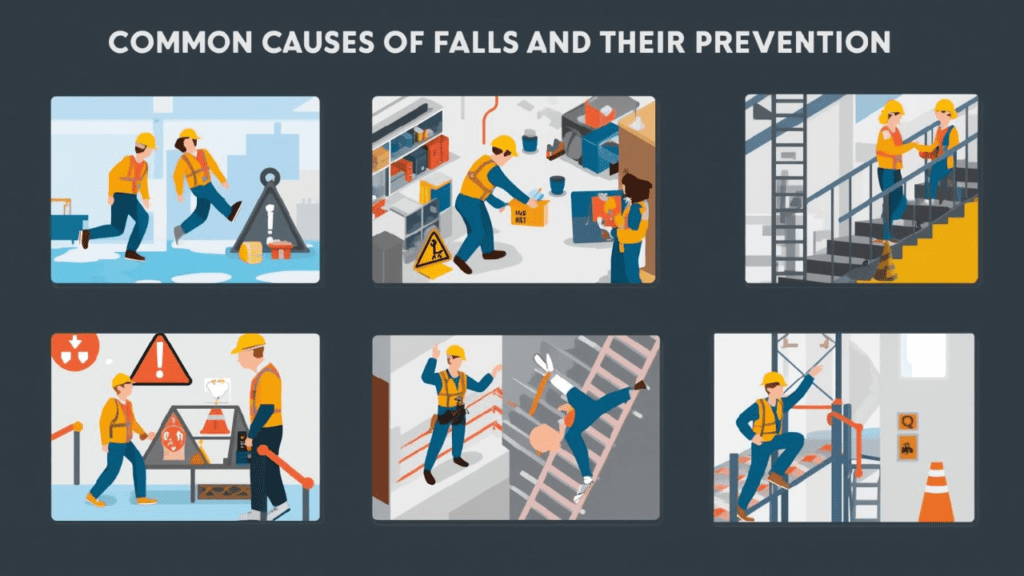
Common Causes of Falls and Their Prevention
Falls are one of the leading causes of workplace injuries and fatalities worldwide. From simple slips on wet floors to deadly falls from height, fall-related incidents affect workers across industries such as construction, manufacturing, oil & gas, warehousing, healthcare, and offices.
What makes falls especially dangerous is that many of them occur during routine tasks — walking, climbing ladders, accessing platforms, or carrying materials. In most cases, falls are completely preventable when hazards are identified early and proper control measures are implemented.
This article explains the common causes of falls, categorizes different types of fall hazards, and provides practical prevention measures that organizations and workers can apply to reduce fall-related accidents.
Understanding Falls in the Workplace
A fall occurs when a person unintentionally comes to rest on the ground, floor, or a lower level. Falls are generally classified into three main categories:
- Slips
- Trips
- Falls from height
Each category has different causes but often shares common contributing factors such as poor housekeeping, unsafe behavior, inadequate training, or lack of proper safety systems.
Why Fall Prevention Is Critical
Falls can result in:
- Fatal injuries
- Head trauma
- Spinal injuries
- Fractures
- Long-term disability
- Loss of productivity
- Legal and financial consequences
According to safety statistics, a large percentage of serious injuries occur due to falls — especially in construction and maintenance activities. Preventing falls protects workers’ lives and strengthens overall safety culture.
Common Causes of Slips and Their Prevention
Slips occur when there is insufficient friction between footwear and the walking surface.
Wet or Slippery Surfaces
Common Causes
- Water spills
- Oil or grease leaks
- Cleaning activities
- Rainwater entry
- Ice or mud
Prevention Measures
- Clean spills immediately
- Use absorbent materials
- Install non-slip flooring
- Place warning signs during cleaning
- Ensure proper drainage
- Use slip-resistant footwear
Poor Floor Conditions
Common Causes
- Uneven flooring
- Damaged tiles
- Loose mats
- Worn-out surfaces
Prevention Measures
- Repair damaged floors promptly
- Secure mats and carpets
- Conduct routine floor inspections
- Replace worn flooring materials
Inadequate Footwear
Common Causes
- Smooth-soled shoes
- Improper footwear for the task
Prevention Measures
- Enforce use of slip-resistant safety shoes
- Match footwear to work environment
- Replace worn-out soles
Common Causes of Trips and Their Prevention
Trips occur when a person’s foot strikes an object, causing loss of balance.
Poor Housekeeping
Common Causes
- Tools left on walkways
- Scrap materials on floors
- Cables and hoses across paths
Prevention Measures
- Maintain clean and clear walkways
- Implement housekeeping schedules
- Use cable trays or covers
- Store tools properly
Obstructed Walkways
Common Causes
- Improper material storage
- Temporary structures
- Poor layout design
Prevention Measures
- Clearly mark walkways
- Provide adequate storage areas
- Remove unnecessary obstructions
- Maintain clear access routes
Poor Lighting
Common Causes
- Insufficient lighting
- Burnt-out bulbs
- Shadows in stairways
Prevention Measures
- Ensure adequate illumination
- Maintain lighting systems
- Use emergency lighting in staircases and corridors
Changes in Floor Level
Common Causes
- Unmarked steps
- Uneven ramps
- Open floor edges
Prevention Measures
- Highlight level changes with paint or tape
- Install handrails
- Provide warning signage
Common Causes of Falls from Height and Their Prevention
Falls from height are the most severe and often fatal type of fall incidents.
Unprotected Edges and Openings
Common Causes
- Missing guardrails
- Open floor holes
- Roof edges without barriers
Prevention Measures
- Install guardrails and toe boards
- Cover floor openings
- Use safety nets where required
- Barricade restricted areas
Improper Use of Ladders
Common Causes
- Incorrect ladder selection
- Poor ladder placement
- Overreaching
- Standing on top rungs
Prevention Measures
- Use the right ladder type
- Follow the 4:1 rule for extension ladders
- Maintain three-point contact
- Train workers in ladder safety
Unsafe Scaffolding
Common Causes
- Incomplete scaffolds
- Missing guardrails
- Overloading
- Poor foundation
Prevention Measures
- Erect scaffolds by trained personnel
- Inspect scaffolds daily
- Use scaffold tags
- Never overload platforms
Lack of Fall Protection Systems
Common Causes
- No harness provided
- Harness not worn correctly
- No anchor points
Prevention Measures
- Provide certified fall protection equipment
- Ensure proper anchorage
- Train workers in harness use
- Implement rescue plans
Weather Conditions
Common Causes
- Rain causing slippery surfaces
- High winds affecting balance
- Poor visibility
Prevention Measures
- Suspend work during adverse weather
- Monitor weather forecasts
- Improve drainage and surface grip
Human Factors Contributing to Falls
Falls are not caused by hazards alone — human behavior plays a major role.
Lack of Training
Issues
- Workers unaware of hazards
- Improper equipment use
Prevention Measures
- Provide regular safety training
- Conduct toolbox talks
- Verify worker competency
Fatigue and Complacency
Issues
- Long working hours
- Repetitive tasks
- Overconfidence
Prevention Measures
- Manage work-rest schedules
- Rotate tasks
- Encourage reporting of unsafe conditions
Rushing and Unsafe Behavior
Issues
- Ignoring procedures
- Taking shortcuts
Prevention Measures
- Enforce safety rules
- Strong supervision
- Promote safety culture over productivity pressure
Organizational Causes of Falls
Poor Safety Management
Issues
- No risk assessments
- Weak supervision
- Lack of safety policies
Prevention Measures
- Conduct hazard identification and risk assessment
- Implement Permit to Work systems
- Assign competent supervisors
Inadequate Maintenance
Issues
- Damaged floors, ladders, scaffolds
- Faulty lighting
Prevention Measures
- Preventive maintenance programs
- Regular inspections
- Prompt repairs
Effective Fall Prevention Strategies
Risk Assessment and Planning
- Identify fall hazards
- Evaluate severity and likelihood
- Implement appropriate controls
Engineering Controls
- Guardrails
- Handrails
- Non-slip surfaces
- Covers for openings
Administrative Controls
- Permit to Work systems
- Safe work procedures
- Training programs
- Supervision
Personal Protective Equipment
- Helmets
- Slip-resistant footwear
- Safety harnesses
- Lanyards
PPE should be the last line of defense.
Emergency Preparedness
- First aid arrangements
- Rescue plans
- Emergency response training
Quick response reduces injury severity.
Best Practices for Preventing Falls
- Maintain good housekeeping
- Inspect walking surfaces regularly
- Use fall protection systems correctly
- Train workers continuously
- Stop work during unsafe conditions
- Encourage hazard reporting
Conclusion
Falls remain one of the most common and dangerous workplace accidents, but they are also among the most preventable. By understanding the common causes of slips, trips, and falls from height — and by implementing practical prevention measures — organizations can significantly reduce fall-related injuries and fatalities.
Fall prevention requires commitment from management, supervisors, and workers alike. A safe workplace is one where fall hazards are controlled, safety systems are maintained, and safe behavior is consistently reinforced.
For checklist and templates visit The HSE Tools.
Permit to Work for Height-Related Activities
Scaffold Erection and Dismantling Safety Procedures
Ladder Safety: Inspection, Use, and Storage
Fall Protection Systems: Guardrails, Harnesses, and Nets
Safe Work at Height Procedures and Best Practices
FAQs
1. What is the most common cause of workplace falls?
Slips and trips due to poor housekeeping and wet surfaces.
2. Which falls are the most fatal?
Falls from height, especially from roofs, scaffolds, and ladders.
3. Are fall accidents preventable?
Yes, most fall accidents are preventable with proper controls.
4. Who is responsible for fall prevention?
Employers, supervisors, and workers all share responsibility.
5. What is the best method to prevent falls from height?
Use collective protection like guardrails, followed by personal fall protection.
