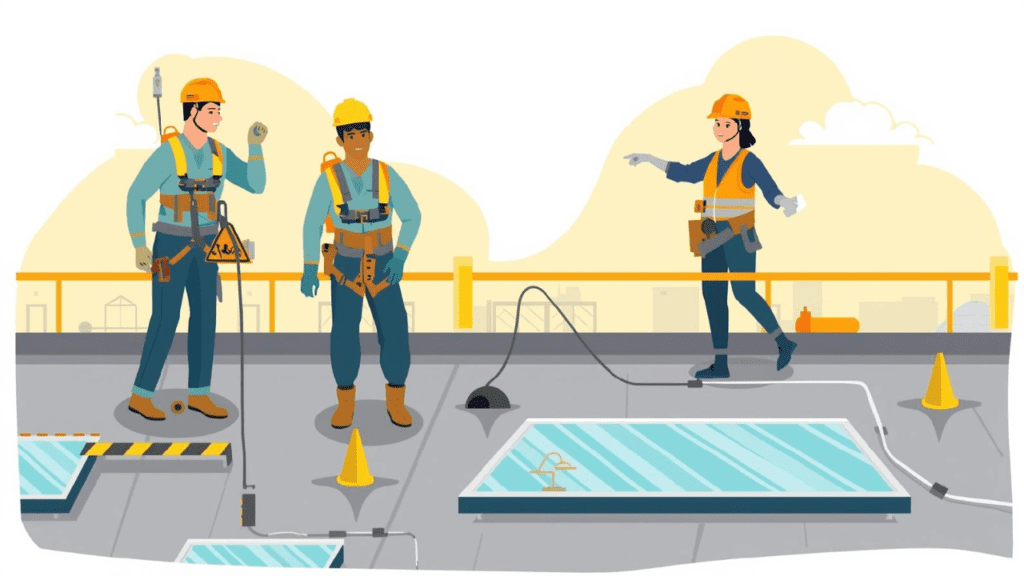
Roof Work Safety: Do’s and Don’ts
Roof work is one of the most hazardous activities in construction, maintenance, and industrial operations. Whether it involves installing roofing sheets, repairing leaks, cleaning gutters, or inspecting rooftop equipment, working on roofs exposes workers to a high risk of falls, slips, trips, and structural failures. Many serious injuries and fatalities occur every year due to unsafe roof work practices.
Roof work accidents often happen because of poor planning, lack of fall protection, unsafe behavior, or ignoring environmental conditions. This article explains Roof Work Safety Do’s and Don’ts, helping workers, supervisors, and safety officers understand how to perform roof activities safely and prevent fall-related incidents.
Understanding Roof Work Hazards
Roof hazards vary depending on roof type, height, slope, and surface condition. Some roofs are strong and flat, while others are fragile, sloped, or weather-exposed.
Common hazards include:
- Falling from roof edges
- Falling through fragile roofs or skylights
- Slipping on wet or dusty surfaces
- Collapse of weak roof structures
- Falling objects striking people below
- Electrical hazards from overhead lines
- Adverse weather conditions
Understanding these hazards is the first step toward safe roof work.
Types of Roofs and Associated Risks
Flat Roofs
- Risk of unprotected edges
- Openings such as skylights or vents
- Water accumulation causing slippery surfaces
Sloped Roofs
- Increased risk of sliding or losing balance
- Difficult footing
- Greater fall distance
Fragile Roofs
- Asbestos sheets
- Fiber cement sheets
- Plastic or glass skylights
- Corroded metal sheets
Fragile roofs pose the highest risk of collapse.
Importance of Roof Work Safety
Roof work safety is critical because:
- Falls from roofs are often fatal
- Rescue from roofs is difficult
- Roof work is affected by weather
- Many roofs are not designed for foot traffic
Proper safety measures protect lives, reduce downtime, and ensure compliance with legal requirements.
Roof Work Safety Do’s
The following do’s must be followed at all times when working on roofs.
Do Conduct a Risk Assessment Before Roof Work
Before starting any roof activity:
- Identify fall hazards
- Check roof strength and condition
- Identify fragile areas
- Assess access and egress points
- Evaluate weather conditions
A task-specific risk assessment ensures proper controls are selected.
Do Use Permit to Work for Roof Activities
Roof work should be controlled under a Permit to Work system, especially for:
- High roofs
- Fragile roofs
- Long-duration tasks
- Work near live equipment
Permits ensure hazards are controlled and responsibilities are clearly defined.
Do Use Fall Protection Systems
Fall protection must be selected based on risk level.
Collective Protection
- Guardrails
- Toe boards
- Covers for openings
- Safety nets
Personal Fall Protection
- Full-body harness
- Shock-absorbing lanyard
- Self-retracting lifeline (SRL)
- Certified anchor points
Collective protection should always be the first choice.
Do Ensure Safe Access to Roofs
Safe access prevents falls during entry and exit.
Safe access methods include:
- Fixed stairways
- Secure ladders
- Temporary access platforms
Ladders must extend above the landing point and be properly secured.
Do Inspect the Roof Before Walking
Before stepping onto a roof:
- Check for loose or damaged sheets
- Identify fragile zones
- Look for skylights and openings
- Check for slippery substances
Unsafe areas must be barricaded or covered.
Do Use Proper Personal Protective Equipment
Essential PPE for roof work includes:
- Helmet with chin strap
- Full-body harness
- Non-slip safety shoes
- Gloves with good grip
- High-visibility vest
PPE must be inspected before use.
Do Secure Tools and Materials
To prevent falling objects:
- Use tool lanyards
- Store materials away from edges
- Install toe boards
- Barricade areas below roof work
Falling objects can seriously injure people below.
Do Monitor Weather Conditions Continuously
Roof work must be stopped during:
- Rain
- Strong winds
- Lightning
- Poor visibility
- Extreme heat
Weather conditions can change quickly, increasing risk.
Do Maintain Good Housekeeping on Roofs
Good housekeeping reduces slip and trip hazards.
Ensure:
- No loose materials
- Clean work surfaces
- Waste removed regularly
Do Provide Training and Supervision
Only trained and competent workers should perform roof work.
Training must include:
- Fall protection use
- Roof hazard identification
- Emergency procedures
Supervision ensures safety rules are followed.
Roof Work Safety Don’ts
Understanding what not to do is just as important as knowing the do’s.
Don’t Work on Roofs Without Authorization
Unauthorized roof access increases risk.
Roof work should never be performed:
- Without a permit
- Without supervision
- Without fall protection
Don’t Walk on Fragile Roof Areas
Never walk directly on:
- Asbestos sheets
- Skylights
- Old or corroded sheets
Use crawl boards, walkways, or platforms if access is required.
Don’t Work Near Roof Edges Without Protection
Unprotected edges are the leading cause of roof falls.
Never work near edges:
- Without guardrails
- Without harness and anchor
Don’t Use Improper Ladders or Access Equipment
Avoid:
- Damaged ladders
- Improvised access (boxes, barrels)
- Unsecured ladders
Always use approved access equipment.
Don’t Ignore Weather Conditions
Never work on roofs during:
- Rain or wet conditions
- High winds preventing balance
- Extreme heat causing fatigue
Ignoring weather is a common cause of falls.
Don’t Carry Heavy Materials While Climbing
Carrying materials while climbing:
- Affects balance
- Increases fall risk
Use:
- Hoisting systems
- Mechanical lifts
Don’t Work Alone on Roofs
Roof work should never be done alone.
Always ensure:
- Another worker is present
- Emergency assistance is available
Don’t Modify Fall Protection Equipment
Never:
- Tie knots in lanyards
- Extend lanyards using ropes
- Use damaged harnesses
Use only manufacturer-approved equipment.
Don’t Leave Roof Openings Uncovered
Uncovered openings create fall hazards.
Ensure:
- All openings are covered
- Covers are secured and labeled
Emergency Preparedness for Roof Work
Emergency planning is essential.
Rescue Plan for Falls from Roofs
A rescue plan must include:
- Method to rescue a suspended worker
- Rescue equipment availability
- Trained rescue personnel
- Emergency contact numbers
Suspension trauma can be fatal without quick rescue.
First Aid and Emergency Response
Ensure:
- First aid kits available
- Trained first aiders on site
- Clear access for emergency services
Common Causes of Roof Work Accidents
Roof accidents often occur due to:
- Lack of fall protection
- Poor planning
- Unsafe behavior
- Weather changes
- Fragile roofs
- Poor supervision
Understanding these causes helps prevent future incidents.
Best Practices for Safe Roof Work
- Plan roof work in advance
- Use collective fall protection
- Train workers regularly
- Inspect equipment daily
- Enforce permit systems
- Stop work during unsafe conditions
Conclusion
Roof work safety depends on proper planning, correct use of fall protection, trained workers, and strict supervision. By following the do’s and avoiding the don’ts, organizations can significantly reduce the risk of falls and injuries during roof work.
Remember — no roof job is so urgent that it cannot be done safely. Falls from roofs are preventable when safety rules are followed consistently.
For checklist and templates visit The HSE Tools.
Common Causes of Falls and Their Prevention
Permit to Work for Height-Related Activities
Scaffold Erection and Dismantling Safety Procedures
Ladder Safety: Inspection, Use, and Storage
Fall Protection Systems: Guardrails, Harnesses, and Nets
FAQs
1. Is fall protection mandatory for roof work?
Yes, whenever there is a risk of falling from height.
2. What is the safest way to work near roof edges?
Using guardrails or full-body harnesses with anchor points.
3. Can roof work be done during rain?
No, wet surfaces significantly increase slip risk.
4. Who should authorize roof work?
A competent person through a Permit to Work system.
5. Are skylights considered fragile roofs?
Yes, skylights must always be treated as fragile areas.
