Common Scaffolding Hazards and Control Measures
Learn the most common scaffolding hazards at construction and industrial sites and effective control measures to prevent falls, collapses, and injuries during scaffold work.
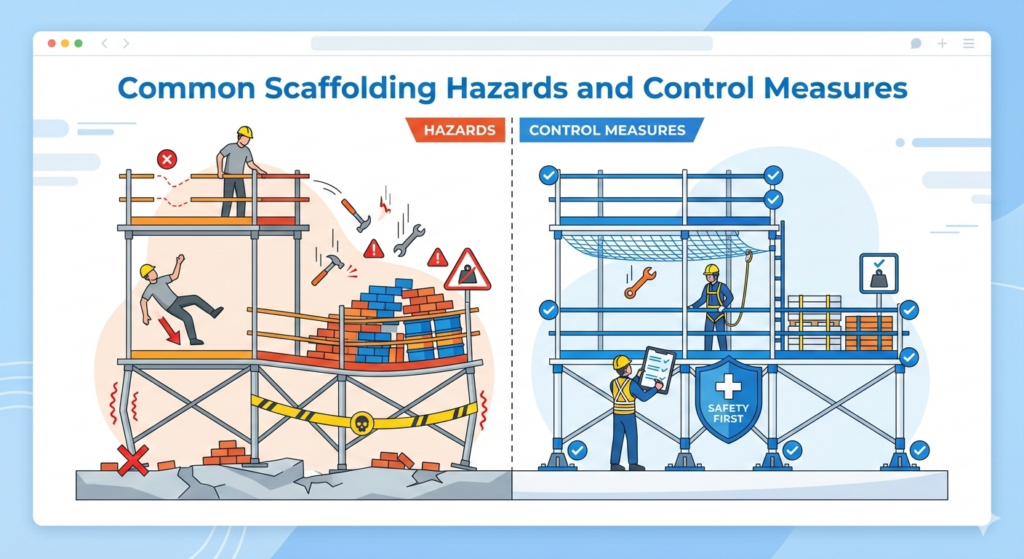
Scaffolding is an essential temporary structure that provides access and working platforms at height for construction, maintenance, and industrial activities. While scaffolds make work at height possible, they also introduce serious hazards if not designed, erected, inspected, and used correctly. Many fatal and serious injuries worldwide are linked to scaffolding accidents.
Most scaffolding incidents occur due to unsafe conditions, missing components, poor supervision, or unsafe behavior rather than equipment failure alone. Understanding common scaffolding hazards and their control measures is critical for scaffolders, supervisors, safety officers, and workers who rely on scaffolds daily.
This article explains the most frequent scaffolding hazards encountered on sites and provides practical control measures to eliminate or reduce risks.
Why Scaffolding Safety Is Critical
Scaffolding hazards are dangerous because they often involve falls from height or structural failure. These incidents can result in:
- Fatal falls
- Multiple worker injuries
- Scaffold collapse
- Falling objects injuring people below
- Project delays and shutdowns
- Legal penalties and reputational damage
Most scaffolding accidents are preventable with proper hazard identification and control measures.
Understanding Scaffolding Hazards
Scaffolding hazards can be grouped into several categories:
- Structural hazards
- Fall hazards
- Access and egress hazards
- Falling object hazards
- Environmental hazards
- Human and organizational hazards
Each category requires specific control measures to ensure safety.
Structural Scaffolding Hazards
Weak or Unstable Foundations
Hazard Description
Scaffolds erected on uneven, soft, or unstable ground can settle or tilt, leading to collapse.
Common Causes
- Poor ground preparation
- Absence of sole boards
- Inadequate drainage
- Soil erosion due to rain
Control Measures
- Prepare and level the ground before erection
- Use sole boards and base plates under all standards
- Ensure firm load-bearing surfaces
- Improve drainage to prevent water accumulation
- Reinspect foundations after rain
Missing or Damaged Scaffold Components
Hazard Description
Using damaged or missing components compromises structural integrity.
Common Causes
- Bent standards or ledgers
- Cracked planks
- Worn or defective couplers
- Corroded components
Control Measures
- Inspect all components before use
- Remove damaged parts from service immediately
- Use only approved and compatible scaffold components
- Maintain proper storage of scaffold materials
Inadequate Bracing
Hazard Description
Missing or insufficient bracing allows scaffold sway and instability.
Common Causes
- Omitted diagonal braces
- Unauthorized removal during use
- Poor erection practices
Control Measures
- Install bracing as per scaffold design
- Never remove braces without authorization
- Inspect bracing daily
- Train scaffolders on structural importance of bracing
Overloading of Scaffolds
Hazard Description
Exceeding scaffold load capacity can lead to sudden collapse.
Common Causes
- Excessive materials stored on platforms
- Heavy equipment placed on scaffold
- Workers unaware of load limits
Control Measures
- Display load rating clearly on scaffold
- Train workers on load limits
- Remove unnecessary materials regularly
- Distribute loads evenly across platforms
Fall Hazards on Scaffolds
Missing Guardrails and Toe Boards
Hazard Description
Unprotected edges expose workers to fall risks.
Common Causes
- Incomplete erection
- Guardrails removed for access
- Poor supervision
Control Measures
- Install top and mid guardrails on all open edges
- Install toe boards to prevent falls and falling objects
- Prohibit use of incomplete scaffolds
- Use advance guardrail systems during erection
Unsafe Working Platforms
Hazard Description
Improper platforms increase risk of slips and falls.
Common Causes
- Gaps between planks
- Loose or unsecured boards
- Slippery surfaces
Control Measures
- Fully deck platforms with secured planks
- Replace damaged or split planks
- Maintain good housekeeping
- Use anti-slip surfaces where required
Improper Use of Personal Fall Protection
Hazard Description
Workers relying on fall protection but using it incorrectly.
Common Causes
- Harness not worn
- Incorrect anchorage
- Lanyards tied to weak points
Control Measures
- Provide training on harness use
- Ensure certified anchor points
- Inspect harnesses before use
- Enforce PPE compliance
Access and Egress Hazards
Unsafe Access to Scaffold Platforms
Hazard Description
Climbing scaffold frames or using makeshift access increases fall risk.
Common Causes
- Missing ladders or stair towers
- Poor planning
- Workers taking shortcuts
Control Measures
- Provide approved ladders or stair access
- Secure ladders properly
- Ensure ladders extend above landing points
- Prohibit climbing on scaffold frames
Blocked or Obstructed Access Routes
Hazard Description
Obstructed access leads to trips and falls.
Common Causes
- Materials stored near access points
- Poor housekeeping
Control Measures
- Keep access routes clear
- Enforce housekeeping standards
- Inspect access points daily
Falling Object Hazards
Tools and Materials Falling from Scaffold
Hazard Description
Objects falling from height can seriously injure people below.
Common Causes
- No toe boards
- Poor housekeeping
- Unsecured tools
Control Measures
- Install toe boards and debris nets
- Use tool lanyards
- Barricade areas below scaffold
- Control material storage
Environmental Scaffolding Hazards
Weather Conditions
Hazard Description
Weather affects scaffold stability and worker balance.
Common Causes
- Strong winds
- Rain making surfaces slippery
- Storms loosening components
Control Measures
- Monitor weather conditions
- Suspend work during unsafe weather
- Inspect scaffolds after storms
- Secure loose components
Electrical Hazards Near Scaffolds
Hazard Description
Scaffolds near power lines pose electrocution risk.
Common Causes
- Inadequate clearance from live lines
- Use of metal scaffolds
Control Measures
- Maintain safe clearance distances
- Use insulated barriers
- Coordinate with electrical teams
- De-energize lines where possible
Human and Organizational Hazards
Lack of Training and Competency
Hazard Description
Untrained workers increase accident risk.
Common Causes
- Inexperienced scaffolders
- No formal training
Control Measures
- Use only trained and competent scaffolders
- Provide regular safety training
- Conduct toolbox talks
Poor Supervision
Hazard Description
Unsafe practices go unnoticed without supervision.
Common Causes
- Inadequate staffing
- Lack of accountability
Control Measures
- Assign competent scaffold supervisors
- Conduct regular inspections
- Enforce safety rules consistently
Unauthorized Scaffold Modifications
Hazard Description
Workers altering scaffolds compromise safety.
Common Causes
- Removing guardrails or planks
- Adjusting components without approval
Control Measures
- Prohibit unauthorized modifications
- Use scaffold tagging systems
- Educate workers on risks
Common Scaffolding Hazards During Erection and Dismantling
Falls During Erection and Dismantling
Control Measures
- Use fall protection systems
- Erect guardrails progressively
- Follow approved erection sequences
Component Dropping During Dismantling
Control Measures
- Use controlled lowering methods
- Establish exclusion zones
- Maintain communication
Inspection and Monitoring as a Control Measure
Regular inspection is one of the strongest controls.
Scaffolds must be inspected:
- Before first use
- Daily before work
- After modification
- After adverse weather
Inspection findings must be recorded and acted upon.
Best Practices for Controlling Scaffolding Hazards
- Conduct task-specific risk assessments
- Use proper scaffold designs
- Train workers and supervisors
- Inspect scaffolds daily
- Enforce scaffold tagging
- Integrate scaffold safety with Permit to Work systems
Conclusion
Scaffolding hazards are among the most serious risks in construction and industrial environments, but they are also among the most controllable. By understanding common scaffolding hazards and implementing effective control measures, organizations can significantly reduce falls, collapses, and injuries.
Safe scaffolding depends on proper planning, competent personnel, correct equipment, and continuous monitoring. When hazards are identified early and controlled effectively, scaffolds become a safe and reliable platform for work at height.
For checklist and templates visit The HSE Tools.
Daily Scaffold Inspection Checklist for Safety Officers
Scaffolding Erection and Dismantling Procedure
Scaffold Components and Types Explained
Roof Work Safety: Do’s and Don’ts
Common Causes of Falls and Their Prevention
FAQs
1. What is the most common scaffolding hazard?
Falls due to missing guardrails or unsafe platforms.
2. How can scaffold collapse be prevented?
By ensuring stable foundations, proper bracing, and load control.
3. Who is responsible for controlling scaffolding hazards?
Management, supervisors, scaffolders, safety officers, and workers.
4. Are daily scaffold inspections mandatory?
Yes, daily inspections are required before use.
5. Can scaffolds be used during bad weather?
No, work should be suspended during unsafe weather conditions.
