 Skip to content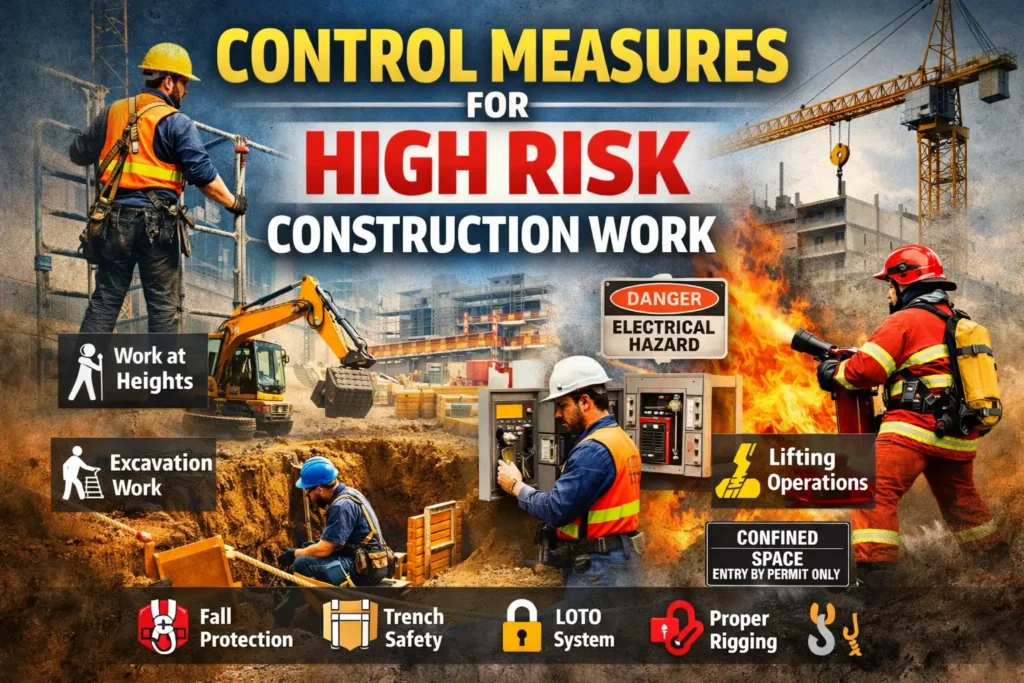
Control Measures for High Risk Construction Work
What is High Risk Construction Work?
High risk construction work refers to activities that have a high potential for serious injury or fatality if not properly controlled. These tasks involve hazardous conditions, heavy equipment, or complex operations that require strict safety measures.
Common examples include working at height, excavation, lifting operations, electrical work, and confined space entry. These activities are part of daily construction work, yet they carry significant risks that cannot be ignored.
Why It Requires Special Controls
High-risk activities are unpredictable. A small mistake, such as improper harness use or incorrect rigging, can lead to severe consequences. That is why these tasks require detailed planning, supervision, and control measures.
Without proper controls, the risk level remains high, increasing the chances of accidents.
Importance of Control Measures in Construction Safety
Preventing Fatal Accidents
Control measures are designed to reduce risks to acceptable levels. They act as barriers between hazards and workers.
In construction, most fatal accidents occur due to lack of proper control measures. Implementing the right controls can prevent incidents and save lives.
Hierarchy of Control in Construction
Elimination to PPE
The Hierarchy of Control is a systematic approach to managing risks:
- Elimination – Remove the hazard
- Substitution – Replace with a safer option
- Engineering Controls – Isolate the hazard
- Administrative Controls – Procedures and training
- PPE – Personal protective equipment
The goal is to control hazards at the source rather than relying only on PPE.
Common High Risk Activities in Construction
Work at Height, Excavation, Lifting, Electrical Work
High-risk construction activities include:
- Working at height
- Excavation and trenching
- Lifting operations
- Electrical work
- Confined space entry
Each activity requires specific control measures.
Control Measures for Working at Height
Fall Protection Systems
Falls are one of the leading causes of accidents. Control measures include:
- Guardrails and safety nets
- Full body harness with lifeline
- Proper scaffolding
- Safe access and egress
Workers must be trained and supervised during height work.
Control Measures for Excavation Work
Trench Protection Systems
Excavation hazards include collapse and falling objects. Control measures include:
- Sloping and benching
- Shoring and shielding
- Barricading and signage
- Daily inspection
Proper planning is essential.
Control Measures for Lifting Operations
Safe Rigging and Equipment Use
Lifting operations require:
- Proper equipment selection
- Certified operators
- Safe rigging practices
- Clear communication
Overloading and poor planning must be avoided.
Control Measures for Electrical Work
Lockout Tagout (LOTO)
Electrical hazards can be fatal. Control measures include:
- Lockout Tagout procedures
- Proper insulation
- Use of PPE
- Regular inspection
Control Measures for Confined Space Entry
Permit and Monitoring Systems
Confined spaces are hazardous due to limited oxygen and toxic gases. Control measures include:
- Permit to work system
- Gas testing
- Continuous monitoring
- Rescue plan
Use of Permit to Work System
Authorization for High Risk Activities
Permits ensure that all safety measures are in place before work begins. They are mandatory for high-risk tasks.
Role of Supervision in Risk Control
Monitoring and Enforcement
Supervisors ensure that control measures are implemented and followed. Their role is critical in preventing unsafe practices.
Training and Competency Requirements
Skilled Workforce
Workers must be trained and competent. Lack of training increases risk.
PPE as the Last Line of Defense
Proper Selection and Use
PPE includes helmets, gloves, safety shoes, and harnesses. It protects workers when other controls fail.
Emergency Preparedness and Response
Rescue Plans
Emergency plans must be in place for high-risk activities. Quick response can save lives.
Communication and Coordination
Toolbox Talks
Regular communication ensures that workers understand risks and controls.
Common Mistakes in Risk Control
Ignoring Procedures
Common mistakes include ignoring procedures, poor supervision, and lack of training.
Control Measures Table Example
| Activity | Hazard | Control Measure |
|---|---|---|
| Height work | Fall | Harness, guardrails |
| Excavation | Collapse | Shoring, barricading |
| Lifting | Load سقوط | Proper rigging |
| Electrical | Shock | LOTO system |
Challenges in Implementing Controls
Dynamic Work Environment
Construction sites are constantly changing, making risk control challenging.
Best Practices for High Risk Work Safety
Proactive Safety Culture
Creating a proactive safety culture ensures that risks are identified and controlled early.
Key Takeaways
- High-risk work requires strict control measures
- Hierarchy of control is essential
- Training and supervision are critical
- PPE is the last line of defense
Conclusion
Control measures are the foundation of safety in high-risk construction work. Proper planning, training, and supervision can significantly reduce risks and prevent accidents. A safe workplace is a well-controlled workplace.
The Importance of Daily Toolbox Talks in Construction
Fire Safety in Construction Sites – Prevention & Control
Personal Protective Equipment – PPE in Construction
Electrical Safety in Construction Areas
How to Conduct a Construction Site Safety Audit
FAQs
1. What is high-risk construction work?
Activities with high potential for serious injury.
2. What are control measures?
Actions taken to reduce risks.
3. What is hierarchy of control?
A system to manage hazards effectively.
4. Why is PPE important?
It protects workers when other controls fail.
5. Who is responsible for safety controls?
Employers, supervisors, and workers.
