 Skip to content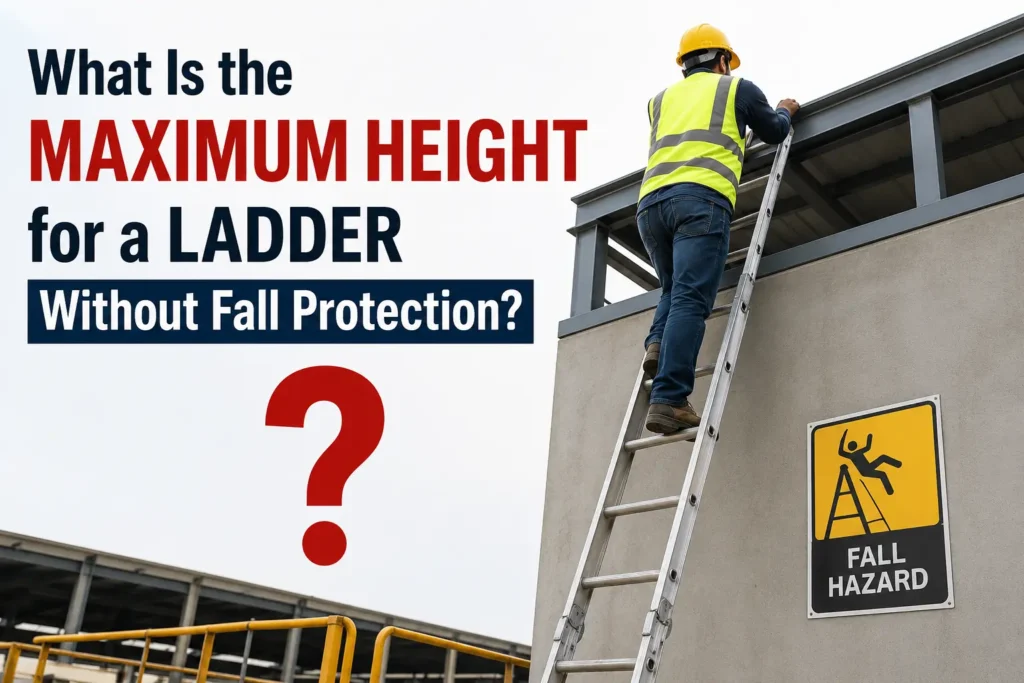
What Is the Maximum Height for a Ladder Without Fall Protection?
Ladders are among the most commonly used tools on construction sites, factories, warehouses, and maintenance projects.
Almost every worker has used a ladder at some point.
Because ladders are so common, many people assume they are completely safe.
Unfortunately, that assumption leads to accidents every year.
One of the most frequently asked safety questions is:
What is the maximum height for a ladder without fall protection?
This question often appears during:
- safety interviews
- toolbox talks
- safety training
- site inspections
- HSE audits
The answer depends on the applicable safety standard and workplace regulations.
However, one thing remains constant:
The higher the ladder, the greater the risk of a serious fall.
Falls from ladders continue to be one of the leading causes of workplace injuries worldwide.
Understanding ladder height requirements can help workers avoid life-changing accidents.
Let’s explore the topic in simple language.
Why Ladder Falls Are So Dangerous
Many workers underestimate ladder hazards because ladders seem simple.
After all, people climb ladders every day.
The danger comes from the fact that even a relatively short fall can cause:
- fractures
- head injuries
- spinal injuries
- permanent disability
- fatalities
A worker who falls from a ladder often has little time to react.
Unlike a scaffold or elevated platform, ladders provide limited stability.
Small mistakes can have serious consequences.
That is why ladder safety receives significant attention in workplace safety regulations.
Is There a Maximum Ladder Height?
This is where many people become confused.
Technically, safety standards often focus more on:
Fall Protection Requirements
rather than establishing a single maximum ladder height.
Different regulations may apply depending on:
- country
- industry
- ladder type
- work activity
The key issue is determining when additional fall protection becomes necessary.
Employers must evaluate the risk and implement appropriate controls.
What Do OSHA Requirements Say?
According to widely recognized ladder safety guidance, fixed ladders often require additional safety measures when workers climb significant heights.
Historically, ladder cages were used extensively.
Modern requirements increasingly focus on:
- ladder safety systems
- personal fall arrest systems
for taller fixed ladders.
For portable ladders, workers must maintain safe climbing practices regardless of height.
Employers should always verify the latest regulatory requirements applicable to their location.
Why Ladder Height Alone Does Not Determine Safety
Many people focus only on height.
In reality, several other factors influence ladder safety.
Examples include:
- ladder condition
- surface stability
- worker training
- weather conditions
- work duration
A short ladder used improperly can be more dangerous than a taller ladder used correctly.
This is why risk assessment remains essential.
Height is only one part of the safety picture.
Common Causes of Ladder Accidents
Most ladder incidents occur because of unsafe behavior rather than ladder failure.
Common causes include:
Overreaching
Workers lean too far sideways instead of repositioning the ladder.
Incorrect Setup
The ladder is placed at an unsafe angle.
Damaged Ladders
Broken or defective ladders increase risk.
Slippery Surfaces
Unstable footing can cause sudden movement.
Carrying Materials While Climbing
This reduces balance and grip.
Understanding these causes helps prevent accidents.
The Importance of the 4-to-1 Rule
One of the most important ladder safety principles is the:
4-to-1 Rule
This means:
For every 4 feet of ladder height, the base should be positioned approximately 1 foot away from the supporting structure.
This creates a safer climbing angle.
A ladder that is too steep or too shallow becomes unstable.
Proper positioning significantly reduces fall risk.
When Is Fall Protection Required?
The answer depends on local regulations and workplace requirements.
Many organizations require additional controls when:
- work is performed at significant heights
- exposure duration increases
- fall hazards become severe
Examples of controls include:
- personal fall arrest systems
- ladder safety systems
- work platforms
- scaffolding
Employers should always follow applicable legal requirements and risk assessments.
Why Portable Ladders Have Limitations
Portable ladders are designed for temporary access.
They are not intended for long-duration tasks.
If workers spend extended periods at height, safer alternatives may be appropriate.
Examples include:
- mobile scaffolds
- elevated work platforms
- scissor lifts
These options often provide:
- better stability
- larger working areas
- improved fall protection
Choosing the right equipment is an important safety decision.
How High Can You Safely Work From a Ladder?
There is no universal answer.
Safe working height depends on:
- ladder type
- worker competency
- environmental conditions
- task complexity
Employers should evaluate:
- duration of work
- frequency of use
- fall consequences
before selecting access equipment.
The safest solution is not always the ladder.
Why Three-Point Contact Is Important
One of the simplest ladder safety rules is:
Maintain Three-Point Contact
This means keeping:
- two hands and one foot
or
- two feet and one hand
in contact with the ladder at all times.
Three-point contact improves stability and reduces the likelihood of falls.
Workers should never rush while climbing.
Slow and controlled movement is safer.
Ladder Inspection Before Use
Every ladder should be inspected before use.
Check for:
- cracks
- bent rails
- damaged feet
- loose rungs
- corrosion
Defective ladders should be removed from service immediately.
Using damaged equipment creates unnecessary risk.
A quick inspection can prevent serious accidents.
Environmental Factors Matter
Weather conditions significantly affect ladder safety.
Examples include:
Rain
Wet surfaces become slippery.
Wind
Strong winds can affect balance.
Poor Lighting
Workers may misjudge footing.
Uneven Ground
Ladders become unstable.
Environmental conditions should always be considered before use.
Why Training Is Essential
Many ladder accidents involve experienced workers.
Experience alone does not eliminate risk.
Proper training helps workers understand:
- ladder selection
- inspection procedures
- safe climbing techniques
- hazard recognition
Regular refresher training reinforces good habits.
Knowledge remains one of the strongest accident prevention tools.
Alternatives to Ladders
Sometimes the safest choice is avoiding ladders entirely.
Alternatives may include:
- scaffolding
- boom lifts
- scissor lifts
- mobile work platforms
These options often provide greater stability and improved fall protection.
A risk assessment helps determine the most suitable equipment.
Safety should always guide equipment selection.
What Safety Officers Should Check
Safety Officers should monitor:
- ladder condition
- setup angle
- worker behavior
- environmental hazards
- compliance with procedures
Regular inspections help identify problems before accidents occur.
Active supervision supports safer work practices.
Conclusion
The question of maximum ladder height without fall protection does not always have a simple universal answer because requirements vary depending on regulations, ladder type, and workplace conditions.
What remains clear is that fall risks increase significantly as height increases.
Employers must evaluate:
- ladder height
- work duration
- environmental conditions
- task complexity
to determine appropriate safety measures.
Proper ladder setup, inspection, training, and risk assessment are essential for preventing falls.
Workers should never assume that a ladder is safe simply because it is commonly used.
Every ladder task deserves careful planning and attention.
When it comes to working at height, safety always starts before the first step onto the ladder.
Permit to Work for Height Activities Explained
How to Conduct a Work at Height Risk Assessment
Top 10 Work at Height Hazards and Control Measures
Work at Height Safety Rules Every Worker Must Know
Emergency Rescue Plan for Work at Height
FAQs
What is the maximum ladder height without fall protection?
Requirements vary by regulation and ladder type. Employers should follow applicable standards and conduct risk assessments.
What is the 4-to-1 ladder rule?
For every 4 feet of ladder height, the base should be positioned approximately 1 foot away from the structure.
Why are ladder falls so dangerous?
Even relatively short falls can result in serious injuries, including fractures, head trauma, and fatalities.
Should ladders be inspected before use?
Yes. Every ladder should be checked for damage, defects, and stability before use.
What is safer than a ladder for long-duration work?
Scaffolds, scissor lifts, boom lifts, and other work platforms often provide better stability and fall protection.

Surely ladder safety is very important at all costs when work at height and once you fall from the ladder may cause not just a fracture but multiple fracture because of the lungs. And weather advserse must also be considered ladder can easily brown off by strong wind
So I really understand the ladder safety
Good
below 2mitres