 Skip to content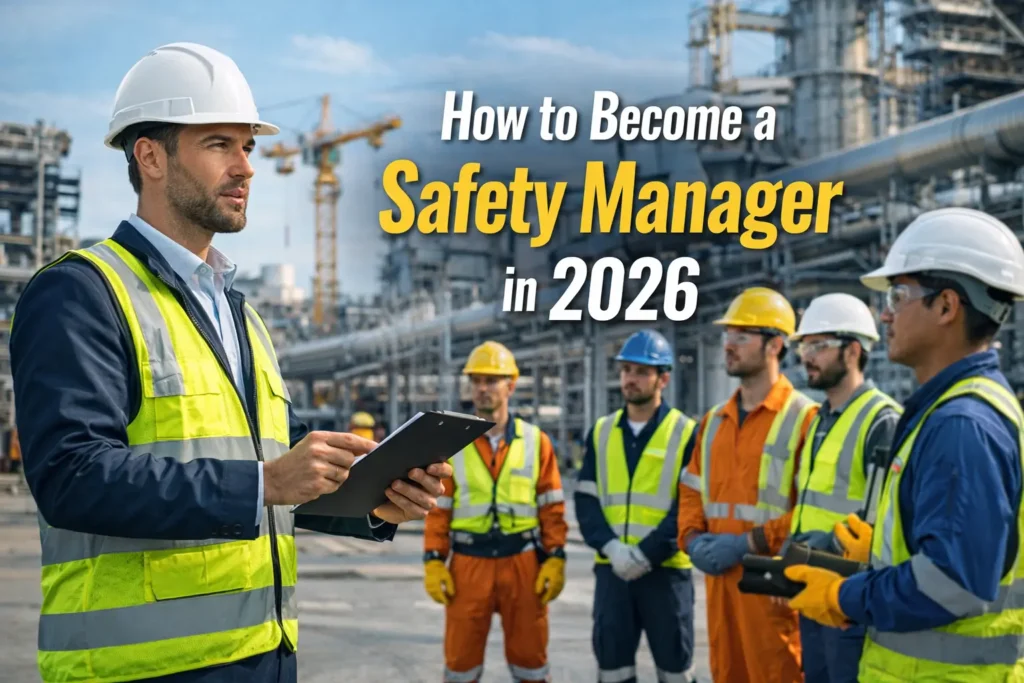
How to Become a Safety Manager in 2026
Becoming a Safety Manager in 2026 is a powerful career move for professionals who want leadership, authority, and long term growth in the health and safety field. Organizations today are not just looking for people who can follow rules. They want leaders who can build a strong safety culture, manage teams, and protect both people and business reputation.
If your goal is to move beyond site level roles and step into management, this guide will walk you through exactly how to become a Safety Manager in 2026.
Why Safety Managers Are in High Demand in 2026
Workplace safety has become a boardroom priority. Accidents today lead to legal penalties, project shutdowns, insurance losses, and brand damage. Governments are enforcing stricter compliance, and clients demand strong safety performance before awarding contracts.
Because of this, companies now need Safety Managers who can plan, lead, monitor, and continuously improve safety systems across projects and locations. In 2026, Safety Managers are no longer optional roles. They are core decision makers.
Who Is a Safety Manager
A Safety Manager is a senior safety professional responsible for developing, implementing, and monitoring an organization’s health and safety management system. Unlike safety officers who focus on daily site activities, Safety Managers focus on strategy, leadership, compliance, and performance improvement.
Think of a Safety Manager as the bridge between top management and site level safety teams.
Understanding the latest OSHA safety standards and resources is essential for anyone aiming to become a Safety Manager in 2026.
Difference Between Safety Officer, Safety Engineer, and Safety Manager
A Safety Officer mainly handles inspections, toolbox talks, and compliance on site. A Safety Engineer applies technical and engineering principles to control hazards.
A Safety Manager oversees the entire safety framework. They manage teams, review audits, set safety goals, communicate with management, and ensure legal compliance across operations. Experience and leadership are what separate a Safety Manager from other safety roles.
Roles and Responsibilities of a Safety Manager
A Safety Manager develops safety policies, conducts risk assessments at an organizational level, reviews incident investigations, and ensures compliance with local and international regulations.
They lead safety audits, manage safety budgets, coordinate training programs, and report safety performance to senior management. In 2026, Safety Managers are also expected to use digital dashboards, KPIs, and data driven decision making.
Educational Qualification Required in 2026
Most Safety Managers have a bachelor’s degree in engineering, science, or occupational health and safety. While a degree alone is not enough, it provides a strong foundation.
In 2026, employers value a combination of education, professional certifications, and proven leadership experience more than academic qualifications alone.
Essential Certifications for Safety Managers in 2026
Professional certifications are critical for moving into management roles. Advanced safety qualifications demonstrate your ability to manage systems, not just site activities.
Certifications focused on occupational health and safety management, risk leadership, and legal compliance significantly improve your chances of promotion to Safety Manager.
Key Skills Every Safety Manager Must Have
A Safety Manager must have strong knowledge of safety management systems, audits, risk management, and incident investigation.
Equally important are leadership, communication, and decision making skills. Safety Managers deal with directors, clients, regulators, and workers. The ability to influence without conflict is a defining skill at this level.
Step by Step Path to Become a Safety Manager in 2026
Step 1 Gain Solid Safety Experience
Most Safety Managers start their careers as Safety Officers or Safety Engineers. Practical site experience is essential before moving into leadership roles.
Step 2 Build Strong Safety Knowledge
Understand laws, standards, audits, and management systems deeply. A Safety Manager must see the bigger picture, not just daily site issues.
Step 3 Develop Leadership Skills
Start leading toolbox talks, mentoring juniors, and coordinating safety programs. Management roles demand people leadership as much as technical knowledge.
Step 4 Move Into Supervisory Safety Roles
Positions such as Senior Safety Officer or Lead HSE Engineer prepare you for management responsibilities.
Step 5 Transition to Safety Manager Role
With experience, certifications, and leadership exposure, you can confidently step into a Safety Manager position.
Industries Hiring Safety Managers in 2026
Construction, infrastructure, oil and gas, manufacturing, power plants, logistics, pharmaceuticals, and renewable energy projects are major employers.
Large corporations, hospitals, airports, data centers, and multinational companies also hire Safety Managers to oversee compliance and emergency preparedness.
Safety Manager Salary in 2026
Safety Managers earn significantly more than site level safety professionals. Salary depends on industry, country, and experience.
Senior Safety Managers working on large projects or multiple sites command high packages. International exposure and audit experience further increase earning potential.
Challenges Faced by Safety Managers
Safety Managers often face pressure from deadlines, budgets, and operational demands. Balancing safety with productivity is a constant challenge.
The key is strong communication, clear reporting, and support from top management. Experienced Safety Managers learn how to negotiate safety without compromising standards.
How to Stand Out as a Safety Manager
Adopt a proactive approach. Use data, trends, and leading indicators rather than reacting to accidents.
Invest in continuous learning, digital safety tools, and leadership development. Safety Managers who can show measurable safety improvements gain rapid recognition.
Future Scope of Safety Managers Beyond 2026
The role of Safety Manager will continue to expand. Mental health, sustainability, ESG reporting, and environmental safety are becoming part of safety leadership roles.
Safety Managers who adapt to these changes will remain in demand for many years.
Common Mistakes to Avoid
Avoid focusing only on paperwork. Do not disconnect from site realities. Never ignore worker feedback.
Safety management succeeds when policies and real world practices align.
Practical Tips for Long Term Success
Stay visible, stay approachable, and stay consistent. Build trust with workers and credibility with management.
Remember, a Safety Manager’s success is measured not by rules written, but by accidents prevented.
Conclusion
Becoming a Safety Manager in 2026 is a natural progression for experienced safety professionals who want leadership, influence, and long term career growth. With the right experience, certifications, and mindset, you can move into a role that shapes safety culture at the highest level. Safety Managers are not just compliance leaders. They are business protectors and people champions.
How to Become a Safety Officer in 2026
NEBOSH Safety Officer Salary 2026: Real Earnings, Country-Wise Pay & Career Growth
Skills Every New Safety Officer Must Learn in 2026
Safety Officer Career Roadmap 2026: From Fresher to Site In-Charge
Monthly Work of a Safety Officer
FAQs
1. Can a Safety Officer become a Safety Manager
Yes. With experience, advanced certifications, and leadership skills, many Safety Officers progress to Safety Manager roles.
2. How many years of experience are needed
Typically five to ten years of safety experience is required, depending on industry and organization size.
3. Is Safety Manager a stressful job
It can be demanding, but strong systems and leadership skills make it manageable.
4. Is Safety Manager a global career
Yes. Safety management roles exist worldwide across multiple industries.
5. What is the biggest skill required for a Safety Manager
Leadership and communication are the most critical skills, even more than technical knowledge.
