 Skip to content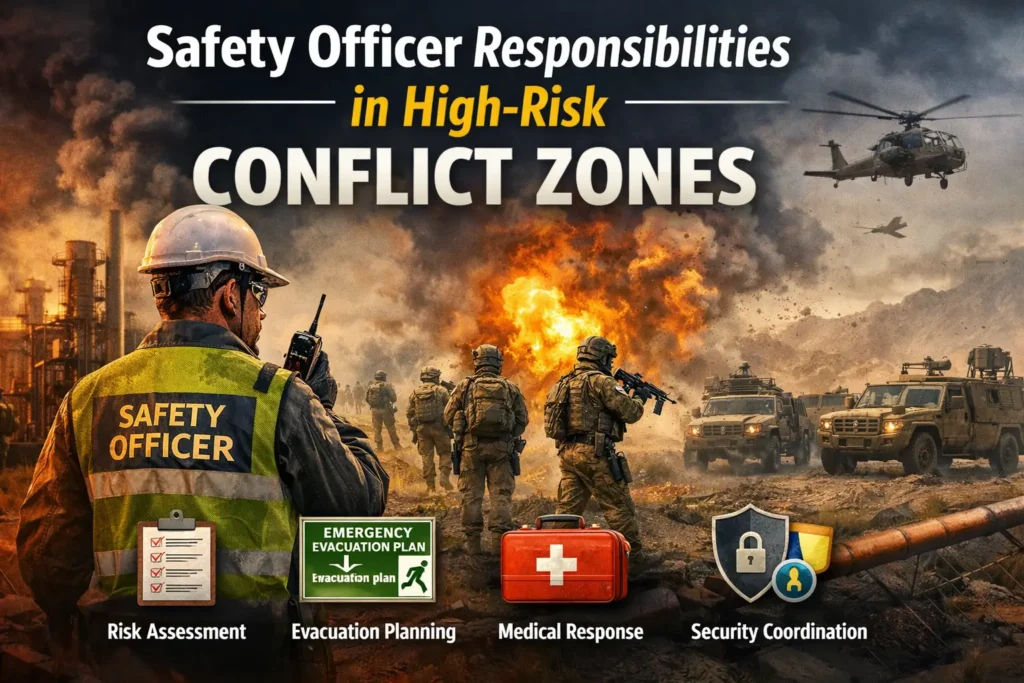
Safety Officer Responsibilities in High Risk Conflict Zones
Working as a safety officer in a normal industrial environment is already challenging. Now imagine doing the same job in a conflict zone, where risks are not just technical but also security-related. Conflict zones include areas affected by war, political instability, or armed tensions, where the situation can change within minutes.
In such environments, hazards are not limited to workplace activities like lifting or excavation. They include external threats such as explosions, armed attacks, restricted movement, and sudden evacuations. This makes the role far more complex and unpredictable.
Why Safety Officers Are Critical Here
In high-risk conflict zones, safety officers become one of the most important people on-site. Their role goes beyond traditional safety management. They are responsible for protecting workers not only from workplace hazards but also from external threats.
They act as planners, coordinators, and decision-makers during critical situations. Without them, chaos can quickly take over during emergencies.
Understanding High-Risk Conflict Environments
War, Political Instability, and Security Threats
Conflict zones are characterized by uncertainty. Conditions can change suddenly due to military actions, political decisions, or security threats.
For safety officers, this means constantly adapting to new risks. A site that was safe in the morning may become dangerous by evening. This dynamic environment requires continuous monitoring and quick decision-making.
Key Responsibilities of Safety Officers
Risk Identification in Dynamic Conditions
The first responsibility is identifying risks, both internal and external. This includes:
- Workplace hazards like machinery and equipment
- Environmental risks like weather
- Security threats like restricted zones or conflict areas
Safety officers must continuously assess these risks and update control measures.
Emergency Preparedness and Response
Emergency planning is critical in conflict zones. Safety officers must ensure that:
- Evacuation plans are ready
- Emergency exits are clear
- Workers know what to do in crisis situations
Quick response can save lives.
Threat Assessment and Risk Analysis
Identifying Security and Operational Risks
Safety officers must work closely with security teams to assess threats. This includes analyzing:
- Potential attack zones
- Safe routes for movement
- High-risk areas within the site
This level of assessment is far beyond normal safety practices.
Implementing Strict Safety Protocols
Access Control and Movement Restrictions
In conflict zones, access control is essential. Safety officers ensure that:
- Only authorized personnel enter the site
- Movement is restricted in high-risk areas
- Workers follow strict safety protocols
Coordination with Security Teams
Working with Armed Security and Authorities
Safety officers must coordinate with security personnel, local authorities, and sometimes military teams. This ensures proper communication and response during emergencies.
Managing Emergency Evacuations
Rapid Response Planning
Evacuations in conflict zones must be quick and organized. Safety officers are responsible for:
- Planning evacuation routes
- Conducting drills
- Ensuring safe assembly points
Crisis Communication Responsibilities
Real-Time Information Flow
Communication is critical. Safety officers must ensure that accurate information reaches workers quickly.
Any delay or confusion can lead to panic.
Ensuring Worker Safety Under Stress
Psychological and Physical Protection
Workers in conflict zones face stress and fear. Safety officers must:
- Provide guidance and reassurance
- Monitor mental well-being
- Ensure safe working conditions
Monitoring High-Risk Operations
Construction, Oil & Gas in Conflict Zones
High-risk operations become even more dangerous in conflict zones. Safety officers must closely monitor activities and enforce strict controls.
Handling Medical Emergencies
First Aid and Trauma Response
Medical emergencies can be severe. Safety officers must ensure availability of first aid and coordinate with medical teams.
Logistics and Resource Management
PPE, Supplies, and Emergency Equipment
Proper equipment is essential. Safety officers must manage resources efficiently, especially in remote or restricted areas.
Legal and Ethical Responsibilities
Compliance in Conflict Areas
Even in conflict zones, safety regulations must be followed. Safety officers must ensure compliance with local and international standards.
Challenges Faced by Safety Officers
Fear, Pressure, and Uncertainty
Working in conflict zones comes with extreme pressure. Safety officers must make decisions under stress while ensuring safety.
Skills Required for Conflict Zone Safety Officers
Decision-Making and Leadership
Key skills include:
- Strong decision-making
- Leadership
- Communication
- Crisis management
Real Scenario from Conflict Zone
Lessons Learned
In one project, a sudden security threat forced immediate evacuation. The safety officer’s quick action ensured that all workers were evacuated safely.
This highlights the importance of preparedness.
How to Prepare for Working in Conflict Zones
Training and Certifications
Safety officers must undergo specialized training in:
- Emergency response
- Risk management
- Crisis communication
Future Demand for Safety Officers in Risk Zones
Growing Need Globally
With increasing global tensions, the demand for safety professionals in high-risk areas is expected to grow.
Key Takeaways
- Safety officers play a critical role in conflict zones
- Responsibilities go beyond traditional safety
- Emergency preparedness is essential
- Strong skills and training are required
Conclusion
Working as a safety officer in high-risk conflict zones is one of the most challenging roles. It requires courage, skill, and constant vigilance. While the risks are high, the impact of this role is even greater, protecting lives in the most difficult conditions.
Hidden Challenges of Working as a Safety Officer (The Reality No One Talks About)
Supervisor Responsibilities in Workplace Safety
Reality of Night Shift Safety Jobs (What No One Tells You)
The Dark Reality of Working as a Safety Officer (No One Tells You This)
Mistakes That Can Destroy a Safety Career
FAQs
1. What is a conflict zone in safety terms?
An area with war or security risks affecting workplace safety.
2. Are safety officers needed in conflict zones?
Yes, they are critical for managing risks and emergencies.
3. What skills are required?
Decision-making, communication, and crisis management.
4. Is it safe to work in conflict zones?
It involves high risk and requires proper preparation.
5. How to prepare for such roles?
Through training, experience, and certifications.
