 Skip to content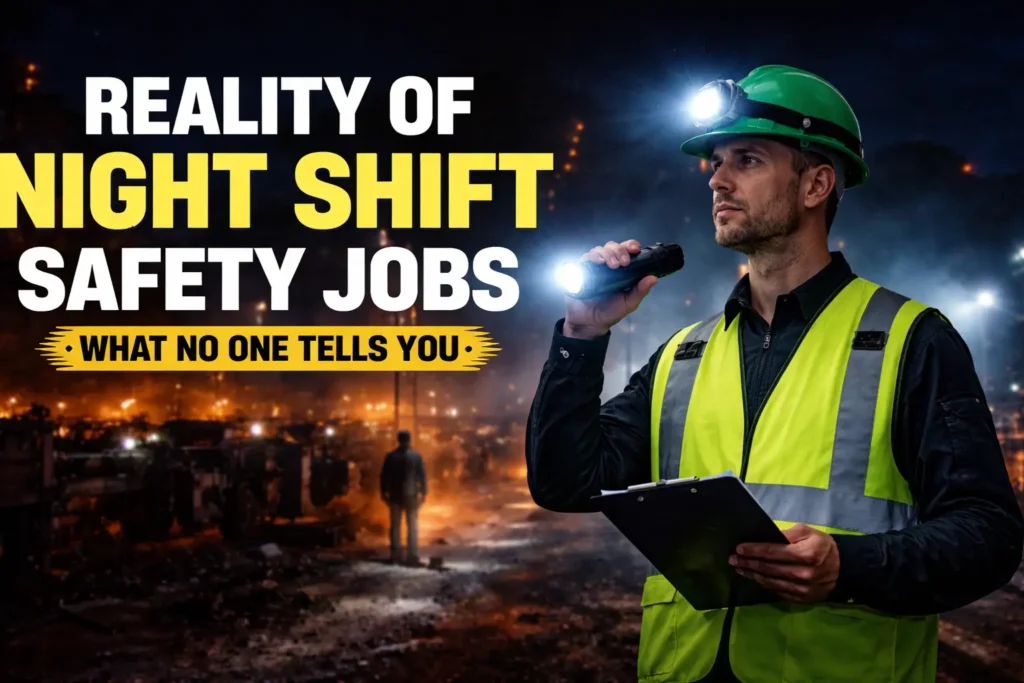
Reality of Night Shift Safety Jobs (What No One Tells You)
Why Night Shift Looks Easy but Isn’t
At first, many safety professionals think night shifts are easier. Less supervision, fewer people, and a quieter environment. It feels like the workload will be lighter and the pressure lower.
But the reality is completely different. Night shifts come with a unique set of challenges that are often more dangerous than day shifts. The silence of the site does not mean safety. In fact, it often hides risks that are harder to detect.
When the sun goes down, visibility reduces, alertness drops, and support systems become weaker. That is when a safety officer’s role becomes even more critical.
The Biggest Misconception
The biggest myth is that fewer people means fewer risks. In reality, fewer people means less control, less supervision, and slower response in emergencies.
Night shift safety is not easier, it is more unpredictable.
Silent Site, Hidden Risks
Reduced Supervision at Night
During the day, multiple supervisors, engineers, and managers are present. At night, the workforce is limited, and supervision drops significantly.
This creates opportunities for unsafe practices. Workers may skip safety procedures, take shortcuts, or ignore PPE requirements. Safety officers must stay extra alert to catch these risks.
Fatigue is the Biggest Enemy
Sleep Deprivation Effects
Working at night goes against the body’s natural rhythm. The human body is designed to rest at night, not stay alert.
Fatigue reduces concentration, slows reaction time, and increases the chances of mistakes. For a safety officer, even a small mistake can lead to serious consequences.
Increased Accident Risk During Night
Human Error and Low Alertness
Studies have shown that accident rates are higher during night shifts. The main reason is reduced alertness and increased human error.
Workers may misjudge distances, forget procedures, or react slowly in critical situations. Safety officers must constantly monitor and guide them.
Pressure from Management
“Finish Work Before Morning” Culture
Night shifts often come with deadlines. Management expects work to be completed before morning.
This creates pressure to speed up tasks, sometimes at the cost of safety. Safety officers must resist this pressure and ensure safe practices are followed.
Limited Emergency Support
Delayed Response Time
In case of an emergency, support services like medical teams or fire response may not be immediately available.
This delay can make situations more dangerous. Safety officers must be prepared to handle emergencies with limited resources.
Isolation and Mental Stress
Working Alone on Site
Night shifts can feel lonely. Fewer people, less interaction, and long hours create a sense of isolation.
This affects mental health and reduces motivation. Staying focused in such conditions is a challenge.
Communication Challenges at Night
Fewer Staff, More Confusion
With limited staff, communication becomes difficult. Messages may not reach everyone, and misunderstandings can occur.
Clear and effective communication is essential to maintain safety.
Health Issues from Night Shifts
Long-Term Impact on Body
Continuous night shifts can lead to health problems such as sleep disorders, fatigue, and stress.
Over time, this affects overall well-being and job performance.
Real Story from a Night Shift Safety Officer
A Close Call Incident
A safety officer working night shift noticed a worker operating equipment without proper lighting. The worker could not see clearly and almost caused a serious accident.
That moment highlighted the importance of constant vigilance during night shifts.
Security Risks During Night Work
Unauthorized Access and Theft
Night shifts increase the risk of unauthorized access and theft. Safety officers must also monitor site security along with safety.
Poor Lighting Conditions
Visibility Hazards
Low lighting creates hazards. Workers may not see obstacles, equipment, or warning signs clearly.
Proper lighting is essential for safe operations.
Work-Life Imbalance
Family and Social Impact
Night shifts disrupt personal life. Spending time with family becomes difficult, and social activities are limited.
This imbalance affects mental health and job satisfaction.
Documentation Challenges at Night
Limited Support and Resources
Completing reports and documentation at night can be difficult due to limited support and resources.
Industry Comparison Table
Night Shift Risk Levels
| Industry | Night Risk Level | Key Challenge |
|---|---|---|
| Construction | High | Visibility, fatigue |
| Oil & Gas | Very High | Hazardous operations |
| Manufacturing | Medium | Repetitive tasks |
Why Many Safety Officers Avoid Night Shifts
The Real Reason
Most safety professionals prefer day shifts due to better support, visibility, and work-life balance.
How to Stay Safe and Effective at Night
Practical Safety Tips
- Ensure proper lighting
- Take short breaks to stay alert
- Maintain clear communication
- Conduct frequent inspections
Key Takeaways
- Night shifts have higher risk due to fatigue and low visibility
- Limited support increases pressure
- Mental and physical health are affected
- Strong vigilance is required
Conclusion
Night shift safety jobs are challenging and demanding. They require extra focus, resilience, and awareness. Understanding these realities helps safety professionals prepare and perform better.
The Dark Reality of Working as a Safety Officer (No One Tells You This)
Mistakes That Can Destroy a Safety Career
Top Skills That Double a Safety Officer’s Salary
Safety Officer vs HSE Engineer Salary Comparison 2026
Safety Officer Salary Growth Timeline, 0 to 10 Years Career Earnings
FAQs
1. Are night shifts more dangerous in safety jobs?
Yes, due to fatigue and reduced visibility.
2. Why do accidents increase at night?
Because of low alertness and human error.
3. How can safety officers stay alert at night?
By taking breaks and staying hydrated.
4. Is night shift harmful to health?
Long-term night shifts can affect health.
5. Should safety officers avoid night shifts?
Not necessarily, but they must be prepared.
