 Skip to content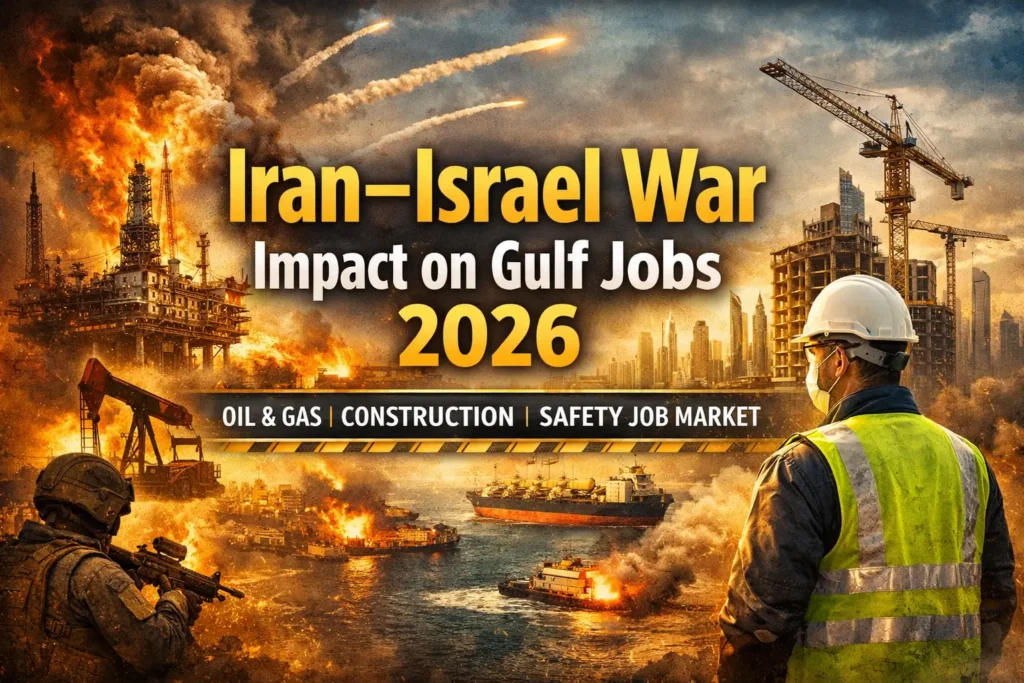
Iran–Israel War Impact on Gulf Jobs 2026, Oil & Gas, Construction & Safety Job Market Reality
The 2026 Iran–Israel war has quickly become one of the biggest geopolitical shocks in recent years. What started as targeted strikes escalated into a regional conflict involving multiple countries, including Gulf nations. The situation has gone beyond military tension and is now affecting global energy, trade, and employment markets.
One of the most critical developments is the disruption of the Strait of Hormuz, through which nearly 20 percent of the world’s oil passes.
When this route is affected, the entire global economy feels the shock.
Why Gulf Countries Are Affected
Gulf countries like UAE, Saudi Arabia, and Qatar depend heavily on oil exports, construction projects, and foreign workforce. With attacks on infrastructure, airspace closures, and security risks increasing, business operations have slowed down significantly.
This directly impacts job opportunities, especially for expats working in oil & gas, construction, and safety roles.
Oil & Gas Industry Shock
Rising Oil Prices but Falling Operations
At first glance, rising oil prices should mean more jobs. Brent crude has surged above $100 per barrel due to the conflict.
But here’s the reality. Despite high prices, oilfield activity is declining, not increasing.
- Offshore rig activity dropped by around 39%
- Companies are delaying new drilling projects
- Workers are being evacuated from high-risk zones
Why? Because security risk is too high. Companies prefer to pause operations rather than risk infrastructure damage or worker safety.
👉 Result: Less hiring, more uncertainty
Construction Sector Impact in Gulf
Project Delays and Workforce Reduction
Construction is one of the biggest employers in Gulf countries. But during war conditions:
- Mega projects are delayed
- Investors hold funding
- Material costs increase due to oil price surge
Many construction sites are slowing down or temporarily stopping work. This directly reduces demand for:
- Engineers
- Supervisors
- Safety officers
- Skilled labor
👉 Result: Hiring slowdown + contract terminations
Safety Jobs Market Reality
Demand vs Hiring Freeze
Safety is always required. But here’s the hidden truth:
- Work risk increases during war
- Hiring decreases at the same time
Companies try to manage with existing staff instead of hiring new safety officers. This creates:
- More workload on current safety staff
- Less opportunity for freshers
- Contract-based hiring instead of permanent roles
Strait of Hormuz Crisis and Job Market
Global Supply Chain Disruption
The Strait of Hormuz disruption has created a chain reaction:
- Oil and gas exports slowed
- Shipping routes blocked
- Logistics jobs reduced
This has frozen hiring in multiple sectors, especially:
- Logistics
- Oil services
- Port operations
👉 The job market is not collapsing, it is shifting and freezing temporarily.
Hiring Freeze Across Gulf Countries
Companies Reducing Recruitment
Due to uncertainty, companies are adopting a “wait and watch” approach:
- New hiring is paused
- Existing contracts are not renewed
- Projects are postponed
Real-time job data shows that Gulf logistics, oil & gas, and hospitality sectors are contracting sharply.
Layoffs and Job Risk for Expats
Indian Workforce Under Threat
The Gulf region has around 90 lakh Indian workers, many in construction and oil sectors.
The ongoing war has created:
- Job insecurity
- Fear of evacuation
- Reduced remittances
Experts warn that if the conflict continues, millions of jobs could be affected.
Oil Prices Surge but Jobs Decline
Why High Oil Doesn’t Mean More Jobs
This is the biggest confusion for many professionals.
High oil prices usually mean more drilling and hiring. But in 2026:
- Infrastructure is damaged
- Security costs are high
- Insurance costs increased
So companies are not expanding operations.
👉 This creates a “high price, low hiring” situation
Shutdown of Projects and Investments
Infrastructure Slowdown
Large infrastructure projects depend on stability. War creates uncertainty.
- Investors delay funding
- Contractors reduce workforce
- New tenders are paused
👉 Construction job market becomes slow and unpredictable.
Safety Officers Facing New Challenges
Increased Risk, Reduced Hiring
Safety professionals are facing a double challenge:
- Higher site risks due to unstable conditions
- Lower hiring opportunities
They are expected to manage:
- Emergency preparedness
- Security threats
- Worker safety under stress
Which Jobs Are Safe in 2026?
Emerging Opportunities
Not all sectors are down. Some are growing:
- Cybersecurity jobs
- Defense-related roles
- Renewable energy jobs
- Crisis management roles
These sectors are increasing due to geopolitical tensions.
Which Jobs Are Most Affected?
High-Risk Sectors
Most affected sectors include:
- Oil & gas field jobs
- Construction jobs
- Logistics and shipping
- Hospitality sector
These depend heavily on stability and global trade.
Gulf Countries Most Impacted
UAE, Saudi Arabia, Qatar
Countries highly dependent on oil exports and global trade are facing:
- Export disruption
- Aviation shutdown
- Tourism decline
Some reports warn that prolonged conflict could even halt energy exports temporarily.
Real Situation on Ground
Worker Fear and Uncertainty
Workers in Gulf countries are facing:
- Fear of job loss
- Safety concerns
- Uncertain future
Many are waiting instead of switching jobs, creating a frozen job market.
Future Job Market Prediction
Short-Term vs Long-Term Impact
Short-Term (2026):
- Hiring freeze
- Project delays
- Job uncertainty
Long-Term:
- Massive rebuilding projects
- Increased demand for safety professionals
- Infrastructure recovery jobs
👉 After war ends, job demand may increase sharply
What Safety Professionals Should Do Now
Practical Career Strategy
If you are a safety officer or planning Gulf jobs:
- Upgrade skills (NEBOSH, IOSH, advanced safety)
- Focus on emergency response and risk management
- Be flexible for different industries
- Avoid risky job switching during instability
Key Takeaways
- War has created job uncertainty in Gulf
- Oil prices increased, but jobs decreased
- Construction and oil sectors are most affected
- Safety jobs exist but hiring is limited
- Future demand may rise after recovery
Conclusion
The Iran–Israel war is not just a geopolitical issue, it is a career-changing event for Gulf job seekers. Oil & gas, construction, and safety sectors are all facing disruption. While the current situation shows hiring slowdown and uncertainty, the future may bring new opportunities once stability returns.
For now, the smartest approach is to adapt, upgrade skills, and stay prepared.
How to Apply for International Safety Jobs Without an Agent
Documents Required for Gulf Safety Jobs
Why Gulf Companies Reject Many Safety Officer Applications
Visa and Work Permit Process for Safety Jobs in the Gulf
How Recruiters Shortlist Safety CVs in the Gulf
FAQs
1. Is Gulf job market safe in 2026?
Currently unstable due to war, with hiring slowdown.
2. Are safety jobs in demand now?
Demand exists, but hiring is limited.
3. Which sector is most affected?
Oil & gas and construction sectors.
4. Will jobs increase after war?
Yes, reconstruction may boost demand.
5. Should I go to Gulf now for job?
Better to wait or evaluate situation carefully.
