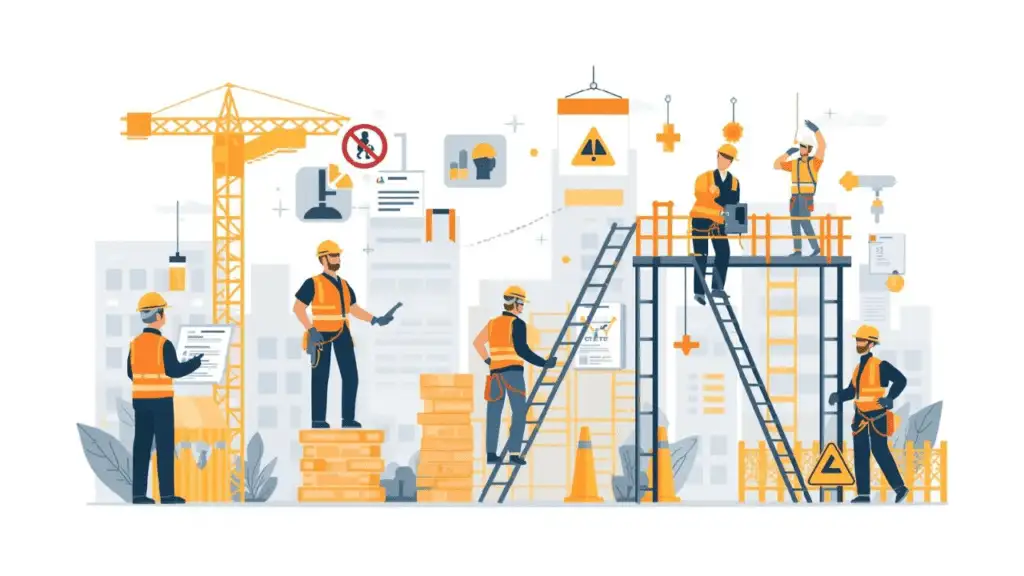
Work at Height Risk Assessment (HIRA)
Work at height is one of the most hazardous activities across construction, industrial maintenance, power plants, oil & gas facilities, and infrastructure projects. Falls from height remain a leading cause of serious injuries and fatalities worldwide. To control these risks effectively, organizations must conduct a Work at Height Risk Assessment, commonly known as HIRA (Hazard Identification and Risk Assessment).
A HIRA helps identify fall hazards, evaluate the level of risk, and implement appropriate control measures before work begins. This article provides a detailed guide on conducting a Work at Height HIRA, covering hazard identification, risk evaluation, control strategies, and best practices.
What Is Work at Height?
Work at height refers to any activity where a person could fall from one level to another and sustain injury. This includes work:
- On ladders, scaffolds, and platforms
- On roofs and fragile surfaces
- On towers, masts, and steel structures
- Near open edges, floor openings, or pits
- On MEWPs, boom lifts, and suspended platforms
If there is a risk of falling, a height risk assessment is mandatory.
What Is HIRA (Hazard Identification and Risk Assessment)?
HIRA is a systematic process used to:
- Identify hazards associated with a task
- Assess the likelihood and severity of harm
- Determine risk levels
- Implement suitable control measures
For work at height, HIRA focuses primarily on fall hazards but also considers secondary risks such as falling objects, weather conditions, access issues, and human factors.
Why Work at Height HIRA Is Essential
Work at height hazards are often underestimated or ignored due to routine nature of tasks. HIRA is essential because it:
- Prevents fatal falls
- Ensures compliance with legal requirements
- Guides selection of fall protection systems
- Improves planning and supervision
- Reduces unsafe behavior
- Strengthens safety culture
A proper HIRA turns high-risk activities into controlled operations.
Legal and Regulatory Requirements
Most safety regulations mandate risk assessment for height work, including:
- OSHA regulations
- Work at Height Regulations
- Factory Acts
- Construction Safety Rules
- ISO 45001 Occupational Health & Safety standards
Failure to conduct a risk assessment can lead to legal penalties, project shutdowns, and severe accidents.
Steps to Conduct Work at Height Risk Assessment
Step 1: Identify Work at Height Activities
Begin by identifying all tasks involving height work, such as:
- Roof maintenance
- Scaffold erection and dismantling
- Ladder work
- Steel erection
- Painting at elevation
- Maintenance on elevated equipment
Clearly defining the task helps identify relevant hazards.
Step 2: Identify Work at Height Hazards
Hazard identification must consider all possible dangers.
Fall Hazards
- Unprotected edges
- Fragile roofs or skylights
- Open floor holes
- Slippery surfaces
- Inadequate guardrails
Access and Egress Hazards
- Unsafe ladders
- Improper scaffold access
- Poorly maintained stairs
- Obstructed walkways
Falling Object Hazards
- Tools dropping from height
- Materials falling onto workers below
- Poor housekeeping
Environmental Hazards
- Wind
- Rain
- Poor visibility
- Extreme heat or cold
Equipment Hazards
- Defective harnesses
- Damaged ladders or scaffolds
- Inadequate anchor points
Human and Behavioral Hazards
- Lack of training
- Fatigue
- Rushing or shortcuts
- Overconfidence
Step 3: Identify Who May Be Harmed
Identify all persons exposed to risk:
- Workers performing height work
- Workers below the work area
- Supervisors and inspectors
- Visitors or contractors
- Public (if applicable)
Understanding exposure helps select effective controls.
Step 4: Evaluate the Risk Level
Risk is assessed by considering:
- Likelihood of a fall
- Severity of potential injury
Typical risk levels include:
- Low
- Medium
- High
- Extreme
Falls from height usually fall under high or extreme risk, requiring strict controls.
Step 5: Implement Control Measures Using Hierarchy of Controls
Risk controls must follow the hierarchy.
Elimination of Work at Height
- Perform work from ground level
- Use long-handled tools
- Prefabricate components
Substitution
- Replace ladders with mobile platforms
- Use MEWPs instead of scaffolding
Engineering Controls
- Guardrails and toe boards
- Covers for openings
- Safety nets
- Fixed access platforms
Administrative Controls
- Permit to Work system
- Safe work procedures
- Training and competency checks
- Supervision
Personal Protective Equipment (PPE)
- Full-body harness
- Shock-absorbing lanyard
- Self-retracting lifeline
- Helmet with chin strap
PPE is the last line of defense.
Step 6: Document the HIRA
The risk assessment must be documented and include:
- Task description
- Identified hazards
- Risk rating
- Control measures
- Responsible persons
- Review date
Documentation ensures accountability and compliance.
Step 7: Communicate and Implement Controls
Before work starts:
- Conduct toolbox talks
- Explain hazards and controls
- Verify PPE and equipment
- Display permits and signage
Workers must understand the HIRA.
Step 8: Monitor and Review the Risk Assessment
HIRA must be reviewed:
- When work conditions change
- After incidents or near misses
- After weather changes
- Periodically during long-duration work
Continuous monitoring keeps the assessment relevant.
Common Work at Height Hazards and Controls
Hazard: Unprotected Edges
Controls
- Install guardrails
- Use harness with anchor
- Barricade restricted areas
Hazard: Fragile Roofs
Controls
- Identify and mark fragile areas
- Use crawl boards
- Install safety nets
Hazard: Ladder Misuse
Controls
- Use correct ladder type
- Follow 4:1 rule
- Train workers
Hazard: Poor Weather Conditions
Controls
- Suspend work
- Monitor forecasts
- Improve surface grip
Hazard: Falling Objects
Controls
- Use toe boards
- Tool lanyards
- Barricade area below
Roles and Responsibilities in Work at Height HIRA
Management
- Ensure risk assessments are conducted
- Provide resources and equipment
- Enforce safety policies
Supervisors
- Conduct site-specific HIRA
- Implement control measures
- Monitor compliance
Workers
- Follow safe procedures
- Use PPE correctly
- Report hazards
Safety Officers
- Review HIRA quality
- Audit compliance
- Support hazard control
Integration of HIRA with Permit to Work
For high-risk height activities, HIRA should be integrated with a Permit to Work system. The permit confirms that:
- Risk assessment is completed
- Controls are implemented
- Authorization is granted
HIRA without permit control is often ineffective.
Common Mistakes in Work at Height Risk Assessment
- Generic assessments
- Ignoring weather conditions
- Not involving workers
- Overreliance on PPE
- Failure to review assessments
Avoiding these mistakes improves safety outcomes.
Best Practices for Effective Work at Height HIRA
- Use task-specific assessments
- Involve experienced workers
- Prioritize collective protection
- Review assessments regularly
- Train workers continuously
Conclusion
Work at Height Risk Assessment (HIRA) is a critical safety tool that helps prevent falls and protect lives. By systematically identifying hazards, evaluating risks, and implementing appropriate control measures, organizations can significantly reduce height-related incidents.
Remember, work at height is inherently dangerous — but with a thorough and effective HIRA, it can be performed safely and responsibly.
For checklist and templates visit The HSE Tools.
Roof Work Safety: Do’s and Don’ts
Common Causes of Falls and Their Prevention
Permit to Work for Height-Related Activities
Scaffold Erection and Dismantling Safety Procedures
Ladder Safety: Inspection, Use, and Storage
FAQs
1. When should a Work at Height HIRA be conducted?
Before starting any height-related activity.
2. Who is responsible for preparing the HIRA?
A competent supervisor or safety officer.
3. Is PPE alone enough to control height risks?
No, PPE should be the last line of defense.
4. How often should a HIRA be reviewed?
Whenever conditions change or periodically for long tasks.
5. Is HIRA mandatory for ladder work?
Yes, especially for non-routine or high-risk ladder tasks.
