 Skip to content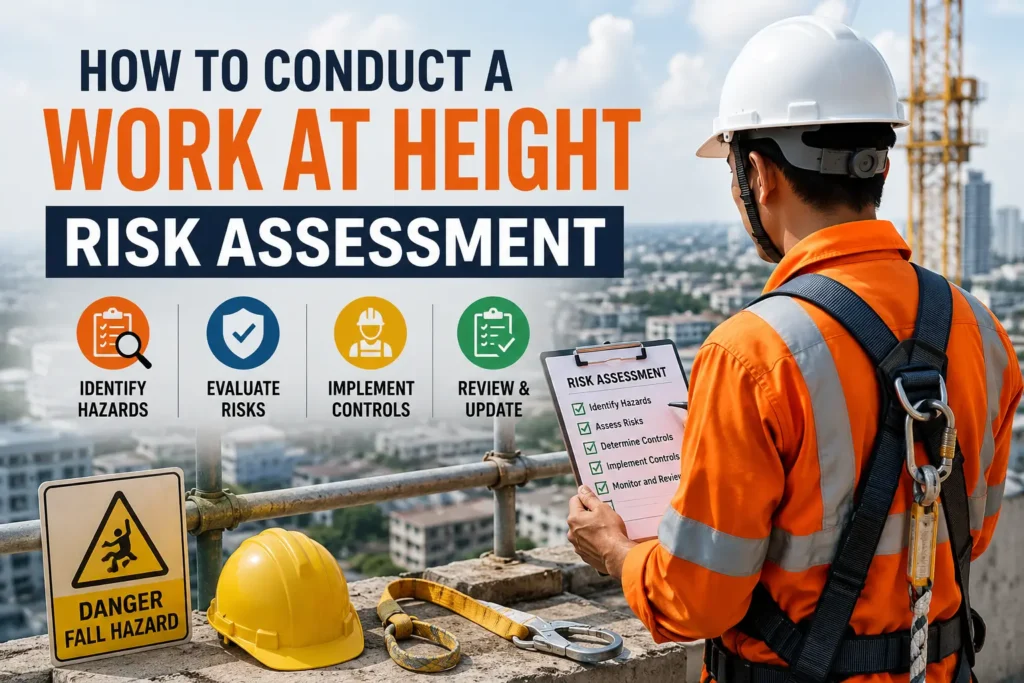
How to Conduct a Work at Height Risk Assessment
Working at height remains one of the most dangerous activities across construction, maintenance, industrial, and warehouse environments. A single mistake while working above ground level can lead to devastating injuries or fatalities within seconds. Whether workers are using scaffolds, ladders, mobile elevated work platforms, rooftops, or structural steel, the risk of falling is always present. That is why learning how to conduct a work at height risk assessment is essential for every employer, supervisor, safety officer, and worker involved in elevated tasks.
Many workplace fall accidents happen because hazards were not identified before work began. Workers may access unstable surfaces, use incorrect equipment, ignore weather conditions, or work without proper fall protection systems. In many cases, the danger existed long before the accident happened, but nobody stopped to assess the risks properly.
According to OSHA and global workplace safety statistics, falls from height continue to be one of the leading causes of workplace fatalities, especially in construction and industrial sectors.
The dangerous part about work at height is that hazards constantly change. Wind conditions may shift suddenly, scaffolding may become unstable, surfaces may become slippery, and workers may become fatigued after long hours. A safe work area in the morning can become hazardous by the afternoon if conditions are not monitored continuously.
A proper risk assessment acts like a safety map before work begins. It helps identify hazards, evaluate risks, and implement controls to prevent falls and injuries. Without risk assessments, workers may unknowingly expose themselves to life-threatening conditions.
The good news is that most work at height accidents are preventable. Careful planning, hazard identification, proper equipment selection, and strong supervision dramatically reduce fall risks and improve worker safety.
Understanding Work at Height Risk Assessment
A work at height risk assessment is a systematic process used to identify fall hazards, evaluate risks, and implement safety controls before elevated work begins. It helps organizations prevent accidents by understanding exactly what could go wrong and how to stop it from happening.
Think of a risk assessment like preparing for a dangerous journey across a mountain. Before starting the trip, you would check weather conditions, examine equipment, study the route, and prepare emergency plans. Work at height activities require the same level of preparation because the consequences of mistakes can be severe.
Many workers assume risk assessments are simply paperwork required for compliance. In reality, they are practical safety tools that protect lives. A well-conducted risk assessment helps workers understand hazards clearly before stepping into dangerous environments.
What Is Work at Height?
Work at height refers to any task performed where a worker could fall and suffer injury. This includes working:
- On scaffolds
- On ladders
- On rooftops
- On elevated platforms
- Near floor openings
- On structural steel
- Inside excavations with fall risks
Even low heights can be dangerous if workers land on hard surfaces, machinery, or sharp objects.
The risk of falling exists anytime workers leave ground level.
Why Risk Assessments Are Important
Risk assessments help organizations recognize hazards before accidents happen.
Without proper assessment, workers may face risks such as:
- Falls from height
- Falling objects
- Structural collapse
- Equipment failure
- Electrocution
- Weather-related hazards
Risk assessments improve decision-making by ensuring hazards are identified and controlled systematically.
They also strengthen communication between supervisors, workers, and safety teams.
Common Hazards in Work at Height Activities
Work at height activities involve multiple hazards that can quickly become deadly if not controlled properly.
Falls from Elevated Surfaces
Falls are the most serious hazard associated with work at height.
Workers may fall because of:
- Missing guardrails
- Slippery surfaces
- Unstable ladders
- Poor footing
- Lack of fall arrest systems
Falls can occur suddenly and often leave little time for workers to react.
Even experienced workers are vulnerable if conditions become unsafe.
Falling Objects
Objects dropped from elevated areas can seriously injure workers below.
Common falling object hazards include:
- Tools
- Materials
- Equipment components
- Debris
Falling objects create danger zones around elevated work areas.
Toe boards, tool lanyards, and exclusion zones help reduce these risks.
Fragile Roof Hazards
Workers performing roofing or maintenance tasks may encounter fragile surfaces such as skylights or deteriorated roofing sheets.
These surfaces may appear stable while actually incapable of supporting body weight.
Many fatal falls occur because workers unknowingly step onto weak roofing materials.
Weather and Environmental Conditions
Wind, rain, heat, lightning, and poor visibility significantly affect work at height safety.
Strong winds can destabilize workers and equipment while wet surfaces increase slipping hazards.
Weather conditions should always be considered during risk assessments.
Equipment Failure Risks
Fall protection equipment, scaffolds, ladders, and elevated platforms must remain in safe condition.
Equipment failure may result from:
- Poor maintenance
- Overloading
- Damage
- Incorrect use
Regular inspections help identify unsafe equipment before failures occur.
OSHA and Work at Height Safety Requirements
OSHA establishes fall protection standards to reduce workplace fatalities and injuries associated with elevated work.
OSHA Fall Protection Standards
OSHA requires fall protection systems whenever workers face fall hazards above certain heights depending on industry and task type.
Fall protection may include:
- Guardrails
- Safety nets
- Personal fall arrest systems
- Positioning systems
- Warning lines
Unsafe elevated work should never begin without appropriate protection measures.
Employer Responsibilities
Employers must provide:
| Employer Responsibility | Purpose |
|---|---|
| Fall protection equipment | Prevent worker falls |
| Worker training | Improve hazard awareness |
| Risk assessments | Identify hazards |
| Equipment inspections | Ensure safe operation |
| Rescue planning | Improve emergency response |
Strong safety management systems help reduce work at height accidents significantly.
Steps to Conduct a Work at Height Risk Assessment
Effective risk assessments follow structured processes to ensure hazards are identified and controlled properly.
Step 1: Identify the Work Activity
The first step is understanding exactly what work will be performed.
Questions to consider include:
- What task will workers perform?
- Where will work take place?
- How long will the task last?
- What equipment will be used?
Clear understanding of the activity helps identify relevant hazards accurately.
Step 2: Identify Hazards
Next, identify all possible hazards associated with the task.
Examples include:
- Fall edges
- Fragile surfaces
- Unstable scaffolds
- Falling objects
- Electrical hazards
- Weather exposure
Hazard identification should involve workers because they often notice risks others may overlook.
Step 3: Determine Who May Be Harmed
Risk assessments should identify everyone exposed to hazards.
This may include:
- Workers at height
- Workers below
- Supervisors
- Contractors
- Visitors
Understanding exposure helps improve control planning.
Step 4: Evaluate Risks
Risk evaluation considers:
- Likelihood of an accident
- Severity of potential injury
- Number of workers exposed
- Environmental conditions
Many organizations use risk matrices to classify risk levels as low, medium, or high.
Higher risks require stronger control measures.
Step 5: Select Control Measures
Control measures should follow the hierarchy of controls whenever possible.
Examples include:
| Control Measure | Example |
|---|---|
| Elimination | Avoid working at height |
| Engineering controls | Guardrails |
| Administrative controls | Safe work procedures |
| PPE | Safety harnesses |
The safest solution is always eliminating the need for work at height whenever possible.
Step 6: Document the Assessment
Risk assessments should be documented clearly.
Documentation may include:
- Hazards identified
- Control measures
- Responsible persons
- Inspection records
- Permit requirements
Written assessments improve communication and accountability.
Step 7: Review and Update Regularly
Work conditions may change throughout the project.
Risk assessments should be reviewed after:
- Weather changes
- Equipment modifications
- Site changes
- Incidents or near misses
Continuous review helps maintain safe working conditions.
Important Control Measures for Work at Height
Strong control measures are essential for preventing falls and injuries.
Use Fall Protection Systems
Fall protection systems provide barriers between workers and fall hazards.
Common systems include:
- Safety harnesses
- Lifelines
- Guardrails
- Safety nets
- Anchor points
Workers should inspect equipment before every use.
Ensure Safe Access and Egress
Workers need safe methods to reach elevated work areas.
Safe access systems may include:
- Ladders
- Stair towers
- Scaffolds
- Mobile elevated work platforms
Unsafe climbing practices create unnecessary risks.
Inspect Equipment Regularly
Equipment inspections help identify defects before failures occur.
Inspect:
- Harnesses
- Lanyards
- Scaffolds
- Ladders
- Anchor points
Damaged equipment should be removed from service immediately.
Common Work at Height Risk Assessment Mistakes
Many fall accidents happen because risk assessments are incomplete or ignored.
Ignoring Environmental Conditions
Some risk assessments overlook wind, rain, heat, or poor visibility conditions.
Weather changes can quickly transform safe work areas into dangerous environments.
Environmental hazards should always remain part of assessment reviews.
Using Inadequate Fall Protection
Workers sometimes use incorrect fall protection equipment or anchor systems.
Improper equipment creates false confidence while failing to provide real protection.
Proper selection and inspection are critical.
Best Practices for Safer Work at Height Operations
Strong work at height programs combine planning, supervision, inspections, and worker training.
Toolbox talks and refresher training help workers stay aware of fall hazards continuously. Even experienced workers benefit from regular reminders because overconfidence often develops during routine work.
Technology is also improving fall prevention through wearable sensors, drone inspections, smart harness systems, and digital permit systems. While technology helps reduce risks, worker awareness and safe behavior remain the most important safety factors.
Companies with strong safety cultures encourage workers to stop unsafe work immediately without fear of punishment. Open communication prevents many accidents before they occur.
Work at height safety is not about slowing productivity. It is about ensuring workers complete tasks safely and return home unharmed.
Conclusion
Conducting a proper work at height risk assessment is one of the most effective ways to prevent falls, injuries, and fatalities during elevated work activities. Risk assessments help organizations identify hazards, evaluate risks, and implement practical control measures before workers are exposed to danger.
Falls from height continue causing serious workplace accidents worldwide, but most incidents are preventable through proper planning, equipment selection, supervision, and worker training.
A strong risk assessment is not simply a document completed for compliance. It is a practical safety process that protects lives by helping workers understand hazards clearly before work begins.
Every hazard identified, every control implemented, and every safe task completed represents another worker protected from harm. That is the true purpose of work at height risk assessments.
Top 10 Work at Height Hazards and Control Measures
Work at Height Safety Rules Every Worker Must Know
Emergency Rescue Plan for Work at Height
Work at Height Risk Assessment (HIRA)
FAQs
1. What is a work at height risk assessment?
A work at height risk assessment identifies fall hazards, evaluates risks, and determines safety controls before elevated work begins.
2. Why are work at height risk assessments important?
They help prevent falls, injuries, equipment failures, and other hazards associated with elevated work activities.
3. What are common work at height hazards?
Common hazards include falls, falling objects, unstable surfaces, weather conditions, and equipment failures.
4. What fall protection systems are commonly used?
Common systems include guardrails, safety harnesses, lifelines, safety nets, and anchor points.
5. Who should conduct work at height risk assessments?
Competent persons such as safety officers, supervisors, or trained professionals should conduct and review risk assessments.
