 Skip to content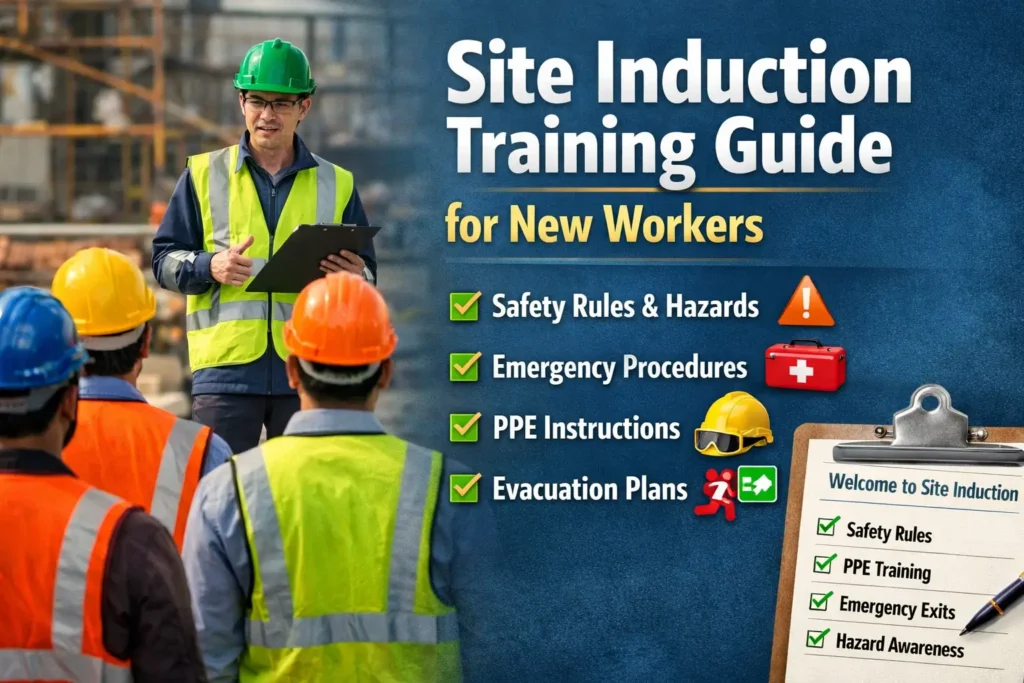
Site Induction Training Guide for New Workers (Complete Safety Guide)
Site induction training is the first and most critical step before any worker enters a workplace. It is designed to introduce new workers to the site environment, safety rules, hazards, and procedures they must follow. Think of it as a roadmap that helps workers understand how to stay safe from day one.
This training is not just a formality. It is a life-saving process. Workers who are unfamiliar with site conditions are at higher risk of accidents. Induction training ensures they know what to expect, what to avoid, and how to respond in emergencies. It creates awareness and builds confidence among workers, especially those who are new to the industry.
Why It Is Mandatory
In most industries, especially construction and manufacturing, site induction is a legal requirement. Regulatory bodies mandate induction training to reduce workplace accidents and ensure compliance with safety standards.
Skipping induction training is like sending someone into a battlefield without preparation. It increases the chances of errors, injuries, and even fatalities.
Importance of Site Induction for New Workers
First Line of Defense Against Accidents
Site induction acts as the first layer of protection against workplace hazards. Many accidents occur because workers are unaware of risks or safety procedures.
By educating workers about hazards, PPE, and emergency actions, induction training reduces the likelihood of incidents. It also helps in creating a safety culture where workers feel responsible for their own safety and that of others.
Key Objectives of Site Induction Training
What Workers Must Learn
The main goal of site induction is to ensure that every worker understands:
- Site-specific hazards
- Safety rules and procedures
- Emergency response actions
- Proper use of PPE
- Reporting systems
This knowledge helps workers perform their tasks safely and confidently.
Who Should Attend Site Induction?
Workers, Visitors, Contractors
Site induction is not limited to workers. It should be provided to:
- New employees
- Contractors and subcontractors
- Visitors entering the site
Anyone who enters the workplace must be aware of basic safety rules.
When Should Induction Training Be Conducted?
Before Starting Work
Induction training must be conducted before a worker starts any task. Delaying induction increases risk.
It should also be repeated when there are changes in site conditions, processes, or hazards.
Essential Topics Covered in Site Induction
Safety Rules and Regulations
Workers must understand site rules such as access control, restricted areas, and safe behavior.
Emergency Procedures
Training should include fire response, evacuation routes, and emergency contacts.
PPE Requirements
Workers must know what PPE to wear and how to use it properly.
Understanding Site Hazards
Common Construction Hazards
Workers should be aware of hazards such as:
- Working at height
- Falling objects
- Electrical risks
- Heavy machinery
Understanding these hazards helps in preventing accidents.
Emergency Response and Evacuation Plan
Fire, Medical, and Rescue Procedures
Workers must know how to respond in emergencies. This includes identifying alarm signals, evacuation routes, and assembly points.
Quick and correct action can save lives.
Personal Protective Equipment (PPE) Training
Proper Usage and Importance
PPE is the last line of defense. Workers must be trained on proper usage, maintenance, and limitations of PPE.
Incorrect use can reduce its effectiveness.
Roles and Responsibilities of Workers
Safety Responsibilities
Workers are responsible for following safety rules, using PPE, and reporting hazards.
Safety is a shared responsibility.
Do’s and Don’ts on Site
Safe vs Unsafe Practices
Clear instructions on what to do and what to avoid help workers make better decisions.
Communication and Reporting System
Reporting Hazards and Incidents
Workers must know how to report unsafe conditions and incidents. Effective communication improves safety.
Permit to Work System Overview
High-Risk Activities
Induction should cover permit systems for activities like hot work, confined space entry, and working at height.
Toolbox Talk Introduction
Daily Safety Briefings
Toolbox talks reinforce safety messages and keep workers updated.
Health and Hygiene Practices
Welfare Facilities
Workers should be aware of hygiene practices and available facilities such as drinking water and rest areas.
Documentation and Record Keeping
Induction Attendance Records
Proper documentation ensures compliance and accountability.
Common Mistakes in Induction Training
What to Avoid
- Rushing through training
- Using complex language
- Ignoring worker feedback
Best Practices for Effective Induction
Making Training Engaging
Use visuals, real-life examples, and interactive methods to make training effective.
Sample Site Induction Checklist Table
| Item | Description | Status |
|---|---|---|
| PPE Training | Helmet, gloves, shoes | ✔ |
| Emergency Plan | Evacuation routes | ✔ |
| Hazard Awareness | Site risks explained | ✔ |
| Reporting System | Incident reporting | ✔ |
Key Takeaways
- Site induction is essential for safety
- It reduces accidents and improves awareness
- Training must be clear and engaging
- Everyone entering the site must attend
Conclusion
Site induction training is not just a requirement, it is a foundation for a safe workplace. Proper induction can prevent accidents, save lives, and create a strong safety culture.
New Safety Laws Every Company Must Follow
Rigging and Slinging Safety Guidelines
Common Crane Hazards and Control Measures
Types of Cranes Used in Construction Sites
Safe Lifting Practices and Planning for Cranes
FAQs
1. What is site induction training?
It is training given to new workers about safety rules and hazards.
2. Why is induction training important?
It reduces accidents and improves awareness.
3. Who should attend induction training?
Workers, contractors, and visitors.
4. When should induction be conducted?
Before starting work.
5. What topics are covered in induction?
Safety rules, hazards, PPE, and emergency procedures.
