 Skip to content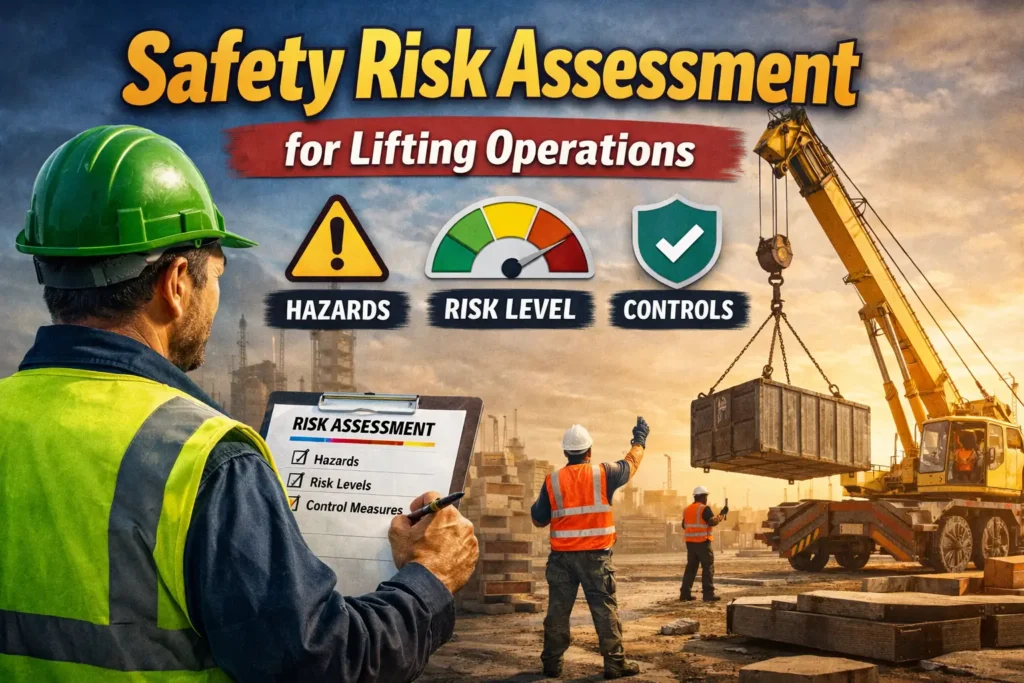
Safety Risk Assessment for Lifting Operations (Complete Practical Guide)
What is a Risk Assessment in Lifting Operations?
Definition and Purpose
A risk assessment for lifting operations is a systematic process used to identify hazards, evaluate risks, and implement control measures before carrying out any lifting activity. Whether it is using a crane, hoist, or manual lifting equipment, the goal is simple, prevent accidents and ensure safe execution.
Lifting operations are considered high-risk because they involve heavy loads, moving equipment, and coordination between multiple workers. One small mistake, such as incorrect rigging or overloading, can lead to serious injuries or fatalities. That is why risk assessment is not just a formality, it is a critical safety requirement.
Why It is Critical for Safety
Without proper risk assessment, lifting operations can quickly become dangerous. Equipment failure, load instability, or poor communication can lead to accidents.
A well-planned risk assessment ensures that hazards are identified in advance and appropriate control measures are in place. It reduces uncertainty and improves safety performance.
Importance of Lifting Operation Risk Assessment
Preventing Accidents and Failures
Most lifting accidents occur due to poor planning and lack of risk assessment. By identifying potential hazards early, organizations can prevent incidents before they happen.
Risk assessment also helps in improving efficiency. When everything is planned properly, lifting operations can be completed safely and smoothly.
Types of Lifting Operations
Routine vs Critical Lifts
Lifting operations are generally classified into:
- Routine Lifts: Regular lifting activities with standard procedures
- Critical Lifts: Complex lifts involving heavy loads, multiple cranes, or high-risk conditions
Critical lifts require detailed planning and approval.
Common Hazards in Lifting Operations
Mechanical, Environmental, Human Risks
Lifting operations involve various hazards, including:
- Equipment failure
- Load falling or swinging
- Poor ground conditions
- Weather conditions
- Human error
Understanding these hazards is the first step in risk assessment.
Key Components of Risk Assessment
Hazard Identification
Identify all possible hazards related to the lifting activity.
Risk Evaluation
Assess the likelihood and severity of each hazard.
Control Measures
Implement measures to eliminate or reduce risks.
Step-by-Step Risk Assessment Process
Planning the Lift
Proper planning includes selecting the right equipment, defining the lifting method, and identifying hazards.
Selecting Equipment
Choose equipment suitable for the load and conditions.
Assigning Competent Personnel
Ensure that operators, riggers, and supervisors are trained and competent.
Implementing Controls
Apply safety measures such as barriers, signage, and PPE.
Roles and Responsibilities in Lifting Operations
Lifting Supervisor
Responsible for overall supervision and ensuring safe practices.
Rigger and Signalman
Handle rigging and communication during lifting.
Crane Operator
Operates the crane safely and follows instructions.
Control Measures for Safe Lifting
Engineering Controls
Use proper equipment and ensure maintenance.
Administrative Controls
Follow procedures and training.
PPE Requirements
Workers must wear helmets, gloves, and safety shoes.
Permit to Work for Lifting Activities
When It is Required
Permits are required for critical lifts and high-risk operations.
Inspection and Maintenance of Equipment
Pre-Use Checks
Regular inspection ensures equipment is safe to use.
Environmental Factors Affecting Lifting
Wind, Weather, Ground Conditions
Environmental conditions can impact lifting safety. Strong winds or unstable ground increase risk.
Communication and Signaling Systems
Hand Signals and Radios
Clear communication is essential to avoid accidents.
Emergency Planning for Lifting Operations
Response to Equipment Failure
Emergency plans must be in place to handle failures.
Common Mistakes in Lifting Operations
Overloading, Poor Planning
Common mistakes include overloading equipment and poor communication.
Risk Assessment Table Example
| Hazard | Risk Level | Control Measure |
|---|---|---|
| Load سقوط | High | Use proper rigging |
| Equipment failure | High | Regular inspection |
| Poor communication | Medium | Use signals/radio |
Industry Best Practices
International Safety Standards
Follow standards like OSHA and ISO for lifting safety.
Challenges in Lifting Risk Assessment
Dynamic Work Environments
Changing conditions make risk assessment challenging.
How to Improve Lifting Safety
Training and Supervision
Regular training and proper supervision improve safety.
Key Takeaways
- Risk assessment is essential for lifting safety
- Proper planning reduces accidents
- Communication is critical
- Training improves performance
Conclusion
Safety risk assessment for lifting operations is a vital process that ensures safe and efficient work. By identifying hazards and implementing control measures, organizations can prevent accidents and protect workers.
Risk Assessment for Excavation Activities
Difference Between HIRA JSA and Risk Assessment
5 Levels of Risk Control (Hierarchy of Controls) Explained
How to Conduct a Workplace Risk Assessment (Step-by-Step Guide)
Permit to Work System vs Risk Assessment
FAQs
1. What is lifting risk assessment?
It is the process of identifying and controlling risks in lifting operations.
2. Why is it important?
To prevent accidents and ensure safety.
3. What are common hazards?
Equipment failure, load falling, and human error.
4. Who is responsible for lifting safety?
Supervisors, operators, and riggers.
5. What is a critical lift?
A complex lifting operation with higher risk.
